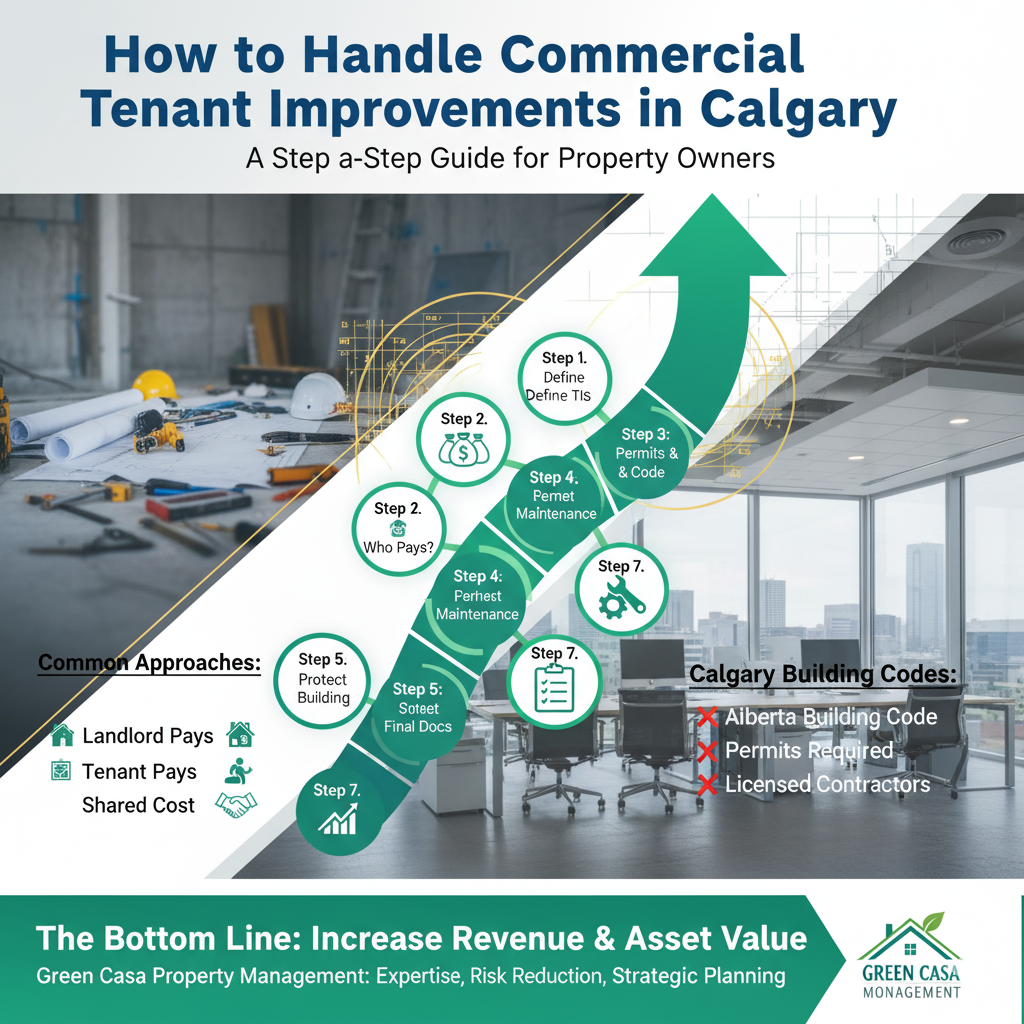

When a commercial tenant signs a lease in Calgary, one of the first conversations they usually initiate is about tenant improvements. Whether it is a restaurant building out a kitchen, a medical clinic adding treatment rooms, or an office tenant customizing workstations, tenant improvements can increase property value but also create risk when handled incorrectly.
For owners, tenant improvement requests can be exciting but stressful. They promise long-term leases, higher rent, stronger tenants, and a more valuable asset. But they also bring construction headaches, change orders, safety concerns, and budget overruns. That is where a structured strategy matters.
Green Casa Property Management specializes in helping Calgary commercial landlords navigate these improvements smoothly with predictable outcomes. Below is a detailed, real-world guide on how commercial tenant improvements should be handled in Calgary’s modern market.
Step 1: Understand What Counts as a Tenant Improvement
Tenant improvements, commonly called TIs, refer to any interior modifications that a tenant needs to operate their business inside your building. These upgrades usually involve:
• Space layout changes
• Electrical or HVAC modifications
• Plumbing upgrades
• Lighting replacements
• Flooring or wall improvements
In Calgary, most commercial sectors rely heavily on tenant improvements. Industrial users may need racking or power upgrades. Office tenants may need private offices and meeting rooms. Retail stores need branding and display layouts.
The key is understanding how each improvement affects the property long term and what regulations apply.
Step 2: Clearly Define Who Pays for What
This is where inexperienced landlords often lose money. Costs can escalate quickly without a plan.
There are three common approaches in Calgary:
Landlord Pays (Tenant Improvement Allowance)
The landlord gives the tenant a pre-negotiated allowance. Anything beyond the allowance is the tenant’s responsibility. This attracts stronger tenants and raises long-term value.
Tenant Pays
Suitable for small, flexible, or short-term tenants who do not require deep customization.
Shared Cost Model
The landlord contributes to improvements that add future value, like HVAC upgrades or washroom improvements.
Green Casa often recommends a balanced allowance model, protecting cash flow while enhancing the long-term resale value of the property.
Step 3: Ensure Compliance with Calgary Commercial Building Codes
Calgary commercial construction has strict standards. Even small changes require proper permitting.
Key responsibilities include:
• Ensuring all work complies with the Alberta Building Code
• Obtaining development and building permits
• Using licensed contractors
• Scheduling city inspections at required stages
Improper permitting puts the owner at risk of fines, insurance loss, and liability. Green Casa coordinates permitting and contractor oversight for landlords to avoid these issues.
Step 4: Clarify Responsibilities for Long-Term Maintenance
Many owners forget this step, and it causes major conflict later.
Once improvements are completed, who maintains them?
For example:
If a tenant installs a commercial dishwasher, is the landlord responsible for repairs?
If new walls or offices were built, who repairs drywall damage or lighting issues?
If the HVAC system was modified, who services it annually?
Green Casa structures lease agreements so expectations are extremely clear. This protects your operating budget and avoids disputes.
Step 5: Protect the Building During Construction
Commercial improvements bring risks:
• Noise and disruptions for existing tenants
• Damage to common areas
• Parking and access interference
• Increased safety liability
Professional oversight is essential. Green Casa provides onsite monitoring and contractor coordination to ensure the building remains clear, safe, and protected throughout all phases.
Step 6 Final Inspections and Legal Documentation
When construction is complete:
• Final building inspections must be passed
• A completion report should be documented
• Warranties need to be collected
• As-built drawings should be stored
• Lease amendments should be updated
This paperwork becomes crucial years later when selling the building or renewing the tenant.
Step 7: Future Proofing Your Asset for Long-Term Value
Good tenant improvements do more than customize space. They enhance the building’s long-term income potential.
Examples of high-value improvements include:
• Upgraded mechanical systems
• Modern electrical upgrades
• Energy-efficient lighting
• Universal washrooms
• Premium flooring and interiors
For landlords planning to reposition or refinance their property, especially under programs like CMHC’s MLI Select for multi-family assets, high-quality improvements can increase valuation, reduce vacancy, and strengthen underwriting.
Green Casa helps owners plan improvements with resale value in mind, not just tenant needs.
Why Calgary Landlords Choose Green Casa
Commercial owners in Calgary expect expertise, risk reduction, and strategic long-term planning. With Calgary’s economy expanding across tech, logistics, finance, and professional services, demand for modernized, efficient commercial spaces is rising.
Green Casa supports landlords by delivering:
• Professional permitting and contractor management
• Strong lease structuring for improvement responsibilities
• Clear budget oversight and documentation
• Protection of building operations and safety
• Long-term value planning for each improvement
Tenant improvements should never be stressful or unpredictable. When handled correctly, they become one of the strongest strategies for increasing revenue and asset value in Calgary’s growing commercial market.