Green Casa Commercial

Get In Touch

Green Casa Popup Form

Latest News & Articles

Discover practical property tips, commercial insights, and industry updates from our experts.

Mahogany real estate tenant profiles and lease stability
Blog, Condo Management, Multifamily and New Builds

Mahogany Detached Homes vs. Luxury Condos: Landlord ROI Analysis

Choosing the right asset type is the foundation of any successful real estate investment strategy. When investing in Mahogany real estate, landlords face a clear choice: acquire high-end detached family residences or invest in modern luxury condo units. Both property classes perform remarkably well in this master-planned lake community, but they deliver returns in fundamentally different ways.

Mahogany Calgary rental market near Village Market
Blog, Market Updates

Mahogany Village Market: Location Strategies for Rental Properties

When analyzing real estate location strategies, proximity to walkable commercial hubs is one of the strongest drivers of tenant demand. Navigating the Mahogany Calgary rental market effectively requires looking beyond the water to evaluate everyday convenience factors. The Mahogany Village Market—an expansive urban shopping hub featuring grocery stores, restaurants, medical clinics, and boutique services—has created a high-density demand node inside the community.

Mahogany lake access and Beach Club rules for rental property tenants in Calgary
Blog, Alberta Tenancy Law

The Landlord’s Guide to Mahogany Beach Club Rules and Lake Access Transfers

If you own an investment property in Mahogany, you already know that the 63-acre freshwater lake and the 22,000-square-foot Beach Club are your primary marketing assets. Setting up Mahogany lake access for renters properly is an effective way to secure premium rental rates and reduce tenant turnover. I have seen many self-managing landlords lose out on top-tier applicants simply because they were unsure how to navigate the Mahogany Homeowners Association (HOA) tenant transfer process.

Legal basement suite Calgary in Legacy
Real Estate, Market Updates

Secondary Suites in Legacy: Regulations, Yields, and Landlord Rules

With the demand for affordable housing across Calgary rising rapidly, real estate investors are actively seeking ways to maximize cash flow from single-family properties.Developing or acquiring a legal basement suite Calgary property owners can rent out has emerged as one of the most effective strategies for increasing rental income without purchasing additional real estate.I have guided numerous landlords through evaluating and managing secondary suites, transforming single-income homes into high-performing, dual-revenue investments. Converting an unused lower level into a fully legal, city-registered suite adds significant appraisal value to your property while providing a strong financial buffer against mortgage rate fluctuations. However, running a successful multi-tenant property requires navigating municipal bylaws, meeting strict safety codes, and managing two separate households under one roof. Let’s break down everything you need to know about secondary suites in Legacy. The Powerful Financial Math of Dual-Income Properties The core advantage of a secondary suite investment lies in income density. Developing a secondary suite doubles your revenue streams while keeping major fixed overhead costs—such as land acquisition and property tax baselines—virtually identical to a standard single-family home. In today’s rental market, a legal one- or two-bedroom basement suite in Legacy can command between $1,200 and $1,600 per month, plus a percentage share of utilities. When combined with the upper main floor lease revenue, your total monthly gross income easily exceeds $3,500+. This extra revenue creates positive monthly cash flow and drastically reduces your vacancy risk, as one unit remains occupied even if the other experiences a tenant transition. Navigating Calgary Secondary Suite Regulations To operate legally and safely, your secondary suite must strictly comply with all municipal bylaws and provincial building codes. Understanding Calgary secondary suite regulations protects you from severe administrative fines, forced unit closures, or legal liabilities. Fire Separation and Safety Mandates Calgary building codes require proper fire separation between upper and lower living spaces. This includes installing fire-rated drywall on mechanical room walls and ceilings, sealing all ductwork penetrations, and installing interconnected smoke and carbon monoxide alarms that sound in both units simultaneously during an emergency. Bedrooms in the basement suite must also feature compliant egress windows that open without tools to ensure a safe escape route. Independent Mechanical and Heating Systems Heating infrastructure is another critical compliance area. Alberta building codes and municipal guidelines require secondary suites to have proper heating controls or independent HVAC systems to prevent air cross-contamination and ensure proper temperature regulation. Under provincial law, landlords must keep heating systems operating reliably at a minimum of 22°C (72°F), making proper mechanical design essential for multi-unit properties. Managing Dual-Tenant Properties in the Legacy Rental Market Operating a property with two separate households living under one roof requires clear lease terms and proactive communication. Sound transmission, shared utility split agreements, and parking assignments are the three most common sources of friction between upper and lower tenants. Establishing transparent rules inside your lease agreements prevents minor misunderstandings before they start. Utility Allocation and Split Agreements To eliminate utility disputes, lease agreements should clearly outline a percentage utility split—typically a 60/40 or 65/35 split between upper and lower tenants based on overall square footage and household occupancy. Alternatively, installing separate electrical sub-meters allows tenants to pay directly for their exact consumption, removing friction entirely. Parking Regulations and Soundproofing Upgrades Parking can quickly become a friction point in suburban communities if left unmanaged. Assign garage bays or driveway spaces to the main floor tenant while reserving designated street parking for the basement occupant. Additionally, installing resilient channels and acoustic insulation during basement construction drastically reduces impact noise between floors, creating a peaceful living environment for both tenants. The Legacy Calgary rental market helps landlords understand rental demand and set competitive rental prices. Strategic Tips for Maximizing Rental Income SE Calgary Landlords Need If you want to command top-tier rental rates, maximizing rental income SE Calgary property owners achieve depends on thoughtful design choices during suite construction. High-end basement finishes make your unit stand out on rental listing sites. Maximize Natural Light: Install oversized egress windows to flood the lower living space with natural light, eliminating the traditional “dark basement” feel. In-Suite Laundry Facilities: Never force basement occupants to share laundry appliances with upper tenants. Installing separate, stacked laundry in both units significantly increases tenant retention and monthly rent values. Durable Flooring Solutions: Install luxury vinyl plank (LVP) flooring throughout the basement suite. LVP is highly water-resistant, durable, and easy to clean, keeping maintenance costs low between tenancies. How Legacy Property Management Safeguards Your Multi-Unit Investment Managing two separate tenant households doubles your operational duties—from managing multiple security deposits and utility reconciliations to coordinating joint move-in inspections and repair calls. Professional Legacy property management removes the operational stress by managing every detail on your behalf. We ensure both suites operate in full legal compliance with municipal bylaws and tenancy laws. From screening applicants for compatibility to managing routine furnace maintenance and filter changes, we keep your property operating safely. Partnering with dedicated local managers protects your asset, preserves tenant relationships, and ensures your secondary suite delivers maximum cash flow with zero personal stress. Professional property management in Calgary, Alberta helps landlords manage tenants, coordinate maintenance, and maintain smooth rental operations. Frequently Asked Questions (FAQs) Are legal basement suites permitted in Legacy? Yes. The City of Calgary permits secondary suites in most residential zoning districts, provided the building meets specific lot width, emergency egress, fire separation, and parking requirements. Suites must be officially registered on the city’s Secondary Suite Registry. What is the egress window requirement for a basement suite bedroom? Every bedroom in a legal secondary suite must have an egress window with an unobstructed opening of at least 0.35 square meters (3.8 sq. ft.), with no dimension less than 380 mm (15 inches), allowing an adult to easily escape during an emergency. Must a legal secondary suite have its own private entrance? Yes. A legal secondary suite must have a direct, independent exterior entrance or a secure private entrance accessible from a shared interior 10

Legacy Calgary townhomes and detached homes
Blog, Calgary Neighbourhoods, Multifamily and New Builds

Legacy Townhomes vs. Detached Homes: Investor ROI Breakdown

When expanding your real estate holdings in southeast Calgary, deciding which property structure to buy is one of the most important decisions you will make. Looking closely at Legacy Calgary townhomes for rent reveals a highly attractive strategy for investors seeking strong cash-on-cash returns, modern floor plans, and low exterior maintenance costs. I have helped many property owners evaluate these exact choices, and both attached and detached homes offer distinct financial advantages depending on your long-term wealth goals. While detached homes offer larger floor plans and higher total monthly rent prices, multi-family townhomes provide an accessible entry point with predictable exterior maintenance managed by a condo corporation. To build a profitable portfolio, you need to weigh how purchase prices, ongoing maintenance obligations, and tenant profiles compare across both housing types in this master-planned community. Let’s dive into the financial breakdown so you can invest with total confidence. Acquisition Costs and Capital Requirements Your initial cash outlay sets the baseline for your monthly mortgage servicing and net cash flow. Legacy features a modern housing stock built by top-tier Calgary builders, giving investors exceptional quality across all price brackets. Multi-Family Townhomes: Townhomes in Legacy require significantly less upfront capital, making them ideal for investors looking to acquire multiple units or enter the market without over-leveraging. Lower purchase prices translate directly into lower down payments and smaller monthly mortgage payments. Detached Single-Family Homes: Detached houses require a larger initial capital investment and higher debt servicing. However, purchasing a single-family home gives you sole ownership of the underlying land, driving superior long-term capital appreciation over time. Analyzing Cash Flow Metrics and Monthly Margins Evaluating net operating income requires looking past gross rent numbers to account for fixed operating expenses like condo dues and property taxes. Townhome Rent Rates: Modern townhomes in Legacy command strong monthly rents, typically ranging between $1,900 and $2,400 per month depending on garage configurations and square footage. When paired with a lower mortgage obligation, the consistent spread often results in a higher cash-on-cash return percentage on your initial investment. Single-Family Rent Rates: Full-sized detached homes in Legacy command higher overall rental rates, frequently renting for $2,500 to $3,200+ per month. While gross revenue is higher, landlords hold sole responsibility for all exterior maintenance costs, land upkeep, and structural reserve funds. Exterior Maintenance Obligations: Townhome owners pay mandatory monthly condo fees that cover exterior building insurance, roof repairs, siding maintenance, and common groundskeeping. This shifts major exterior maintenance risks o Tenant Profiles and Lease Renewal Trends Understanding who will live in your investment property allows you to tailor your finishes and management style for maximum lease stability. A well-maintained Calgary townhouse can appeal to young professionals, couples, and small families looking for modern living spaces with less exterior maintenance than a detached home. The Townhome Tenant Profile Attached townhomes in Legacy appeal heavily to young professionals, starter families, healthcare workers commuting to Seton, and downsizing retirees. These renters value modern interior finishes, attached garages, and a low-maintenance lifestyle that eliminates weekend lawn care and winter snow shoveling. The Single-Family Tenant Profile Detached homes attract established families seeking long-term stability near local schools and parks. These tenants typically sign multi-year lease agreements to keep their children in the same school catchments. Because they treat the property like their own long-term residence, single-family homes experience exceptionally low tenant turnover rates. Alberta Landlord Responsibilities and Heating Maintenance Regardless of whether you choose an attached townhome or a detached single-family house, complying with provincial tenancy laws is mandatory. According to Alberta’s Residential Tenancies Act, landlords are legally required to keep rental properties in good repair and ensure heating systems maintain a minimum temperature of 22°C (72°F) during winter months. A heating failure during a severe freeze cycle can lead to frozen pipes, major water damage, and emergency repair bills. Establishing a regular HVAC inspection schedule protects your financial investment across all Legacy Calgary rental properties. Proactive Maintenance Guidelines for Landlords Annual Technical Check: Schedule a licensed gas technician to inspect furnaces, burners, and heat exchangers every fall before cold weather arrives. Regular Filter Changes: Replace furnace filters every 2 to 3 months to prevent system strain, lower utility bills, and protect indoor air quality. Documented Inspection Logs: Maintain dated, signed service receipts after every maintenance visit as official proof that you are complying with provincial housing standards. Streamlining Management with Legacy Calgary Property Management Managing multiple rental units while balancing your personal life can quickly become stressful. Professional Legacy Calgary property management provides the complete operational support required to keep your portfolio running smoothly. We manage every phase of the tenancy lifecycle, from strategic rental pricing and targeted digital advertising to thorough credit screening, lease execution, and routine inspections. We also handle condo board communications and rule enforcement for townhome properties, ensuring your renters stay fully compliant with all community bylaws. Partnering for Success with Transparent Management Fees Scaling your real estate investments requires clear financial visibility. Partnering with an expert team that offers competitive Calgary property management fees ensures you maintain full transparency over your net rental yields. Our comprehensive management approach takes the guesswork out of property ownership. By pairing the right property type in Legacy with proven, professional management systems, you build a stress-free real estate portfolio that generates consistent passive income for years to come. Legacy Calgary townhomes offer investors a practical option for balancing rental income, maintenance costs, and long term investment goals. Frequently Asked Questions (FAQs) Are Legacy Calgary townhomes for rent easy to keep occupied? Yes. Townhomes in Legacy are in extremely high demand due to their modern layouts, attached garages, and low-maintenance appeal. They consistently attract qualified young professionals, healthcare staff, and starter families. What is the main financial advantage of investing in a townhome over a house? Townhomes require lower upfront purchase prices and smaller down payments. This lower debt service often generates a higher percentage cash-on-cash return on your invested capital compared to buying a detached home. Who handles exterior maintenance for a rental 10

Legacy Calgary rental market guide for landlords
Blog, Market Updates, Property Management Services

The Landlord’s Guide to the Legacy Calgary Rental Market

If you are looking to expand your real estate portfolio in Calgary’s fast-growing southeast, you have likely noticed the massive momentum behind WestCreek’s master-planned community of Legacy. Navigating the Legacy Calgary rental market offers property owners a rare combination: modern, low-maintenance housing inventory paired with overwhelming tenant demand. I have guided numerous local investors through acquiring and managing rentals here, and the performance metrics consistently stand out. What makes this neighborhood such a power player for landlords is its intentional design. Encircled by a 300-acre environmental reserve and packed with 15 kilometers of interconnected walking pathways, Legacy delivers the quiet, nature-focused lifestyle that modern renters actively seek out. Let’s break down the key drivers of this local market so you can position your investment for maximum occupancy and high yields. Why Investing in Legacy Real Estate Delivers Reliable Cash Flow When evaluating master-planned communities, the financial balance between your acquisition cost and projected rental revenue dictates your long-term success. Investing in Legacy real estate is uniquely attractive because the neighborhood offers diverse housing styles—from stylish apartment condos and laned homes to multi-story townhomes and estate properties. This variety allows investors to enter the market at accessible price points without compromising on tenant quality. Across the community, average monthly rents generally range between $1,700 and $2,600+, depending on the square footage, layout, and property finish. Detached homes with fenced yards and attached garages command premium rental rates, while modern townhomes offer high cash-on-cash return margins due to lower entry prices. Because the housing stock is relatively new, you also enjoy minimal immediate capital expenditure costs on major structural components like roofs or siding. The Strong Demand for Legacy Family Rentals Tenant retention is the single most important factor in keeping real estate investments profitable over time. Legacy family rentals experience exceptionally low turnover rates because the neighborhood was built from the ground up to support growing families through every stage of life. When a family settles into a home surrounded by world-class infrastructure, they rarely want to move. Legacy features six state-of-the-art playgrounds, a dedicated community pump track, and four local school sites right within its borders, including the massive All Saints High School. Families want stability for their children’s education and social lives. Providing a clean, well-maintained rental home in this environment naturally leads to multi-year lease renewals and predictable monthly cash flow. Community Highlights That Help You Market Your Rental When advertising your rental property to prospective tenants, you need to highlight the lifestyle amenities that make daily living in Legacy so effortless. Township Commercial Center and Local Retail One of the biggest selling points for renters moving to the area is the massive Township shopping district located at the corner of 210 Avenue and Macleod Trail SE. Featuring over 1.7 million square feet of retail space, tenants have immediate access to major anchors like Sobeys, Winners, and Bed Bath & Beyond, alongside popular restaurants, fitness studios, and daycare centers. 300 Acres of Protected Environmental Reserve For outdoor enthusiasts, dog owners, and active families, having 300 acres of untouched natural reserve winding through the community is a major lifestyle feature. Renters can walk, run, or bike along 15 kilometers of paved trails right outside their front door, giving your property listing a distinct edge over standard suburban developments. Unbeatable Access to Transit and Commuter Routes Legacy sits right off Macleod Trail and 210 Avenue SE, offering an effortless commute for tenants working anywhere in the city. The neighborhood is just a short drive from the Somerset-Bridlewood LRT station and major highways like Stoney Trail, making morning commutes seamless for healthcare workers heading to the nearby South Health Campus or office workers traveling downtown. Essential HVAC Rules and Alberta Landlord Duties While Legacy’s modern infrastructure reduces everyday maintenance issues, fulfilling your legal duties as a landlord remains essential. Under Alberta’s Residential Tenancies Act, property owners are legally required to keep rental properties in good repair and ensure heating systems function reliably to maintain a comfortable 22°C (72°F) environment throughout freezing winter months. A sudden furnace breakdown during an Alberta cold snap causes severe stress for tenants and risks catastrophic property damage from frozen, burst pipes. Establishing a regular HVAC servicing routine protects your asset and keeps your tenants safe. Recommended Heating Maintenance Plan Annual Technical Audits: Hire a licensed technician to inspect gas pressure, ignition controls, and heat exchangers every late summer or early autumn before cold weather sets in. Regular Filter Changes: Replace furnace filters every 2 to 3 months to protect the blower motor, maintain heating efficiency, and ensure clean indoor air quality. Duct Cleaning Cycles: Schedule professional duct cleaning every 3 to 5 years to keep dust and allergens out of the mechanical systems. Keep Service Records: Retain dated, written service receipts after every check as proof that you are actively maintaining the property to provincial standards. Streamlining Operations with Legacy Calgary Property Management Managing a rental property alongside your personal career and family responsibilities can quickly become a demanding task. Partnering with a professional Legacy Calgary property management team transforms your real estate asset into a truly passive source of income. We handle every operational detail, from executing strategic digital marketing campaigns and conducting rigorous tenant background checks to managing lease agreements and coordinating 24/7 emergency repairs. Our deep understanding of local market trends ensures your property is priced accurately to capture top-dollar rents while minimizing vacancy periods. Scaling Your Portfolio with SE Calgary Property Management Maximizing your wealth in real estate requires a long-term operational strategy backed by local expertise. Working alongside experienced SE Calgary property management professionals gives you access to tested systems that protect your equity and streamline tenant relations. From enforcing lease terms and collecting rent electronically to managing move-in/move-out inspections and seasonal maintenance schedules, we take the stress out of being a landlord. By letting experts handle daily property operations, you can focus on building your investment portfolio with complete peace of mind. Frequently Asked Questions (FAQs) How do you 10

Multi-family real estate investment comparing new builds and existing properties in Alberta
Blog, Multifamily and New Builds

Alberta Investors Face-Off: Brand New Builds vs. Value-Add Classics in Multi-Family Real Estate

Calgary and Edmonton are buzzing with real estate activity, making multi-family real estate an attractive option for investors in Alberta. Investors have two tempting choices: buy a modern new build in a trendy neighbourhood or purchase an older building and renovate it for strong cash flow. Both approaches offer unique benefits depending on your investment goals. This decision can shape your strategy for the next 5 to 10 years. So, let’s compare both options side by side, looking at costs, rents, risks, and rewards, with a special focus on the Alberta advantage. The Case for New Builds in Alberta In the last five years, Calgary and Edmonton have seen an explosion in newly built duplexes, triplexes, and 4-plexes. Investors love them for their simplicity, design, and financing incentives. Predictable Performance Lower vacancy rates Fewer repair emergencies Brand-new systems (furnace, roof, HVAC) With a new build, you can budget with greater confidence, especially in the first 5–10 years. CMHC’s MLI Select Makes It Even Better Did you know your new 4-plex in Calgary with energy-efficient heating and universal design features could qualify for: 95% LTV Reduced insurance premiums Amortization up to 50 years That’s a game changer for investors trying to reduce monthly carrying costs. Modern Design Means Higher Rents Today’s renters are willing to pay a premium for: Contemporary kitchens Air conditioning Secure entrances On-site parking In new Calgary suburbs like Seton, Cornerstone, or Skyview Ranch, rents for new 4-plex units can exceed $1,800/month. The Case for Existing Multi-Family Buildings Alberta’s inner cities are filled with charming mid-century buildings just waiting for a facelift. Many have solid bones and a huge upside. Value-Add = Forced Appreciation You buy a 10-plex in Edmonton for $1.8M. Rents are $900/month. After some light renos, paint, appliances, and flooring, you raise rents to $1,150. That $250/unit increase? It adds $500,000–$700,000 in value on paper. That’s how you build wealth fast without waiting for the market to appreciate. Lower Barrier to Entry You may find older 4-plexes for under $900,000 in parts of Edmonton and under $1.2M in Calgary, especially in older areas like Bowness, Dover, or Abbottsfield. This makes it ideal for newer investors or partnerships pooling capital. More Creative Control You can design the renovation, pick the finishes, reposition the building, and shape the tenant base. That’s powerful when building a brand or vision. Side-by-Side Recap: What Should You Choose? Feature New Build Existing Property Initial Cost Higher Lower Maintenance Needs Minimal (for 5–10 years) Higher, varies by age and condition Rent Potential High (modern finishes, appeal) Medium (depends on upgrades) Financing CMHC MLI Select available CMHC MLI Select for reno projects Cash Flow Often lower early on Higher if bought and renovated smart Investment Style Passive, clean, turnkey Hands-on, value-add, high ROI Final Word: Build New or Rebuild Old: Just Start Smart Whether you go for the polished new build or the classic fixer-upper, what matters is that you know the numbers, understand your goals, and have the right support. Green Casa Property Management works with both types of investors, helping manage new 4-plexes, 20-unit walk-ups, and everything in between. From tenant placement to maintenance and compliance, we’ve got your back. Frequently Asked Questions (FAQs) What is the difference between new builds and existing multifamily properties? New builds offer modern designs and lower initial maintenance needs, while existing properties may provide opportunities to increase rental income through renovations. Which is better for multi-family real estate investment in Alberta? The right choice depends on your budget, investment goals, rental demand, and willingness to manage renovation costs and ongoing maintenance. Can renovating an older property increase its rental income? es, upgrades to kitchens, flooring, appliances, and other features can make a property more attractive to tenants and potentially increase rental income. How does Calgary property management help multifamily investors? Calgary property management services can help investors handle tenant screening, rent collection, maintenance, and day to day property operations. What should investors consider before buying a multifamily property in Alberta? Investors should evaluate the purchase price, expected rental income, financing options, repair costs, vacancy risks, and long term investment potential before making a decision. Hafil Perincheeri Co-Founder & Director Linkedin Envelope Instagram Hafil Perincheeri is an engineer-turned-realtor, investor, and builder based in Calgary, Canada. As Co-Founder and Director of Greencasa, he specializes in home flips, property development, and investment strategies. Since 2019, he has guided clients in home buying, multifamily investing, and financing options like CMHC and MLI Select, ensuring transparent, informed decisions. Get A Free Quote Green Casa Contact Form Full NamePhone NumberEmailCityServices– Select –Property ManagementConstruction ConsultancyCapital InvestmentMLI Select Program GuidanceDescribe your Requirement:Submit


50-unit apartment building investment analysis in Calgary
Blog, Market Updates

How to Analyze a 50-Unit Apartment in Calgary Without Losing Your Shirt

If you’ve invested in a duplex or a 6-plex before, a 50-unit building can feel like a monster. The price tag alone can make your stomach turn. But the truth is, with the right analysis, these deals become surprisingly logical. In this blog, we’ll break it down step by step, showing how rental income, operating expenses, and financing costs affect the overall investment. Buying a larger apartment building in Calgary is not just about the purchase price. You also need to understand its income potential, vacancy risks, and ongoing expenses to see whether the numbers make sense. With a clear financial picture, you can make more informed investment decisions and avoid costly surprises. Scenario: A 50-Unit in NE Calgary You come across this listing: Price: $8.2 million Avg. Monthly Rent: $1,200 Other Income: $20,000/year Vacancy Rate (projected): 5% Expenses (estimated): 42% of income Let’s see if it’s a good deal. 1. Start with Potential Income Gross Rental Income = 50 × $1,200 × 12 = $720,000/year+ Other Income = $740,000 Now subtract 5% for vacancy and non-payment: Effective Gross Income = $703,000 2. Estimate Operating Expenses At 42% of income: Expenses = 0.42 × $703,000 = $295,260 3. Net Operating Income (NOI) NOI = $703,000 – $295,260 = $407,740 That’s your profit before debt payments. This is the number lenders care about. 4. Let’s Talk Cap Rate Cap Rate = $407,740 ÷ $8,200,000 = 4.97% Pretty solid in today’s market, Calgary has cap rates around 4.5% to 5.5%, so this is a fair market deal. 5. What About Cash Flow? Assume 25% down ($2.05M), and finance $6.15M at 5.25%, 30-year term: Debt Service (annual): approx. $410,000 Now calculate: Cash Flow = NOI – Debt Service = $407,740 – $410,000 = –$2,260 You’re close to break-even. A small rent increase ($50/unit) could push you into positive territory. 6. Debt Coverage Ratio DCR = $407,740 ÷ $410,000 = 0.99 Banks won’t love that. But with CMHC-insured financing (MLI Select), your payments could be $90K–$100K lower annually. That flips this deal into strong positive cash flow. 7. Pro Tip: The Power of Property Management With 50 tenants, 50 leases, and constant maintenance, you’re not just a landlord anymore: you’re running a business. At Green Casa, we help owners of large buildings: Handle rent collection and tenant communication Coordinate bulk repairs and seasonal maintenance Monitor financial performance monthly Keep tenants happy and your asset stable You focus on the strategy. We handle the daily grind. Final Thought: Numbers First, Emotions Last Big apartment deals may seem overwhelming at first, but breaking down the numbers makes them easier to understand. By evaluating rental income, operating expenses, financing costs, and cash flow, you can make more informed investment decisions and identify potential risks before committing. Whether you’re considering your first 50-unit apartment in Calgary or expanding your existing portfolio, success starts with a clear financial picture. With the right analysis and a reliable property management team, you can focus on your investment goals while keeping your property running smoothly. Frequently Asked Questions (FAQs) How do you analyze a 50-unit apartment building in Calgary? To analyze a 50-unit apartment building, calculate its potential rental income, vacancy losses, operating expenses, net operating income (NOI), cap rate, financing costs, and cash flow. These figures help determine whether the property is a suitable investment. How do you calculate the net operating income of a 50-unit apartment? Net operating income is calculated by subtracting operating expenses from effective gross income. Effective gross income accounts for vacancy and other income adjustments. NOI does not include mortgage payments or income taxes. What factors affect cash flow in a 50-unit apartment investment? Cash flow depends on rental income, vacancy rates, operating expenses, maintenance costs, financing terms, and mortgage payments. Careful budgeting and effective property management can help investors maintain more predictable cash flow. How can property management help apartment building investors in Calgary? Professional property management helps coordinate rent collection, tenant communication, maintenance, lease administration, and financial reporting. These services can reduce the daily workload for owners and support the long-term performance of their investment. How does CMHC MLI Select financing affect a 50-unit apartment investment? CMHC MLI Select may offer eligible multi-unit residential property owners access to favourable financing terms based on qualifying criteria. Lower financing costs or longer amortization periods, where available, may improve cash flow and make a 50-unit apartment investment more financially manageable. Hafil Perincheeri Co-Founder & Director Linkedin Envelope Instagram Hafil Perincheeri is an engineer-turned-realtor, investor, and builder based in Calgary, Canada. As Co-Founder and Director of Greencasa, he specializes in home flips, property development, and investment strategies. Since 2019, he has guided clients in home buying, multifamily investing, and financing options like CMHC and MLI Select, ensuring transparent, informed decisions. Get A Free Quote Green Casa Contact Form Full NamePhone NumberEmailCityServices– Select –Property ManagementConstruction ConsultancyCapital InvestmentMLI Select Program GuidanceDescribe your Requirement:Submit

Multi-Family Property Investment in Alberta
Blog, Multifamily and New Builds

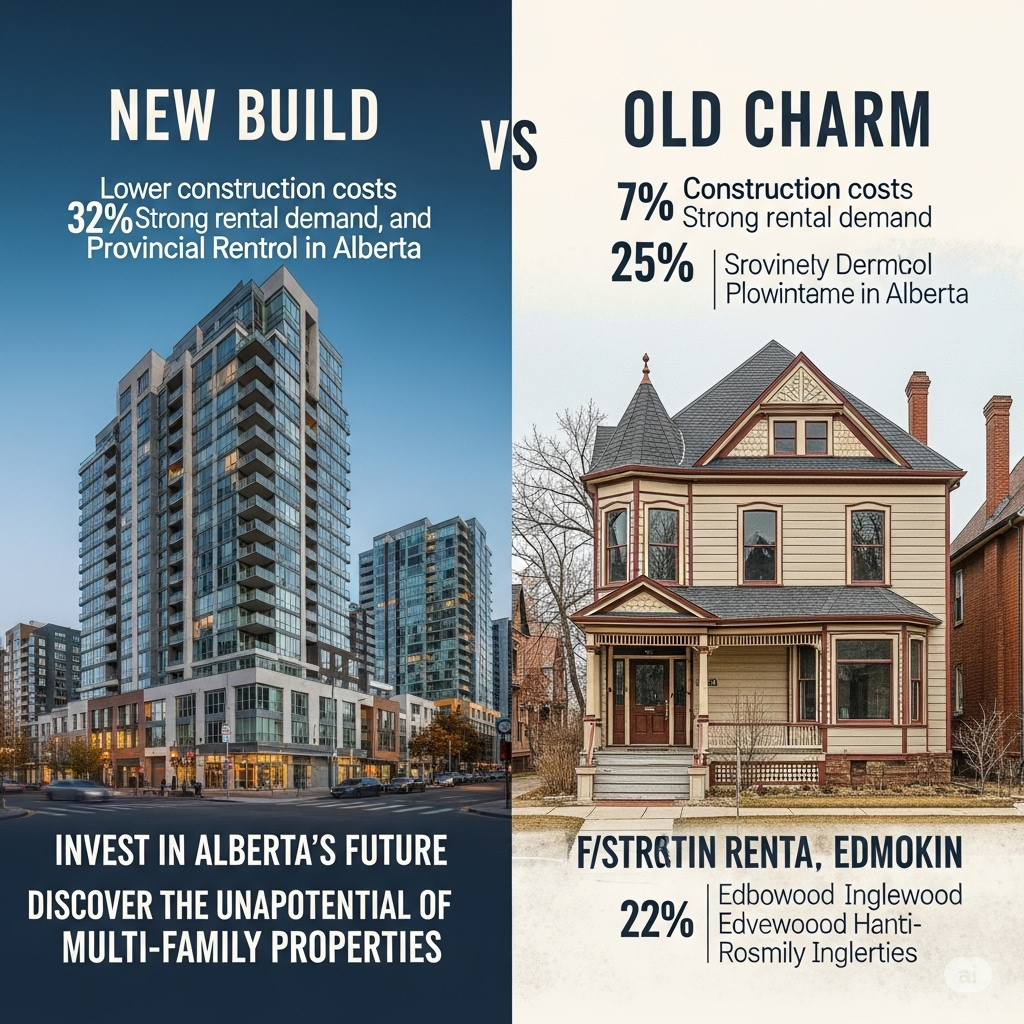
New Build or Old Charm? What Alberta Investors Need to Know Before Buying Their Next Multi-Family Property

In Alberta’s evolving real estate market, multi-family property investment in Alberta presents investors with an important choice: should you choose a modern new build or an older multi-family property with renovation potential? New builds offer modern features and lower initial maintenance, while existing properties can provide rental income and opportunities to increase value. In growing markets like Calgary and Edmonton, both options have their advantages. Understanding the costs, rental potential, and risks can help you choose the property that best fits your investment goals and budget. Why Consider a New Build? Let’s start with the fresh stuff. In cities like Edmonton’s Blatchford area or Calgary’s Seton and Livingston, new multi-family developments are springing up—and for good reason. Here’s why investors are paying attention: 1. Lower Immediate Maintenance Costs New plumbing. New electrical. New roof.It’s all built to code, and likely under warranty for 5–10 years. That means fewer surprises and more predictable operating costs early on. Many first-time multi-family investors start with new 4-plexes because of the peace of mind it brings. 2. Energy Efficiency = Long-Term Savings + CMHC Incentives Modern builds are often more energy-efficient, which is huge in Alberta’s cold winters and hot summers. Some qualify for CMHC’s MLI Select program, which offers: Up to 95% loan-to-value (LTV) 50-year amortizations Lower interest rates for properties with green and accessible features This can supercharge your financing and make a new build more affordable than it looks. 3. Higher Tenant Appeal = Higher Rents Tenants in 2025 expect: In-suite laundry Open-concept kitchens Secure parking Smart home tech New buildings lease up faster and often command higher rents, especially in family-friendly zones of Calgary like Mahogany or Evanston. ⚠️ But Watch Out For: Higher up-front costs: Per-unit pricing can be steep Delayed cash flow: You may need to lease up from scratch Development risk: If you’re buying pre-construction, timelines can stretch New Build vs. Existing: The Alberta Angle Alberta stands out in a few ways: Lower construction costs compared to BC or Ontario Strong rental demand, especially from newcomers and young professionals No provincial rent control, which gives value-add investors room to grow rents after improvements In Calgary, you’ll see many purpose-built rental projects in areas like Legacy, Currie, and Downtown East Village. In Edmonton, Inglewood, Oliver, and Ellerslie are seeing both revitalized buildings and new construction side-by-side. Final Thoughts Whether you choose a new build or an existing property, the right investment depends on your budget, goals, and risk tolerance. Evaluate the costs, rental potential, and long-term value before making a decision. With careful planning, both options can offer valuable opportunities in Alberta’s multi-family market. Frequently Asked Questions (FAQs) Is a new build or an older multi-family property better for investment in Alberta? A new build may offer lower initial maintenance costs and modern features, while an older property can provide rental income and opportunities to increase value through renovations. The best choice depends on your budget and investment goals. What should investors consider before buying a multi-family property in Alberta? Investors should evaluate the purchase price, rental income, operating expenses, property condition, financing options, and long-term appreciation potential before making a decision. Are older multi-family properties profitable in Calgary and Edmonton? Older properties can generate strong returns when rental demand is steady and renovation costs are carefully managed. Investors should inspect the building and calculate potential cash flow before purchasing.   Do new multi-family properties qualify for CMHC MLI Select? Some eligible multi-family properties may qualify for CMHC MLI Select financing, depending on program requirements and criteria such as affordability, energy efficiency, and accessibility. How can investors compare new builds and existing multi-family properties? Investors can compare total acquisition costs, expected rental income, maintenance expenses, vacancy risks, and future improvement opportunities to determine which property best suits their investment strategy. Hafil Perincheeri Co-Founder & Director Linkedin Envelope Instagram Hafil Perincheeri is an engineer-turned-realtor, investor, and builder based in Calgary, Canada. As Co-Founder and Director of Greencasa, he specializes in home flips, property development, and investment strategies. Since 2019, he has guided clients in home buying, multifamily investing, and financing options like CMHC and MLI Select, ensuring transparent, informed decisions. Get A Free Quote Green Casa Contact Form Full NamePhone NumberEmailCityServices– Select –Property ManagementConstruction ConsultancyCapital InvestmentMLI Select Program GuidanceDescribe your Requirement:Submit

Scroll to Top

Compare