Green Casa Commercial

Get In Touch

Green Casa Popup Form

Multifamily and New Builds

Mahogany real estate tenant profiles and lease stability
Blog, Condo Management, Multifamily and New Builds

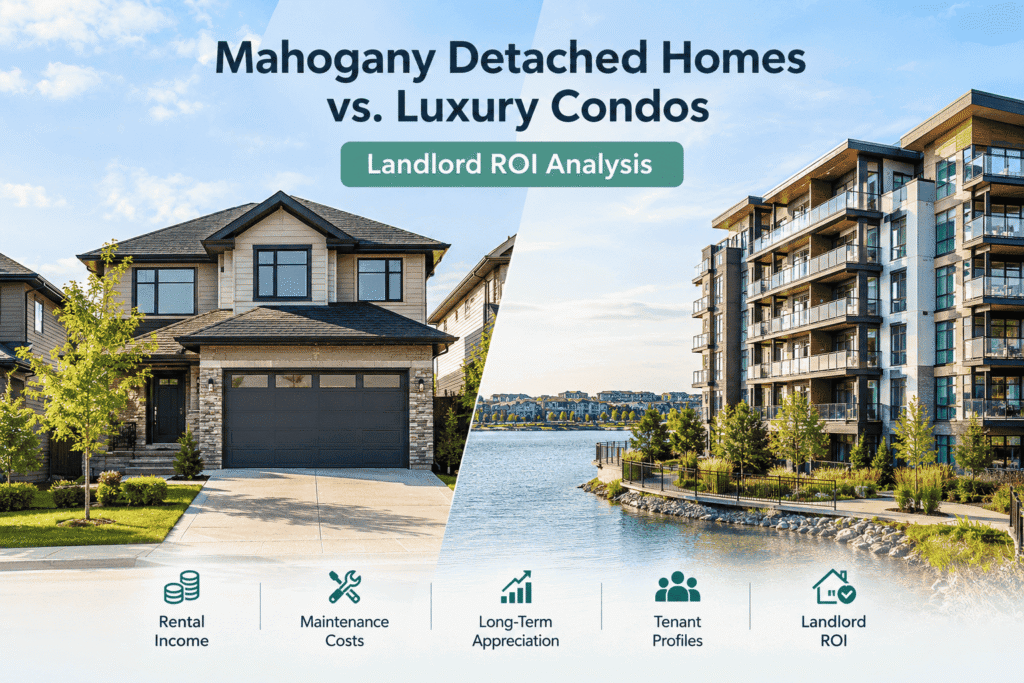
Mahogany Detached Homes vs. Luxury Condos: Landlord ROI Analysis

Choosing the right asset type is the foundation of any successful real estate investment strategy. When investing in Mahogany real estate, landlords face a clear choice: acquire high-end detached family residences or invest in modern luxury condo units. Both property classes perform remarkably well in this master-planned lake community, but they deliver returns in fundamentally different ways.

Legacy Calgary townhomes and detached homes
Blog, Calgary Neighbourhoods, Multifamily and New Builds

Legacy Townhomes vs. Detached Homes: Investor ROI Breakdown

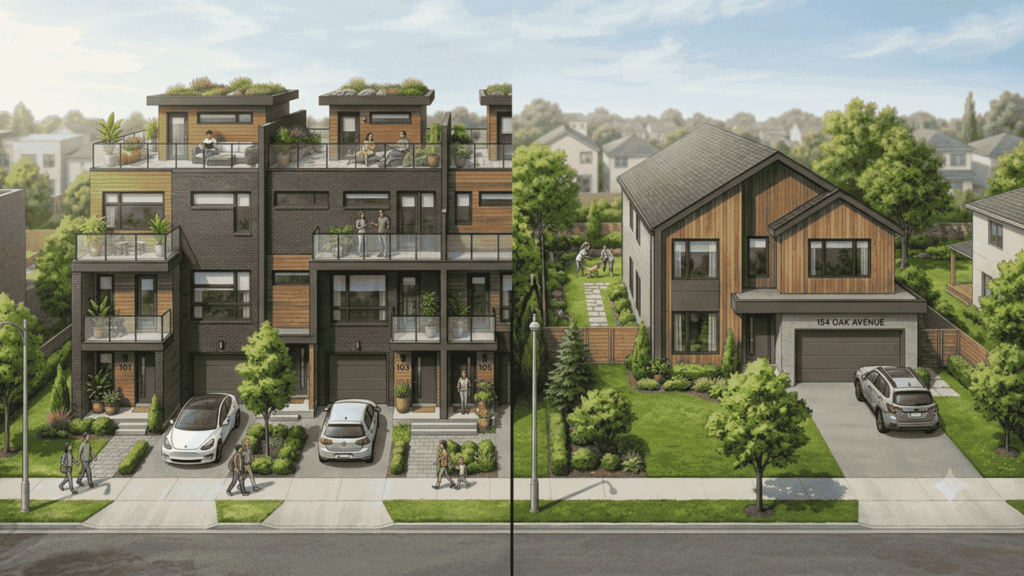
When expanding your real estate holdings in southeast Calgary, deciding which property structure to buy is one of the most important decisions you will make. Looking closely at Legacy Calgary townhomes for rent reveals a highly attractive strategy for investors seeking strong cash-on-cash returns, modern floor plans, and low exterior maintenance costs. I have helped many property owners evaluate these exact choices, and both attached and detached homes offer distinct financial advantages depending on your long-term wealth goals. While detached homes offer larger floor plans and higher total monthly rent prices, multi-family townhomes provide an accessible entry point with predictable exterior maintenance managed by a condo corporation. To build a profitable portfolio, you need to weigh how purchase prices, ongoing maintenance obligations, and tenant profiles compare across both housing types in this master-planned community. Let’s dive into the financial breakdown so you can invest with total confidence. Acquisition Costs and Capital Requirements Your initial cash outlay sets the baseline for your monthly mortgage servicing and net cash flow. Legacy features a modern housing stock built by top-tier Calgary builders, giving investors exceptional quality across all price brackets. Multi-Family Townhomes: Townhomes in Legacy require significantly less upfront capital, making them ideal for investors looking to acquire multiple units or enter the market without over-leveraging. Lower purchase prices translate directly into lower down payments and smaller monthly mortgage payments. Detached Single-Family Homes: Detached houses require a larger initial capital investment and higher debt servicing. However, purchasing a single-family home gives you sole ownership of the underlying land, driving superior long-term capital appreciation over time. Analyzing Cash Flow Metrics and Monthly Margins Evaluating net operating income requires looking past gross rent numbers to account for fixed operating expenses like condo dues and property taxes. Townhome Rent Rates: Modern townhomes in Legacy command strong monthly rents, typically ranging between $1,900 and $2,400 per month depending on garage configurations and square footage. When paired with a lower mortgage obligation, the consistent spread often results in a higher cash-on-cash return percentage on your initial investment. Single-Family Rent Rates: Full-sized detached homes in Legacy command higher overall rental rates, frequently renting for $2,500 to $3,200+ per month. While gross revenue is higher, landlords hold sole responsibility for all exterior maintenance costs, land upkeep, and structural reserve funds. Exterior Maintenance Obligations: Townhome owners pay mandatory monthly condo fees that cover exterior building insurance, roof repairs, siding maintenance, and common groundskeeping. This shifts major exterior maintenance risks o Tenant Profiles and Lease Renewal Trends Understanding who will live in your investment property allows you to tailor your finishes and management style for maximum lease stability. A well-maintained Calgary townhouse can appeal to young professionals, couples, and small families looking for modern living spaces with less exterior maintenance than a detached home. The Townhome Tenant Profile Attached townhomes in Legacy appeal heavily to young professionals, starter families, healthcare workers commuting to Seton, and downsizing retirees. These renters value modern interior finishes, attached garages, and a low-maintenance lifestyle that eliminates weekend lawn care and winter snow shoveling. The Single-Family Tenant Profile Detached homes attract established families seeking long-term stability near local schools and parks. These tenants typically sign multi-year lease agreements to keep their children in the same school catchments. Because they treat the property like their own long-term residence, single-family homes experience exceptionally low tenant turnover rates. Alberta Landlord Responsibilities and Heating Maintenance Regardless of whether you choose an attached townhome or a detached single-family house, complying with provincial tenancy laws is mandatory. According to Alberta’s Residential Tenancies Act, landlords are legally required to keep rental properties in good repair and ensure heating systems maintain a minimum temperature of 22°C (72°F) during winter months. A heating failure during a severe freeze cycle can lead to frozen pipes, major water damage, and emergency repair bills. Establishing a regular HVAC inspection schedule protects your financial investment across all Legacy Calgary rental properties. Proactive Maintenance Guidelines for Landlords Annual Technical Check: Schedule a licensed gas technician to inspect furnaces, burners, and heat exchangers every fall before cold weather arrives. Regular Filter Changes: Replace furnace filters every 2 to 3 months to prevent system strain, lower utility bills, and protect indoor air quality. Documented Inspection Logs: Maintain dated, signed service receipts after every maintenance visit as official proof that you are complying with provincial housing standards. Streamlining Management with Legacy Calgary Property Management Managing multiple rental units while balancing your personal life can quickly become stressful. Professional Legacy Calgary property management provides the complete operational support required to keep your portfolio running smoothly. We manage every phase of the tenancy lifecycle, from strategic rental pricing and targeted digital advertising to thorough credit screening, lease execution, and routine inspections. We also handle condo board communications and rule enforcement for townhome properties, ensuring your renters stay fully compliant with all community bylaws. Partnering for Success with Transparent Management Fees Scaling your real estate investments requires clear financial visibility. Partnering with an expert team that offers competitive Calgary property management fees ensures you maintain full transparency over your net rental yields. Our comprehensive management approach takes the guesswork out of property ownership. By pairing the right property type in Legacy with proven, professional management systems, you build a stress-free real estate portfolio that generates consistent passive income for years to come. Legacy Calgary townhomes offer investors a practical option for balancing rental income, maintenance costs, and long term investment goals. Frequently Asked Questions (FAQs) Are Legacy Calgary townhomes for rent easy to keep occupied? Yes. Townhomes in Legacy are in extremely high demand due to their modern layouts, attached garages, and low-maintenance appeal. They consistently attract qualified young professionals, healthcare staff, and starter families. What is the main financial advantage of investing in a townhome over a house? Townhomes require lower upfront purchase prices and smaller down payments. This lower debt service often generates a higher percentage cash-on-cash return on your invested capital compared to buying a detached home. Who handles exterior maintenance for a rental 10

Multi-family real estate investment comparing new builds and existing properties in Alberta
Blog, Multifamily and New Builds

Alberta Investors Face-Off: Brand New Builds vs. Value-Add Classics in Multi-Family Real Estate

Calgary and Edmonton are buzzing with real estate activity, making multi-family real estate an attractive option for investors in Alberta. Investors have two tempting choices: buy a modern new build in a trendy neighbourhood or purchase an older building and renovate it for strong cash flow. Both approaches offer unique benefits depending on your investment goals. This decision can shape your strategy for the next 5 to 10 years. So, let’s compare both options side by side, looking at costs, rents, risks, and rewards, with a special focus on the Alberta advantage. The Case for New Builds in Alberta In the last five years, Calgary and Edmonton have seen an explosion in newly built duplexes, triplexes, and 4-plexes. Investors love them for their simplicity, design, and financing incentives. Predictable Performance Lower vacancy rates Fewer repair emergencies Brand-new systems (furnace, roof, HVAC) With a new build, you can budget with greater confidence, especially in the first 5–10 years. CMHC’s MLI Select Makes It Even Better Did you know your new 4-plex in Calgary with energy-efficient heating and universal design features could qualify for: 95% LTV Reduced insurance premiums Amortization up to 50 years That’s a game changer for investors trying to reduce monthly carrying costs. Modern Design Means Higher Rents Today’s renters are willing to pay a premium for: Contemporary kitchens Air conditioning Secure entrances On-site parking In new Calgary suburbs like Seton, Cornerstone, or Skyview Ranch, rents for new 4-plex units can exceed $1,800/month. The Case for Existing Multi-Family Buildings Alberta’s inner cities are filled with charming mid-century buildings just waiting for a facelift. Many have solid bones and a huge upside. Value-Add = Forced Appreciation You buy a 10-plex in Edmonton for $1.8M. Rents are $900/month. After some light renos, paint, appliances, and flooring, you raise rents to $1,150. That $250/unit increase? It adds $500,000–$700,000 in value on paper. That’s how you build wealth fast without waiting for the market to appreciate. Lower Barrier to Entry You may find older 4-plexes for under $900,000 in parts of Edmonton and under $1.2M in Calgary, especially in older areas like Bowness, Dover, or Abbottsfield. This makes it ideal for newer investors or partnerships pooling capital. More Creative Control You can design the renovation, pick the finishes, reposition the building, and shape the tenant base. That’s powerful when building a brand or vision. Side-by-Side Recap: What Should You Choose? Feature New Build Existing Property Initial Cost Higher Lower Maintenance Needs Minimal (for 5–10 years) Higher, varies by age and condition Rent Potential High (modern finishes, appeal) Medium (depends on upgrades) Financing CMHC MLI Select available CMHC MLI Select for reno projects Cash Flow Often lower early on Higher if bought and renovated smart Investment Style Passive, clean, turnkey Hands-on, value-add, high ROI Final Word: Build New or Rebuild Old: Just Start Smart Whether you go for the polished new build or the classic fixer-upper, what matters is that you know the numbers, understand your goals, and have the right support. Green Casa Property Management works with both types of investors, helping manage new 4-plexes, 20-unit walk-ups, and everything in between. From tenant placement to maintenance and compliance, we’ve got your back. Frequently Asked Questions (FAQs) What is the difference between new builds and existing multifamily properties? New builds offer modern designs and lower initial maintenance needs, while existing properties may provide opportunities to increase rental income through renovations. Which is better for multi-family real estate investment in Alberta? The right choice depends on your budget, investment goals, rental demand, and willingness to manage renovation costs and ongoing maintenance. Can renovating an older property increase its rental income? es, upgrades to kitchens, flooring, appliances, and other features can make a property more attractive to tenants and potentially increase rental income. How does Calgary property management help multifamily investors? Calgary property management services can help investors handle tenant screening, rent collection, maintenance, and day to day property operations. What should investors consider before buying a multifamily property in Alberta? Investors should evaluate the purchase price, expected rental income, financing options, repair costs, vacancy risks, and long term investment potential before making a decision. Hafil Perincheeri Co-Founder & Director Linkedin Envelope Instagram Hafil Perincheeri is an engineer-turned-realtor, investor, and builder based in Calgary, Canada. As Co-Founder and Director of Greencasa, he specializes in home flips, property development, and investment strategies. Since 2019, he has guided clients in home buying, multifamily investing, and financing options like CMHC and MLI Select, ensuring transparent, informed decisions. Get A Free Quote Green Casa Contact Form Full NamePhone NumberEmailCityServices– Select –Property ManagementConstruction ConsultancyCapital InvestmentMLI Select Program GuidanceDescribe your Requirement:Submit


Multi-Family Property Investment in Alberta
Blog, Multifamily and New Builds

New Build or Old Charm? What Alberta Investors Need to Know Before Buying Their Next Multi-Family Property

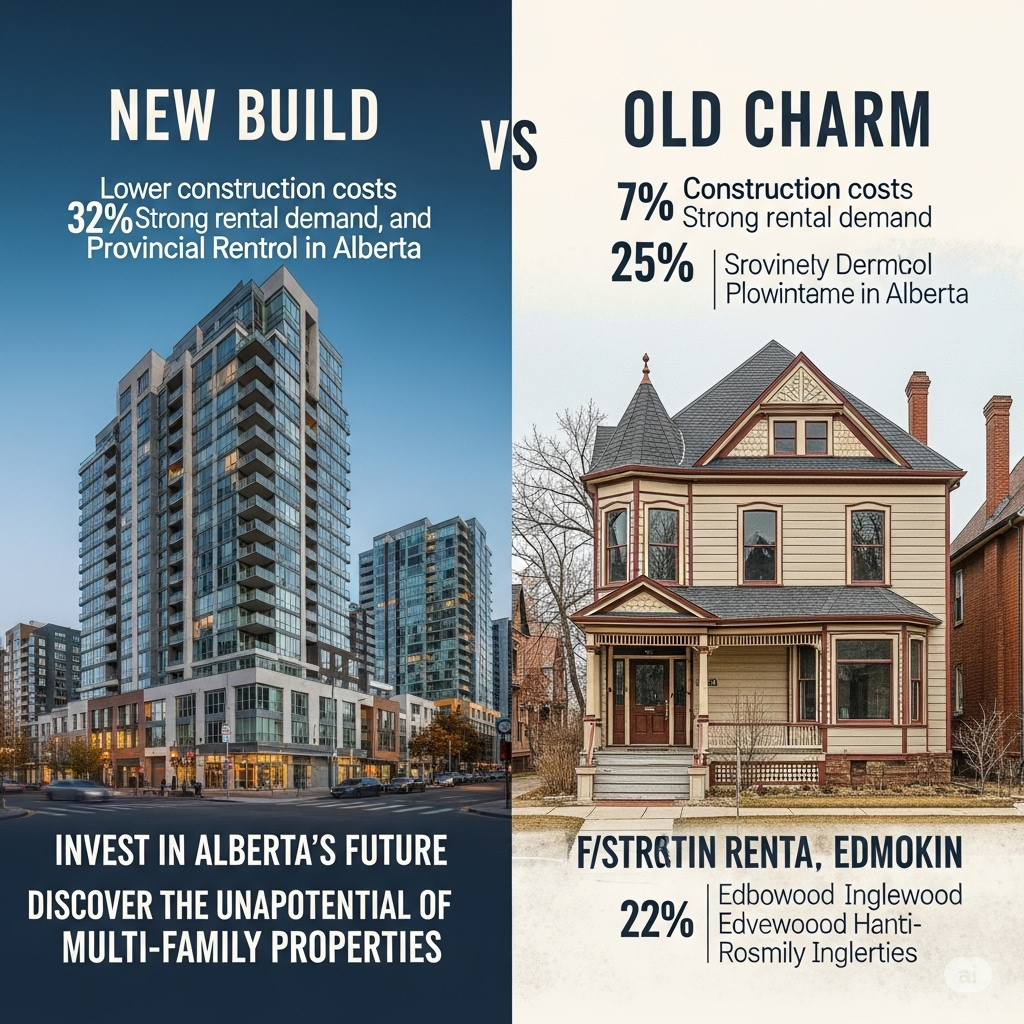
In Alberta’s evolving real estate market, multi-family property investment in Alberta presents investors with an important choice: should you choose a modern new build or an older multi-family property with renovation potential? New builds offer modern features and lower initial maintenance, while existing properties can provide rental income and opportunities to increase value. In growing markets like Calgary and Edmonton, both options have their advantages. Understanding the costs, rental potential, and risks can help you choose the property that best fits your investment goals and budget. Why Consider a New Build? Let’s start with the fresh stuff. In cities like Edmonton’s Blatchford area or Calgary’s Seton and Livingston, new multi-family developments are springing up—and for good reason. Here’s why investors are paying attention: 1. Lower Immediate Maintenance Costs New plumbing. New electrical. New roof.It’s all built to code, and likely under warranty for 5–10 years. That means fewer surprises and more predictable operating costs early on. Many first-time multi-family investors start with new 4-plexes because of the peace of mind it brings. 2. Energy Efficiency = Long-Term Savings + CMHC Incentives Modern builds are often more energy-efficient, which is huge in Alberta’s cold winters and hot summers. Some qualify for CMHC’s MLI Select program, which offers: Up to 95% loan-to-value (LTV) 50-year amortizations Lower interest rates for properties with green and accessible features This can supercharge your financing and make a new build more affordable than it looks. 3. Higher Tenant Appeal = Higher Rents Tenants in 2025 expect: In-suite laundry Open-concept kitchens Secure parking Smart home tech New buildings lease up faster and often command higher rents, especially in family-friendly zones of Calgary like Mahogany or Evanston. ⚠️ But Watch Out For: Higher up-front costs: Per-unit pricing can be steep Delayed cash flow: You may need to lease up from scratch Development risk: If you’re buying pre-construction, timelines can stretch New Build vs. Existing: The Alberta Angle Alberta stands out in a few ways: Lower construction costs compared to BC or Ontario Strong rental demand, especially from newcomers and young professionals No provincial rent control, which gives value-add investors room to grow rents after improvements In Calgary, you’ll see many purpose-built rental projects in areas like Legacy, Currie, and Downtown East Village. In Edmonton, Inglewood, Oliver, and Ellerslie are seeing both revitalized buildings and new construction side-by-side. Final Thoughts Whether you choose a new build or an existing property, the right investment depends on your budget, goals, and risk tolerance. Evaluate the costs, rental potential, and long-term value before making a decision. With careful planning, both options can offer valuable opportunities in Alberta’s multi-family market. Frequently Asked Questions (FAQs) Is a new build or an older multi-family property better for investment in Alberta? A new build may offer lower initial maintenance costs and modern features, while an older property can provide rental income and opportunities to increase value through renovations. The best choice depends on your budget and investment goals. What should investors consider before buying a multi-family property in Alberta? Investors should evaluate the purchase price, rental income, operating expenses, property condition, financing options, and long-term appreciation potential before making a decision. Are older multi-family properties profitable in Calgary and Edmonton? Older properties can generate strong returns when rental demand is steady and renovation costs are carefully managed. Investors should inspect the building and calculate potential cash flow before purchasing.   Do new multi-family properties qualify for CMHC MLI Select? Some eligible multi-family properties may qualify for CMHC MLI Select financing, depending on program requirements and criteria such as affordability, energy efficiency, and accessibility. How can investors compare new builds and existing multi-family properties? Investors can compare total acquisition costs, expected rental income, maintenance expenses, vacancy risks, and future improvement opportunities to determine which property best suits their investment strategy. Hafil Perincheeri Co-Founder & Director Linkedin Envelope Instagram Hafil Perincheeri is an engineer-turned-realtor, investor, and builder based in Calgary, Canada. As Co-Founder and Director of Greencasa, he specializes in home flips, property development, and investment strategies. Since 2019, he has guided clients in home buying, multifamily investing, and financing options like CMHC and MLI Select, ensuring transparent, informed decisions. Get A Free Quote Green Casa Contact Form Full NamePhone NumberEmailCityServices– Select –Property ManagementConstruction ConsultancyCapital InvestmentMLI Select Program GuidanceDescribe your Requirement:Submit
Alberta Investment Strategy
Multifamily and New Builds

New Build vs Existing Multi-Family: Which Alberta Investment Strategy Wins in 2026?

You are standing at a crossroads in Alberta’s family market. To your left you have a brand development with modern finishes and energy-efficient systems. To your right you have a building that’s a little tired but is in a great location with rents that are lower than the market average and a lot of potential. Which path should you take? The decision to go with a build or an existing multi-family property is a very important one for investors in Alberta in 2026. Alberta is a place to invest in multi-family properties. There are reasons for this. First, Alberta does not have a sales tax. This means that you will not have to pay much when you buy a property. Second, it is not as expensive to build in Alberta as it’s in other places like Vancouver or Toronto. This makes it more possible to build properties. Third, Alberta does not have rules that control how much rent you can charge. This gives investors freedom to set their own rents. Fourth, there are a lot of people moving to Alberta and a lot of professionals who need places to live. Finally, the cities of Calgary and Edmonton are making it easier to build family housing by changing their zoning rules. All of these things make Alberta a great place to invest in family properties. The Case for New Builds in Alberta Lets look at the advantages of builds in Alberta. In cities like Calgary and Edmonton, new multi-family developments are being built. These new builds have advantages.  Lower Immediate Maintenance Costs They have maintenance costs right away. This is because everything is new and under warranty for 5 to 10 years. This means that you will not have to worry about surprise repairs for a while. Many first-time investors like to start with builds because they are less stressful. When you are deciding between a build and an existing property, the fact that new builds have lower maintenance costs is a big plus. Energy Efficiency and CMHC Incentives New builds are also more energy-efficient. This is important in Alberta, where the winters are cold and the summers are hot. Some new builds can even get financing from the Canada Mortgage and Housing Corporation. This financing can give you an interest rate and a longer time to pay back the loan. However, there is a deadline for this financing. After September 30 2026 new developments will have to meet energy efficiency standards. Higher Tenant Appeal = Higher Rents New builds also have appeal to tenants. Tenants like finishes and amenities like in-suite laundry and secure parking. New builds can rent for higher prices especially in areas that are popular with families. In some areas of Calgary rents for 4-plex units can be over $1,800 per month. The Downsides of New Builds However new builds also have some downsides. They are more expensive to buy upfront. You may also have to wait a while to start getting rent money because you have to lease up the property from scratch. If you buy a property before it is built the timeline can be longer than you expect. In a market where not many new properties are being built the supply of new builds is limited. The Case for Existing Multi-Family Properties Now let’s look at the advantages of existing multi-family properties. These properties may not be as flashy as builds but they can be a great investment. You can often buy an existing property for 20 to 30 percent less per unit than a build. This means that you have money to spend on renovations or other things. Existing properties can also give you cash flow because they already have tenants. You can also increase the value of the property by making renovations and then refinancing the property. The Downsides of Existing Properties Existing properties also have some downsides. They may need repairs, which can be expensive. The layout of the property may not be as modern as some tenants like. Older properties require work to manage and maintain. Here is a comparison of new builds and existing properties: * New builds have upfront costs but lower maintenance costs. * Existing properties have purchase prices but may need more repairs. * New builds can rent for higher prices but may take longer to lease up. * Existing properties can give you cash flow right away but may not be as modern as some tenants like. Which Strategy Wins in 2026? The best strategy for you will depend on your goals. What you are looking for. If you want an investment with predictable costs, a new build may be the way to go. If you are willing to put in some work, an existing property can give you a lot of potential for growth. Alberta is a place to invest in multi-family properties. The market is strong. There are a lot of opportunities to make money. Whether you choose a new build or an existing property, you can make a good investment if you do your research and understand the market. Conclusion Alberta is a good place because it does not have a provincial sales tax. The cost of building something in Alberta is also lower than in British Columbia or Ontario. Alberta has no rules that control how much rent can be charged, which’s good for people who own buildings. There are a lot of people who want to rent homes in Alberta so that is good for the people who own these homes. The government of Alberta is also making it easier for people to build homes and businesses by changing some of the rules, which is really helpful, for Alberta and the people who live there and for the province of Alberta. Frequently Asked Questions (FAQs) What are the main advantages of new build multi-family in Alberta? New builds offer amenities, lower maintenance costs, and energy efficiency. They can also get financing from the Canada Mortgage and Housing Corporation. What 10

multi family vancouver
Multifamily and New Builds

Value Add Multi Family in Vancouver: How to Unlock Hidden Potential in Older Buildings

I have walked past apartment buildings and thought that with a little work they could be really nice. I am not the one who thinks this way. In Vancouvers 2026 market value add multi family investing is a strategy for investors who are willing to put in some effort and unlock the hidden potential of these buildings. There are a lot of buildings in the market and they are having a hard time finding tenants but older buildings are doing better. The vacancy rate for buildings is very low at 2.7 percent while new buildings have a much higher vacancy rate of 11.6 percent. This means that old buildings in locations can be bought at a reasonable price renovated and then rented out for a higher price. In this guide I will explain the value add family strategy, how to find the right deals and the steps to follow to successfully renovate a building in Vancouvers unique market.   Why Value Add Multi Family Works in Vancouver I want to explain why value add family is a good idea in Vancouver right now. First the market is changing. 24,000 New rental units will be available in the next two years, which means that there will be more empty apartments and rents will go down especially for new buildings. New buildings are having a time.. Older buildings that were built a long time ago are doing better. Second the rate of return on investment has changed. In the quarter of 2026 the rate of return on apartment buildings in Vancouver ranged from 3.4 percent in Kitsilano to 4.9 percent in Fairview. This change creates an opportunity for value add investors to buy buildings at a price. Third the zoning policy in Vancouver is changing, which is making it easier for people to invest in multi family homes. One third of the money spent on properties in 2024 was for multiplex redevelopment. The government is making it easier for people to build homes in the same area, which is creating opportunities for smart investors. Identifying the Right Value Add Multi Family Deal Not all old buildings are good for value add multi family investing. Here is what I look for in a building. I look for buildings with rents that’re lower than the average rent in the area. The Maples is a 38 unit building in Marpole where the rentsre 23.51 percent lower than the average rent in the area. This is the kind of potential for increase in rent that makes value add investing work. When the tenants move out the rent can be increased to the rate, which will increase the income from the building and its value. I also look for buildings that have not been well maintained by the owners. These buildings often have the potential for improvement. I can fix the problems with the building make it look better and then charge a rent. The Aldon Apartments in Vancouvers West End is a building that has a lot of potential for improvement. It is described as an opportunity for value add investing with the potential to increase its value through renovations and better management. The location of the building is also very important. I look for buildings that’re close to public transportation, shops and employment centers. Vancouvers West End Mount Pleasant and Marpole are all areas where value add family deals are available. Older buildings often have layouts, inefficient systems and missing amenities. By modernizing the kitchens, bathrooms and common areas I can make a building into a desirable rental property. The Value Add Playbook: Renovation Strategies That Work Once I have bought a property here is how I renovate it to increase its value. I start by renovating the units. I put in kitchens with new countertops, appliances and cabinets. I also renovate the bathrooms with vanities, fixtures and tiles. Many tenants expect to have a washer and dryer in their unit so I add those well. These renovations justify rents and attract better tenants. I also improve the areas, such as the lobby, hallways and outdoor spaces. A fresh coat of paint flooring and updated lighting can make a big difference in how the building looks. These improvements also help justify rent increases. The mechanical, electrical and plumbing systems in buildings often need to be updated. By installing energy systems I can reduce the operating costs of the building and make it more environmentally friendly. This can also help me qualify for government incentives. Adding amenities such as bike storage, package lockers and shared outdoor spaces can make my building more attractive to tenants. These amenities can help differentiate my building from others in the area. Sometimes the biggest improvements come from management. By improving the way I screen tenants collect rent and maintain the building I can significantly increase the operating income. Financing Value Add Multi Family in Vancouver Financing is a part of any value add multi family strategy. The good news is that there are government programs to help finance these projects. I can get a loan of up to 95 percent of the value of the building with a repayment period of up to 50 years. I can also get a discount on my insurance premiums. For existing buildings I can qualify for these programs by committing to rent some of the units at a rate than the average rent in the area. I can also qualify by making energy upgrades to the building. Conventional commercial financing is also available. The terms are not as good. I would need to put down a deposit and the interest rate would be higher. For a $3 million project this could mean the difference between putting down $150,000 and $600,000. Government financing programs often make the difference between a project that’s feasible and one that is not. The Numbers: What Value Add Multi Family Looks Like in Vancouver Let me give you an example of what value add multi family investing can look 10

New Build vs. Existing Multi-Family in Vancouver
Multifamily and New Builds

New Build vs. Existing Multi-Family in Vancouver: Which Investment Strategy Wins in 2026?

Imagine you are standing in Vancouvers -family market. You have two options. On one side you see a brand development with modern finishes and energy-efficient systems. On the side you see an old 1970s walk-up with low rents and a lot of potential. Which one should you choose? This is a decision for investors in Vancouver in 2026. 24,000 rental units are coming to the market in the next two years. The vacancy rate is at 3.7 percent and construction costs are around $400 to $475 per foot. So it is really important to think about whether to build something new or buy an existing building. The Vancouver Context: A Market at a Crossroads Vancouver’s multi-family market is changing. After years of very low vacancy and rising rents the market is now adjusting to a lot of new construction. In 2025 the city saw the new rental units in forty years. The vacancy rate is now at 5.0 percent overall. It varies by building type. The nicer buildings are seeing a vacancy rate of 11.6 percent while the older buildings are seeing a vacancy rate of 2.7 percent. What does this mean for you? If you build something you might have trouble renting it out. Investors are looking for returns to make up for the fact that rents might not be as high next year. You need to understand what is happening in the market before you make a decision. New Build Multi-Family: The Shiny New Toy New buildings are nice because they have amenities like in-suite laundry and fitness centers. These things attract tenants who’re willing to pay more. New buildings are also having trouble renting out units. The vacancy rate for buildings is almost 40 percent. It is taking a time to fill these buildings and developers are not getting the rents they thought they would. CMHC MLI Select Incentives There is a program called CMHC MLI Select that can help with financing for buildings. You can get a loan with an interest rate and a long repayment period. You have to meet certain standards for energy efficiency. If you do you can get a discount on your loan. This can be a help for new construction projects. However building something is expensive The cost of construction in Vancouver is very high. It can cost between $400 and $475 per foot to build a wood-frame multiplex. It takes a long time to build something new. You have to consider all these costs and risks when you are deciding whether to build or buy. Existing Multi-Family: The Value-Add Opportunity Existing buildings are another option. They often have purchase prices and a lot of potential for renovation and improvement. For example: There is a building called The Maples in Marpole that has 38 units. Twenty-seven of the units have already been renovated. The rents are still lower than market rate. This means there is room to increase the rents and make money. Lower Purchase Price and Value-Add Potential Another example is the Aldon Apartments in Vancouvers West End. This building has 23 suites. Is a good opportunity for investors who want to add value. The building needs some work. It is priced low enough that you can make some repairs and increase the value. Renovation and Rent Growth Existing buildings can be a choice because you can make them more valuable by renovating them. You can increase the rent. Make more money. And existing buildings are often fully rented so you can start making money away. The CMHC MLI Select program is also available for existing buildings. You can get a loan with an interest rate and a long repayment period if you agree to make some energy-efficient upgrades. This can be a help for existing building owners. CMHC MLI Select for Existing Buildings Existing buildings also have some challenges. They often need repairs and maintenance which can be expensive. There are rules in Vancouver about how much you can raise the rent, which can limit your income. The Catch: Deferred Maintenance and Renovation Costs So which is better? New. Existing multi-family? It depends on what you want and what you’re willing to take on. If you have a lot of money and are willing to wait building something might be a good choice. If you want to make money right away and are willing to do some work an existing building might be better. Head-to-Head Comparison: New Build vs Existing Multi-Family Here is a comparison of new build and existing multi-family: Purchase price: New build is more expensive, existing buildings are less expensive.  Cap rate: Existing buildings often have higher cap rates  Vacancy risk: New builds have higher vacancy rates  Maintenance: New builds need maintenance at first but existing buildings need more work  Renovation potential: Existing buildings have potential for renovation and increase in value  MLI Select points: New builds can get points for energy efficiency existing buildings can get points for energy retrofits and affordability  Rent growth: Existing buildings have potential for rent growth  Construction timeline: New builds take longer to construct existing buildings are ready to rent out away Which Strategy Wins in 2026? The answer to which strategy is better depends on you. If you have a lot of money and are willing to wait new construction might be a choice. If you want to make money right away and are willing to do some work existing buildings are a good option. Some people think that the market is just going through a cycle and will recover. As one expert said, “This is a normalization after an overheated period it’s not a structural weakening”. The market will eventually get better. When it does well-located and well-managed properties will do well. Conclusion In conclusion the decision to build something or buy an existing building in Vancouvers multi-family market is a big one. You need to think about the market, your goals and what you are willing to take on. New builds have amenities and can get 10

Multifamily and New Builds

Unlock 5% 50-Year Amortization: Your 2026 Blueprint for MLI Select Success

Do you want to buy a big apartment building but think you need a lot of money for a down payment? I used to think that until I found out about the CMHC MLI Select program. In 2026 getting the MLI Select points is the best way for investors to buy multi-family properties with just 5 percent down and loans that can be paid back over 50 years. The program uses a points system with three parts: affordability, energy efficiency and accessibility. If you get 100 points you get the deal. 95 Percent loan-to-value financing, 50-year amortization and a 30 percent discount. In this guide I will show you how to get the MLI Select points, what you need to do to reach each level and how the September 30, 2026 deadline affects your plan. Lets unlock the potential of this great program together. . What Makes MLI Select So Powerful? Let me tell you why this program is so good. Imagine you want to borrow money to buy a $10 million apartment building. The bank would usually want 25 to 30 percent down. That’s $2.5 to $3 million in cash. With MLI Select you can get a loan with 5 percent down. That’s $500,000 for the same building. The 50-year amortization means your monthly payments are much lower so you have money from day one. When you get the MLI Select points you are not just getting a loan. You are changing the way your deal works. The program offers interest rates around 4.25 to 5.00 percent as of April 2026, which is lower than usual commercial loans. The combination of down payments, longer amortization and good rates can make deals work that would not have worked before. Understanding the Three Pathways to Maximum Points The MLI Select points system has three parts. Each one is a way to get the most points. Think of them as three things you can do to reach your goal. You get points for affordability by keeping some units at rents. You get points for energy efficiency by building or fixing up your building to use energy. You get points for accessibility by designing units that’re easy for everyone to use. The minimum score you need is now 50 points, up from 12 points. The three levels of points give you better loans: 50 points gives you 85 percent loan-to-value 40-year amortization and a 10 percent discount. Seventy points gives you 95 percent loan-to-value 45-year amortization and a 20 percent discount. One hundred points gives you the deal: 95 percent loan-to-value 50-year amortization and a 30 percent discount. When you get the MLI Select points every point counts. The difference between 70 and 100 points on a $10 million project can save you around $160,000 to $180,000 in insurance costs. Affordability: The Powerful Way to Get Points Let me be honest with you. The affordability way is often the best way to get the most MLI Select points. It’s the way to get 100 points on its own. CMHC says a unit is affordable if the rent is not than 30 percent of the average renters income in your area. Here’s how the scoring works: if you keep 10 percent of units at rents for 10 years you get 30 points. If you keep 15 percent of units at rents you get 50 points. That’s enough to qualify your project right away. If you keep 25 percent of units at rents for 20 years you get the full 100 points. For investors who want to get the MLI Select points this is often the easiest way. In Calgary, where the renters income is around $77,000 an affordable rent would be around $1,925 per month. In Vancouver, where incomes and rents are higher the math is different. But the idea is the same. The affordability way is a trade-off: you get lower rent on some units but you get a much better loan for the whole building. Energy Efficiency: Going Green to Boost Your Score Energy efficiency is the way to get the most MLI Select points and it can give you up to 50 points. You get points for using energy than the baseline standards. The current standards are the 2015 National Building Code and 2017 National Energy Code. Only until September 30 2026. After that projects have to meet the 2020 standards. The points you get for energy efficiency depend on how much you improve: if you reduce energy consumption by 15 percent you get 20 points. If you reduce it by 25 percent you get 35 points. If you reduce it by 40 percent you get the 50 points. You need to work with an energy advisor to model your building and prove that you met the standards. For investors who want to get the MLI Select points it’s crucial to think about energy upgrades early in the design process. Things like insulation, energy-efficient heating and cooling systems, LED lights, smart thermostats and solar panels can all help you get a higher score. The September 30 deadline makes this important. If you want to qualify under the standards you need to act now. Every month you wait is a month closer to requirements. Accessibility: Designing Units That Are Easy to Use The way to get the most MLI Select points is accessibility, which can give you up to 50 points. Before you can get any accessibility points all your units have to be “visitable”. That means someone can safely enter the unit move around and use the bathroom. Once you meet this standard here’s how the scoring works: if 15 percent of units are accessible you get 20 points. If 15 percent of units are accessible. 85 Percent are designed for everyone or if all units are designed for everyone you get 30 points. You can also get points if you get certified by the Rick Hansen Foundation. A standard certification gets you 20 points and a Gold certification gets 10

Multifamily and New Builds

Master Multi-Family Property Management: Your 2026 Guide to Running Buildings Like a Pro

Let me ask you something. Have you ever tried managing a 20-unit apartment building on your own? I have.. I can tell you that managing a multi-family property is really tough. It is not about collecting rent and fixing things that are broken. You are running a business with many tenants, complex schedules for maintenance and a lot of rules to follow. In 2026 it is very important to do things so you can protect your investment. In this guide I will walk you through the things you need to know to manage a multi-family property. Whether you have a building or a big one this will help you run it well and make the most money. Why Multi-Family Management Is Different Managing a multi-family building is not like renting out a single house. I learned this when I started managing a building. In a house you have one tenant and one set of problems. In a -family building you have many tenants who share walls, parking and other spaces. One roof covers everyone and one heating system keeps everyone warm. The good thing is that it can be easier to manage units in one building than many houses all over the city.. It can also be more complicated. When you make a decision it affects people and mistakes can happen quickly. Tenant Relations and Conflict Resolution: Keeping the Peace One of the jobs of a property manager is to keep the peace between tenants. I have had to deal with complaints about noise, parking and trash. As the manager you have to listen to both sides and be fair. I always start by listening to what both sides have to say. Then I look at the rules and the lease agreement. Sometimes a warning is enough to solve the problem.. If it happens again you may need to take stronger action. The key is to be fair and not favor one tenant over another. Maintenance Coordination: Keeping the Building Running Multifamily buildings have many systems that need to be maintained. You have a heating system, a roof, hallways and fire alarms. As the property manager you need to make sure these systems are working well. You need to change the filters test the fire alarms and inspect the roof. Sometimes emergencies happen, like a pipe bursting at midnight. You need to act and call a plumber turn off the water and tell the tenants what is happening. If you do not act fast the problem can get worse. Financial Management: The Numbers That Matter Money is a part of managing a multi-family property. You need to collect rent from all the tenants on time. You need to track who paid and who did not. Some tenants pay by check some by bank transfer and some automatically. You also need to handle security deposits and follow the law. If a tenant is late with the rent you need to call them and charge a fee. If they are very late you may need to start the process to evict them. You also need to pay the bills for the building like utilities and repairs. You need to keep track of all the money coming in and going out. Legal Compliance: Navigating the Rules Multifamily buildings have many rules to follow. As the property manager you need to make sure the building meets all the codes and standards. You need to have working smoke detectors, fire extinguishers and emergency lighting. You need to follow the rules for leases, notices and evictions. If you do not follow the rules you can get in trouble. A professional property management company can help you stay on top of all the rules. The CMHC MLI Select Connection: Financing Your Management Strategy There is a program called CMHC MLI Select that can help you finance your property. It is a kind of insurance for rental buildings with five or more units. You can earn points for things like energy efficiency and accessibility. The more points you earn the better your financing terms will be. As the property manager you play a role in earning these points. You need to keep the building energy accessible and affordable. The September 30, 2026 Deadline: What You Need to Know There is a date to remember: September 30 2026. After this date, the rules for energy codes will change. It will be harder to earn points for energy efficiency. If you are using the MLI Select program, you need to understand how this affects your financing. You need to make sure your building meets the standards so you can get the best financing terms. Professional Management: When to Call in the Experts Not everyone should manage a multi-family building themselves. It can be a lot of work especially if you have a big building. A professional property management company can help you with the day-to-day work, finances and rules. They can find tenants handle maintenance and keep track of the money. If you are an investor from out of town it is a good idea to hire a professional manager. Managing a multi-family building is a big job. You need to pay attention to details be good with people and be good with money. From dealing with tenants to handling finances you need to do things so your investment does well. With programs like CMHC MLI Select managing a property well can help you get financing terms. Whether you have a building or a big one you need to do things right so you can make the most money. Conclusion If you are in charge of a building or you are an investor from another province or you just do not have the time or you do not know how to take care of things from day to day it is a good idea to hire a professional to manage things for you. They will take care of finding tenants keeping the building in good shape watching over the 10

Scroll to Top

Compare