Green Casa Commercial

Get In Touch

Green Casa Popup Form

Condo Management

Mahogany real estate tenant profiles and lease stability
Blog, Condo Management, Multifamily and New Builds

Mahogany Detached Homes vs. Luxury Condos: Landlord ROI Analysis

Choosing the right asset type is the foundation of any successful real estate investment strategy. When investing in Mahogany real estate, landlords face a clear choice: acquire high-end detached family residences or invest in modern luxury condo units. Both property classes perform remarkably well in this master-planned lake community, but they deliver returns in fundamentally different ways.

condo disputes
Condo Management

Navigating Condo Disputes: A Guide for Calgary and Alberta Owners

Condo living is great. Sometimes problems come up. People complain about noise, parking and maintenance. I have been in these situations as a condo owner and as a member of the condo board. Today we will talk about how to deal with these problems in Calgary and Alberta. By the end of this you will know how to solve problems and protect your rights as a condo owner. Common Causes of Condo Disputes Condo disputes happen for reasons. Noise is the problem. When people play music loud walk heavily or have barking dogs it can cause trouble. Parking is another issue. When people park in the spot block other cars or take up all the spaces it makes people angry. Maintenance is also a problem. Leaks, pests and issues with shared areas can cause tension. I have seen all these problems in my building. Condo disputes are always going to happen. So it is very important to know how to deal with them. Condo disputes are a part of condo living. The Role of the Condo Board in Disputes The condo board helps solve problems. They make sure people follow the rules. They talk to owners. Help them resolve issues. They can give warnings or fines. The board is chosen by the owners. They are not professionals. They are the first people to go to when you have a problem. I have been on the board. Solved many problems. Condo disputes are best solved by the board. They know the building and the rules. How to Handle a Noise Complaint Noise complaints are very common. First talk to the person who is being loud. They might not know they are disturbing you. A nice conversation can solve the problem. If that does not work, write down when the noise happens. Keep a record of the dates and times. Then contact the board or the property manager. They can help solve the problem. I have solved noise complaints by talking to the person. Condo disputes do not have to get out of hand. Just talk to each other. Try to solve the problem. How to Handle a Parking Dispute Parking disputes are frustrating. First read the parking rules. Check the rules to see who can park where. If someone is parking in your spot leave them a note. If the problem continues contact the board. They can enforce the rules. I have seen parking disputes solved quickly when people communicate. Condo disputes about parking happen a lot. Just follow the rules. Be respectful to others. How to Handle a Maintenance Dispute Maintenance disputes can be tricky. If you have a leak contact the board or property manager away. Take pictures. Keep records. The board is in charge of the areas. You are in charge of your unit. Sometimes it is hard to know who is responsible. I have seen disputes about leaks and repairs. Condo disputes about maintenance require patience. Work with the board to find a solution. Mediation and Legal Options When you move out your landlord has to give you the money you paid as a deposit. They have to do this within an amount of time usually 14 to 30 days. They can only take out money for things you broke or did not pay for. They cannot take out money for things that are just worn out. You should take pictures of your home when you move in and out to prove what it looked like. How to Prevent Condo Disputes The best way to deal with condo disputes is to prevent them. Read the rules. Follow them. Talk to your neighbors. Go to board meetings. Stay informed. When people respect each other there are problems. I have lived in buildings with communities. Condo disputes are fewer when everyone follows the rules. Be a neighbor and respect others. Conclusion Now you know how to deal with condo disputes. Noise, parking and maintenance issues are common. Talk to each other. Try to solve the problem. The condo board is there to help. Mediation can solve problems without lawyers. Prevention is the way to deal with condo disputes. I have dealt with disputes. Found that respect and communication are key. Your condo community is your home. Keep it peaceful. Condo living is great when everyone gets along. Frequently Asked Questions (FAQs) What is the common cause of condo disputes? The common cause of condo disputes is noise. Parking and maintenance issues are also common.   Who solves condo disputes? The condo board solves condo disputes. They enforce the rules. Help owners resolve issues. What should I do if I have a noise complaint? Talk to the person who is being loud. If that does not work, write down when the noise happens and contact the board. Can I take action, for a condo dispute? Yes, but it is expensive and takes a time. Try mediation first. Going to court should be a resort. How can I prevent condo disputes? Read and follow the rules. Talk to your neighbors. Go to board meetings. Be a member of the community. Hafil Perincheeri Co-Founder & Director Linkedin Envelope Instagram Hafil Perincheeri is an engineer-turned-realtor, investor, and builder based in Calgary, Canada. As Co-Founder and Director of Greencasa, he specializes in home flips, property development, and investment strategies. Since 2019, he has guided clients in home buying, multifamily investing, and financing options like CMHC and MLI Select, ensuring transparent, informed decisions. Get A Free Quote Green Casa Contact Form Full NamePhone NumberEmailCityServices– Select –Property ManagementConstruction ConsultancyCapital InvestmentMLI Select Program GuidanceDescribe your Requirement:Submit

Condo Management

Condominium Fees in Calgary. What They. How to Save.

You found a condo in Calgary. The price is right. The location is perfect. The amenities are amazing. Then you see the monthly condo fees. Your heart sinks. What do these fees actually cover?. Is there any way to reduce them? I have owned condos. Managed them for years. So I know how these fees work. Today you and I will break down condo fees in detail. By the end you will know what you are paying for. You will know how to save money without sacrificing comfort. What Are Condo Fees and Why Do They Exist? Condo fees are monthly payments that every condo owner must pay. They cover the cost of maintaining the areas. They cover the cost of building systems. They also contribute to the reserve fund for major repairs. Without these fees the building would fall apart. Elevators would stop working. The roof would leak. The hallways would be dirty. I have seen buildings with fees fall into disrepair. Because they did not collect money. Condo fees are not a cost. They are an expense to protect your investment. Understanding what they cover is the step. It is the step to appreciating their value. What Do Condo Fees Typically Cover in Calgary? Most condo fees cover categories. Building insurance is an one. This covers the structure and common areas. Your personal belongings and liability are separate. Maintenance of areas includes hallways, lobbies, elevators and landscaping. Utilities for areas include electricity, water and sometimes heating for shared spaces. Management fees pay the property management company. The company that runs the building day to day. The reserve fund is a savings account for repairs. Repairs like roof replacement, elevator upgrades and parking lot resurfacing. Some buildings include heat and water in the condo fees. Others do not. Always ask what is included. Why Do Condo Fees Vary So Much Between Buildings? Condo fees can range from 200 dollars to over 800 dollars per month. Why such a big difference? The age of the building matters. Older buildings need maintenance. They have reserve funds. Amenities matter. A building with a pool, gym, concierge and rooftop garden will have fees. Energy efficiency matters. Buildings with windows and insulation have lower utility costs. Management matters. Some boards are better at budgeting and negotiating contracts. I have seen two buildings with fees 200 dollars apart. Simply because one board managed money better. When comparing types of condominiums in Calgary always look at the fee history. The Reserve Fund. Why It Matters Much. The reserve fund is the important part of your condo fees. This is money set aside for repairs and replacements. A healthy reserve fund should cover least 70 to 80 percent of what the reserve study recommends. If the fund is low you are at risk of an assessment. That is a surprise bill that can be thousands of dollars. I once had a client face a 15,000 dollar assessment. Because the reserve fund was underfunded. Review the reserve study before you buy. Ask how much is in the fund and how much is needed. This is one of the important steps. It is one of the important steps in buying any of the types of condominiums in Calgary. Special Assessments. When Surprise Costs Hit. A special assessment is a fee charged to owners. It is charged to cover underfunded repairs. It can be a one time payment. Spread over several months. Common reasons include roof replacement, elevator repairs or structural issues. Special assessments can be as low as 500 dollars or as high as 50,000 dollars. I have seen owners panic when they receive an assessment notice. The best defense is a funded reserve fund. If the reserve fund is healthy special assessments are rare. Always check the reserve fund before you buy any condo. How to Save Money on Condo Fees. You might not be able to eliminate condo fees.. You can reduce them. First buy in a building with amenities. Do you really need a pool you will never use? Second choose a building with utility costs. Look for energy windows and heating systems. Third get involved in the board. You can help make financial decisions. Fourth shop around for contracts. Contracts for landscaping, cleaning and maintenance. Fifth consider land condos. They often have fees. I have saved hundreds per year. I saved hundreds per year by choosing a building with amenities. Think about what you use. What Happens If You Do Not Pay Your Condo Fees? This is serious. If you do not pay your condo fees the corporation can place a lien on your unit. A lien means you cannot sell or refinance until the debt is paid. The corporation can also take action to collect the debt. In cases they can force a sale of your unit to recover the unpaid fees. This is rare. It happens. I always tell owners to pay their condo fees on time. It is an obligation, not a suggestion. If you are struggling, talk to the board or property manager. Many will work out a payment plan. Conclusion You now understand condo fees in Calgary. They cover building insurance, maintenance, utilities, management and the all important reserve fund. Fees vary based on age, amenities and management. A healthy reserve fund protects you from assessments. Pay your fees on time to avoid trouble. If you want to save money choose a building, with fewer amenities and better management. I have owned condos for years. These lessons have saved me thousands. Condo living is wonderful when you understand the costs. Go find your home. Frequently Asked Questions (FAQs) Are condo fees in Calgary tax deductible? If you rent out your condo the fees are deductible as an expense. For residences they are not deductible. Can condo fees increase every year? Yes. They usually increase slightly each year to keep up with inflation and rising costs. Large increases may signal problems. What is the average condo fee in Calgary? It 10

Restrictive Covenants in Alberta
Blog, Condo Management

Restrictive Covenants in Alberta What Every Property Owner Should Know

You bought a house in a neighborhood in Alberta. The neighborhood looks great.. Then you find out there are rules that say what you can and cannot do with your property. These rules are called covenants. Every property owner in Alberta needs to know what restrictive covenants are. I have owned properties with these covenants. Helped other people deal with them. Today we will talk about how these covenants work in Alberta what they mean for your rights and how to deal with them. By the end of this you will know what to do if you have covenants on your property. How Restrictive Covenants Work in Alberta In Alberta a restrictive covenant is a rule that says what you can and cannot do with your land. This rule is written on the property title. The person who developed the neighborhood created this rule. It can last forever. Everyone who owns the property after that has to follow this rule. In Alberta the Land Titles Act says that restrictive covenants are legal long as they make sense and are clear. So what is a covenant in Alberta? It is a way to keep neighborhoods looking nice and consistent. It can also limit what you can do with your property. The History of Restrictive Covenants in Alberta Covenants have been around for a long time in Alberta. A time ago developers used them to create fancy neighborhoods. They controlled how big houses could be, what they looked like and even who could live there. Thankfully, some of those rules are no longer allowed. Today restrictive covenants are used to keep property values high. Neighborhoods looking nice. You can find them in neighborhoods that were built in the 1970s and 1980s. Understanding what covenants are helps you understand why your neighborhood looks the way it does. Some of these rules are old. Do not make sense anymore. Some are still important. How Restrictive Covenants Impact Your Building Plans If you want to build or fix up your house restrictive covenants can get in the way. They might say how tall your house can be. They might say what your house has to look like on the outside. They might even say what color your roof can be. They might say how big your garage or shed can be. I have seen people have trouble getting building permits because their plans did not follow the covenants. Before you start any project check your property title. Knowing what the restrictive covenants are on your property can save you a lot of trouble. Restrictive Covenants and Home Businesses A lot of covenants say you cannot run a business from your house. This means you cannot work from home. This is common in neighborhoods where people live. If you want to start a business from your house check your property title. Some of these rules are very broad. Say you cannot do any kind of business. Others are more specific. I have seen people unable to obtain licenses for daycares, home offices, and even hair salons because of covenants. Knowing what the restrictive covenants are on your property can make a difference in whether you can work from home or not. How to Enforce a Covenant in Alberta In Alberta the courts are in charge of enforcing covenants. Any property owner who is affected by someone not following the rules can go to court. Ask for help. The court will look at what happened and how bad it was. The court will also think about whether the rule’s still important. I have seen courts make people follow the rules even when the neighborhood has changed. I have also seen courts say that old rules do not have to be followed. If you want to enforce a covenant you should talk to a lawyer. What is the point of having a covenant if you cannot make people follow it? Defenses to Covenant Enforcement There are things you can say if someone tries to enforce a restrictive covenant against you. The rule might be too vague to enforce. The neighborhood might have stopped following the rule. The rule might go against what’s fair. It might be impossible to follow the rule because the neighborhood has changed. I have seen people successfully argue that a rule was not important anymore.. You are not guaranteed to win. You need a lawyer to help you make your case. Knowing how to defend yourself against a covenant can save you a lot of money and trouble. The Role of the Condominium Act and Restrictive Covenants In condominiums the Condominium Act is more important than covenants.. Some older condominiums still have restrictive covenants on the title. Newer condominiums follow the act. Have their own rules. The act gives owners freedom. It also has a way to solve disputes. If you own a condominium in Alberta your rights are governed by the act, not the restrictive covenants.. The restrictive covenants might still apply to your unit. So what are covenants in a condominium? They might not be as important as the rules. Conclusion You know about restrictive covenants in Alberta. They are rules on property titles that say what you can and cannot do. They can affect what you build what businesses you can. How you live. They are enforced by the courts. Can be hard to remove. Before you buy a property or start a project check your title. I have seen many people get in trouble because they did not know about the restrictive covenants. Knowing what the restrictive covenants are on your property can be helpful or hurtful. Knowing what you have is the step, to dealing with it. Frequently Asked Questions (FAQs) Are covenants enforceable in Alberta? Yes. In Alberta restrictive covenants are legally enforceable long as they make sense and are clear. Can a restrictive covenant be removed in Alberta? Yes,. It is hard to do. You need a court order or an agreement from all the owners. 10

alberta condo act
Condo Management

5 Key Rights Every Condo Owner Has Under the Alberta Condo Act

You own a condo. Do you really know your rights? A lot of owners do not. They just pay their fees go to meetings and hope everything turns out okay.. The Alberta Condominium Act gives you strong rights as an owner. I have used these rights myself to protect my condo. Today we’ll go through five rights you have under the Alberta Condo Act. By the end of this you’ll feel confident to join in at condo meetings and hold your board accountable. 1. The Right to Vote Every condo owner can vote in board elections and on big decisions. The Alberta Condominium Act says owners should have a say in how their building’s run. You vote on the budget. You vote on assessments. You vote on changes to bylaws. Your vote counts. I’ve seen elections where just a few votes made a difference. Your voice matters. The act also says boards must give owners notice of meetings and elections. If you don’t get notice your rights might be broken. The Alberta Condo Act makes sure democracy works in your community. 2. The Right to Access Records Being transparent is important in the Alberta Condominium Act. Owners can review records meeting minutes and reserve fund studies. You can ask for these documents anytime. The board must give them to you within a time. I’ve used this right to check that my fees were being spent correctly. It gives me peace of mind. If the board won’t share records they’re breaking the act. Knowing your rights under the Alberta Condo Act makes you confident to ask questions. 3. The Right to Challenge Bylaws Bylaws are rules that control your condo community. They must be fair. The Alberta Condominium Act gives you the right to challenge illegal bylaws. If a bylaw limits your rights or is unfair you can take action. You can suggest changes to bylaws. You can vote against proposed bylaws. You can even take action if needed. I’ve helped owners challenge bylaws that unfairly stopped them from having pets. The Alberta Condo Act protects you from rules. 4. The Right to Participate in Meetings The Alberta Condominium Act says boards must hold annual general meetings and other meetings. These meetings are open to all owners. You have the right to go speak and ask questions. You also have the right to be heard. Boards can’t stop owners from meetings. If they do they’re breaking the law. I always go to meetings to stay informed. It’s also a way to meet neighbors and understand whats happening in your building. The Alberta Condo Act makes sure you’re not left out. 5. The Right to a Well Managed Building The Alberta Condominium Act says boards must manage the corporation properly. This includes taking care of areas collecting fees and preparing budgets. The board must act in the interest of all owners. They can’t favor themselves or a small group. If the board is mismanaging funds or ignoring maintenance owners have the right to act. You can demand accountability. You can vote out board members. The Alberta Condo Act gives you the tools to ensure your building is well managed. How to Exercise Your Rights Under the Alberta Condo Act Knowing your rights is one thing. Using them is another. Start by reading the Alberta Condominium Act. Go to board meetings. Ask questions. Request financial records. Vote in every election. If you think there’s a problem write down everything. Send a written request to the board. If they don’t respond, get advice. You can also file a complaint with the Condominium Dispute Resolution Tribunal. I’ve seen owners successfully defend their rights by being persistent and informed. Your rights are useless if you don’t use them. Common Violations Owners Should Watch For Sadly not all boards follow the law. Common violations include not holding meetings not providing financial records imposing unfair bylaws and mismanaging reserve funds. Some boards try to silence owners who ask many questions. That’s illegal. If you see any of these problems speak up. The Alberta Condominium Act is on your side. I’ve seen boards change their behavior once owners assert their rights. Don’t be afraid to stand up for yourself. Conclusion You now know five rights you have, under the Alberta Condominium Act. You have the right to vote, access records, challenge bylaws attend meetings and demand management. These rights are tools. I’ve used them to protect my condo and hold boards accountable. Don’t be an owner. Get informed, get involved and stand up for your rights. The Alberta Condo Act is your shield. Use it wisely. Frequently Asked Questions (FAQs) What rights do condo owners have under the Alberta Condo Act? You have the right to vote, access records, challenge bylaws attend meetings and demand management. Can a condo board restrict my right to access records? No. The Alberta Condominium Act gives you the right to access records. Boards can’t unreasonably withhold them. What happens if a board violates the Alberta Condo Act? Owners can take action. This might include filing a complaint seeking mediation or going to court. How can I propose a change to my condo by laws? You can propose a change at a meeting. The board must consider your proposal and vote on it. Do I need a lawyer to enforce my rights under the Alberta Condo Act? Not always. Many disputes can be resolved informally. For serious problems a lawyer can help. Hafil Perincheeri Co-Founder & Director Linkedin Envelope Instagram Hafil Perincheeri is an engineer-turned-realtor, investor, and builder based in Calgary, Canada. As Co-Founder and Director of Greencasa, he specializes in home flips, property development, and investment strategies. Since 2019, he has guided clients in home buying, multifamily investing, and financing options like CMHC and MLI Select, ensuring transparent, informed decisions. Get A Free Quote Green Casa Contact Form Full NamePhone NumberEmailCityServices– Select –Property ManagementConstruction ConsultancyCapital InvestmentMLI Select Program GuidanceDescribe your Requirement:Submit

Alberta Condominium Act
Blog, Condo Management

What Is the Alberta Condominium Act and Why Does It Matter?

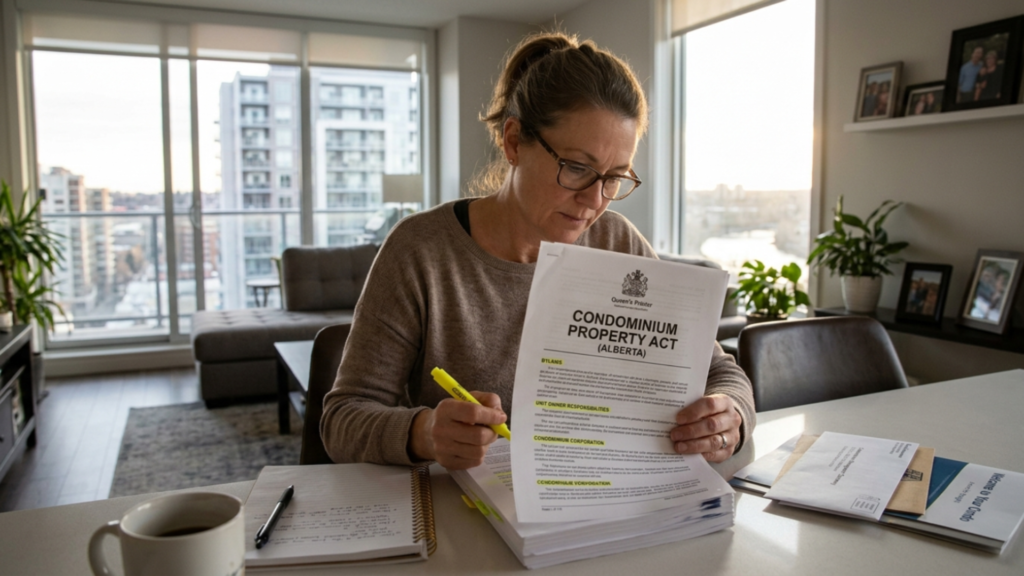
You own a condo. Are thinking about buying one in Alberta.. Have you ever read the Alberta Condominium Act? Most people have not. I was guilty of that too when I bought my condo. The Condominium Act is really important for every condo owner. Today you and I will explore what the Condominium Act is and why it affects your life. By the end you will know your rights, your responsibilities and how to protect yourself. This knowledge could save you from mistakes. What Is the Alberta Condominium Act? The Alberta Condominium Act is the law that governs all condominiums in Alberta. It sets the rules for how condos are created managed and governed. The Condominium Act covers everything from condo fees and reserve funds to board elections and dispute resolution. Every condo corporation in Alberta must follow the Condominium Act. It also protects the rights of individual unit owners. The Condominium Act ensures that owners have a say in how their building’s run. Without the Condominium Act condo living would be chaotic. I have seen how the Condominium Act provides structure and fairness in every condo community. Why the Alberta Condominium Act Matters to You You might think the Condominium Act is for lawyers and board members.. It affects you directly. The Alberta Condominium Act gives you the right to see records. It gives you the right to vote in board elections. It gives you the right to challenge bylaws. The Condominium Act also protects you from fee increases. Without the Condominium Act a board could do whatever they wanted with no accountability. I have seen owners use the Condominium Act to stop decisions by their board. Knowledge of the Condominium Act is power. It is your shield against mismanagement. The Role of Condo Boards Under the Act Condo boards are. Governed by the Condominium Act. The board manages the corporation. Makes decisions about maintenance, finances and rules. They are elected by the owners. They must follow the Condominium Act in everything they do. The Condominium Act requires boards to hold general meetings. It requires them to provide statements. It requires them to maintain a reserve fund. If a board violates the Condominium Act owners can take action. I have served on a board. Learned the hard way that the Condominium Act is not optional. It is the law. It must be followed. Condo Fees and Reserve Funds Under the Act The Condominium Act sets rules for condo fees and reserve funds. Fees must be reasonable. Used for legitimate expenses. The board must prepare a reserve fund study every five years. This study estimates repair costs. The reserve fund must be adequately funded to cover these costs. If the fund is too low special assessments may be needed. The Condominium Act requires transparency. Owners have the right to see the reserve fund study. I always recommend reviewing the reserve fund before buying a condo. The Condominium Act gives you that right. Use it. Bylaws and Rules What the Act Allows Bylaws are the rules that govern a condo community. They cover everything from restrictions to parking rules to noise limits. The Condominium Act allows condo corporations to create bylaws.. Those bylaws cannot violate the Condominium Act or the law. Bylaws must be reasonable. They must be enforced fairly. Owners have the right to propose changes to bylaws. The Condominium Act also requires that bylaws be registered with the land titles office. If a bylaw is unreasonable or unfair owners can challenge it. I have helped owners challenge bylaws that went far. The Condominium Act protects you. Dispute Resolution Under the Act Disputes happen in condo communities. The Condominium Act provides a process for resolving them. First you try to resolve the issue. If that fails you can mediate. If mediation fails you can apply to the Court of Queens Bench. The Condominium Act also allows for arbitration. I have seen disputes over noise, pets and parking resolved through these processes. The Condominium Act ensures that disputes are handled fairly and consistently. Without the Condominium Act disputes would drag on forever. Knowing the dispute resolution process gives you confidence to stand up for your rights. Recent Changes to the Alberta Condominium Act The Alberta Condominium Act has been updated in years. New rules require education for board members. New rules require voting for board elections. New rules require transparency in reserve fund studies. These changes make condo governance more professional and accountable. I welcome these changes. They make it easier for owners to participate and harder for boards to mismanage. If you own a condo stay informed about changes to the Condominium Act. The law. So should your knowledge. Conclusion You now understand the Alberta Condominium Act. Why it matters. It gives you rights as an owner. It holds boards accountable. It ensures governance. It sets rules for fees, reserve funds and bylaws. It provides a dispute resolution process. Whether you are a buyer or a long time owner knowing the Condominium Act is essential. I have used the Condominium Act to protect my rights and to help others. Do not be afraid of the law. Embrace it. The Condominium Act is your defense, in condo living. Frequently Asked Questions (FAQs) What is the Alberta Condominium Act? It is the law that governs all condominiums in Alberta. It sets rules for management, finances and owner rights. Who enforces the Alberta Condominium Act? The Condominium Dispute Resolution Tribunal. Owners can also challenge violations through the system. Do all condos in Alberta follow the act? Yes. All condominiums in Alberta are governed by the Alberta Condominium Act. Can a condo board ignore the Alberta Condominium Act? No. Boards must follow the Alberta Condominium Act. If they do not owners can take action. How can I learn more about the Alberta Condominium Act? You can read the act online. Many condo management companies and lawyers also provide resources. Hafil Perincheeri Co-Founder & Director Linkedin Envelope Instagram Hafil Perincheeri is an engineer-turned-realtor, investor, 10

Bare Land Condominium
Blog, Condo Management

Bare Land Condominium Explained: A Complete Guide for Buyers

I was looking at homes. I kept hearing the term “bare land condominium”. What does it mean? A bare land condominium is one of the misunderstood types of property ownership in Canada. I was confused when I first heard about it. Now I want to explain it in terms. By the end of this, you will know what a bare land condominium is, how it works and if it is right for you. What Is a Bare Land Condominium? Let me start with a definition. A bare land condominium is when you own the land your home’s on and you share some areas with your neighbors, like roads and parks. This is different from a condo where you only own the inside of your unit. In a land condominium you own the land and the house on it. You share some areas with your neighbors, like roads and utilities. These shared areas are managed by a group of owners called a condominium corporation. This type of ownership is common in duplexes, townhouses and some single family home communities. How Does a Bare Land Condominium Differ from a Condo? This is a question I get a lot. In a condo you own the inside of your unit but not the land. The condominium corporation owns the land and shared areas. You pay fees every month for maintenance of shared spaces. In a land condominium you own your land and your house. You only share some areas with your neighbors like roads and utilities. You have control over your property. You can change your house and yard easily.. You still pay fees every month for shared things like roads and utilities. I have owned both types. The difference is big. The Ownership Structure of a Bare Land Condominium When you buy a land condominium you become part of the condominium corporation. The corporation is made up of all the owners. They elect a board to manage areas. The board handles money, maintenance of shared things and enforcement of rules. Each owner has a vote based on their unit size or lot size. The corporation collects fees every month to cover road maintenance, snow removal, landscaping of shared areas and utility systems. This structure gives you ownership of your land while sharing costs for shared things. The Pros of Owning a Bare Land Condominium Why would someone choose a land condominium over a regular home? First you own the land. That means you have control over your property within the rules. Second you share the cost of things like roads and utilities. That can be cheaper than doing it all yourself. Third, the fees are often lower than condo fees because there are fewer shared things. Fourth you have privacy and space than a traditional condo. Fifth, you can usually have pets, gardens and changes easily. I have recommended land condominiums to buyers who want a home feel with shared cost benefits. The Cons of Owning a Bare Land Condominium course, there are downsides. You are still part of a condominium corporation. That means you have to follow rules and pay fees. You cannot do whatever you want on your property. There may be rules about fences, parking or exterior changes. You also share the cost of repairs to shared things. If the road needs to be fixed or the drainage system fails you share the bill. You also have control over the overall management of the community. I have seen owners get frustrated with decisions they disagreed with. Bare Land Condominium Fees: What Do They Cover? Fees in a land condominium cover shared things like road maintenance, snow removal, landscaping of shared areas, street lighting and utility systems. Some communities also have gates, security or clubhouses that add to the fees. The fees are generally lower than condo fees because there are fewer shared buildings and things.. They still require budgeting. I always tell buyers to review the fee structure. Ask what is included and what is not. Understanding the fees is essential when considering a land condominium. Common. Restrictions Every bare land condominium has rules. These rules govern what you can. Cannot do on your property. Common rules include fence height and materials exterior paint colors, types of roofing allowed, parking regulations and landscaping requirements. Some communities restrict the size or type of pets. Others have age restrictions. I have seen buyers fall in love with a home only to discover they cannot build the garage they wanted. Always review the rules before you buy. Request a copy from the condominium corporation or your real estate agent. Is a Bare Land Condominium Right for You? Here is my honest advice. A bare land condominium is a choice if you want to own your land and home but still want to share the cost of things like roads and utilities. It is also good if you want control than a traditional condo but do not want the full maintenance responsibility of a detached home. It is not ideal if you dislike rules and shared decision making. If you want freedom buy a detached home outside a condo corporation. If you want maintenance and amenities choose a traditional condo. I have helped many buyers find their fit. The right choice depends on your lifestyle and priorities. Conclusion You now understand what a bare land condominium is. You own your land and home share some areas and pay fees for shared things. It offers control than a traditional condo but less freedom, than a detached home. Review the rules, fees and reserve fund before buying. I have owned a land condominium and enjoyed the balance of control and shared costs. If it fits your lifestyle it can be a choice. Go find your home. Frequently Asked Questions (FAQs) What is a land condominium? It is a type of ownership where you own your land and home but share some areas with your neighbors like roads and utilities. How is a bare land condominium 10

Condo Management

Bare Land Condo vs Traditional Condo: Which Is Right for You?

You are ready to buy a home. You have two options: a bare land condo or a traditional condo. You are not sure which one is better. I have owned both land condos and traditional condos and I can tell you that they offer very different lifestyles. Today you and I will compare land condos and traditional condos in detail. We will look at costs, control, maintenance and lifestyle. By the end you will know exactly which type of ownership fits your needs for a land condo or a traditional condo. What Is a Bare Land Condo Compared to a Condo? Let me start with the basics. A bare land condominium means you own your lot and home a land condo. You share common areas like roads and utilities. A traditional condo means you own your unit but not the land, a condo. You share hallways, elevators and building systems with owners. Understanding a land condominium is essential before making a decision. The ownership structure, costs and lifestyle are completely different for a land condo and a traditional condo. I have helped many buyers choose between these two types of condos a land condo and a traditional condo. The right choice depends on your priorities for a land condo or a traditional condo. Cost Comparison: Which Is More Affordable for a Bare Land Condo or a Traditional Condo? Let us talk money for a land condo and a traditional condo. A bare land condo generally has monthly fees for a bare land condo. You are not paying for elevators, gyms or concierge services for a land condo. You pay for roads, snow removal and utilities for a bare land condo. A traditional condo has fees to cover building maintenance, insurance and amenities for a traditional condo. However the purchase price of a land condo can be higher because you are buying land for a bare land condo. A traditional condo has a purchase price because you are buying only a unit for a traditional condo. I have seen buyers choose one over the other based on their budget for a land condo or a traditional condo. The total cost of ownership is what matters for a land condo and a traditional condo. Control and Freedom: Which Gives You More for a Bare Land Condo or a Traditional Condo? Control is where a bare land condo shines for a land condo. You own your land and home a land condo. You can paint, landscape and renovate freely within the bylaws for a bare land condo. You have your entrance and outdoor space for a bare land condo. A traditional condo offers control for a traditional condo. You share walls, floors and ceilings for a condo. You need board approval for changes for a traditional condo. You have privacy and less outdoor space for a traditional condo. I have lived in both a bare land condo and a traditional condo and the freedom of a land condominium is significant for a bare land condo. If you value control and privacy a bare land condo is the choice for a bare land condo. Responsibility: Which Is Easier for a Bare Land Condo or a Traditional Condo? Maintenance is a trade off for a land condo and a traditional condo. In a land condo you maintain your home and yard for a bare land condo. You are responsible for the roof, windows, landscaping and exterior of your home for a land condo. The condominium corporation handles shared infrastructure like roads and utilities for a bare land condo. In a condo you are responsible only for the interior of your unit for a traditional condo. The corporation handles everything including the roof, windows, hallways, elevators and landscaping for a traditional condo. If you want maintenance a traditional condo is easier for a traditional condo. If you enjoy gardening and home projects a bare land condominium offers that opportunity for a land condo. Lifestyle: Which Suits You for a Bare Land Condo or a Traditional Condo? Each offers a lifestyle for a bare land condo and a traditional condo. A bare land condo community often feels like a neighborhood for a land condo. You have your home, yard and street for a bare land condo. Neighbors are close. Not sharing walls for a bare land condo. A traditional condo feels more urban for a condo. You share areas and amenities for a traditional condo. You may have a gym party room and rooftop terrace for a condo. You are closer to shops, restaurants and transit for a condo. I have recommended land condos to families and traditional condos to professionals for a bare land condo and a traditional condo. Think about your routine for a bare land condo or a traditional condo. Do you want a yard and street for a land condo?. Do you want amenities and walkability for a traditional condo? Resale. Investment Potential for a Bare Land Condo and a Traditional Condo Which is a better investment for a bare land condo and a traditional condo? Both can appreciate well. For different reasons for a bare land condo and a traditional condo. A bare land condominium includes land ownership, which’s limited and valuable for a bare land condo. Land values generally increase over time for a land condo. A traditional condo offers convenience, which appeals to renters and young professionals for a traditional condo. It may be easier to rent out for a condo. I have seen both types perform well for a land condo and a traditional condo. The key is location and condition for a land condo and a traditional condo. Choose a managed community or building for a bare land condo and a traditional condo. Review the reserve fund and bylaws for a land condo and a traditional condo. A good investment is about more than the type of ownership for a land condo and a traditional condo. How to Decide Which Is Right for You for a Bare 10

Condominiums in Calgary
Blog, Condo Management

A Guide to the Different Types of Condominiums in Calgary, Alberta

You want to buy a condo in Calgary. Then you find out there are many types. There are condos, townhouse condos, bare land condos and more. You need to know about the types of condominiums in Calgary before you make a decision. I have helped many people buy condos. I want to share what I know. Today we will look at every type of condo in Calgary. By the end you will know which type of condo is right for you and your money. What Is a Condominium? How Does It Work in Calgary? First lets start with the basics. A condominium or condo is when you own your unit and share some areas with other owners. These areas can include hallways, elevators, parking, gyms and landscaping. All owners pay fees to take care of these shared areas. Condos have a board of directors that makes sure everything runs smoothly. This board is made up of owners who were elected by the owners. They make sure the building is in condition and that everyone follows the rules. This is how all types of condominiums in Calgary work. Apartment Condos The Most Common Choice Apartment condos are what people usually think of when they think of condos. They are buildings with many units. You own your unit. You share walls and floors with your neighbors. These condos often have amenities like a gym party room and underground parking. They are popular in downtown Calgary and other areas. The monthly fees can be high because of the amenities and maintenance. Apartment condos are great if you want a life with minimal work. Townhouse Condos: The Best of Both Worlds Townhouse condos are like row houses. You own your unit, which has two or three floors. You have a yard or patio. You share one or two walls with your neighbors. You have your own entrance. This type of condo is very popular in Calgary because it offers space and privacy. The condo fees are usually lower because there are amenities. You are responsible for the outside of your unit unless the condo corporation takes care of it. I have recommended townhouse condos to families who want a home feel without all the work. Bare Land Condos: A Unique Ownership Structure Bare land condos are different. You own the land your home’s on and you share some areas with your neighbors. This type of condo is common in duplexes and fourplexes. You are responsible for your home, including the roof and landscaping. The condo fees are often lower because there are shared amenities. This type of condo can be an option because it gives you more control and lower maintenance costs. I have helped people buy land condos when they wanted a detached home feel without all the work. Condominium Corporations and Their Role Every condo has a corporation. The corporation is made up of all the owners, who elect a board of directors. The board handles the money hires managers and makes sure everyone follows the rules. They also plan for repairs. If the corporation does not have money you may have to pay extra fees. I always tell people to review the condo corporation documents before buying. A run corporation means a well-maintained building. Condo Fees: What They Cover. Why They Vary Condo fees are important to consider. They cover maintenance, insurance and utilities for shared areas. The fees vary depending on the building and the corporation. In Calgary monthly condo fees can range from 200 dollars to over 800 dollars. Newer buildings may have fees but they can increase over time. Older buildings may have fees but they are often better maintained. I have seen people choose a condo with fees only to have to pay extra later. Always ask about the reserve fund. The Pros and Cons of Each Condo Type Lets look at the pros and cons of each type of condo. Apartment condos offer convenience and amenities. They can have high fees and less privacy. Townhouse condos offer space and a home feel but they require more work. Bare land condos offer control and lower costs. They may not have all the amenities. The right choice depends on your lifestyle. If you travel often an apartment condo might be best. If you have a family a townhouse condo might be better. If you want a detached home feel a bare land condo could be the answer. I have owned all types of condominiums in Calgary. Each one was right for me at different times. Conclusion You know about the different types of condominiums in Calgary. Each type has its benefits and drawbacks. Think about your lifestyle, your budget, and what you want. Review the condo corporation documents. Ask about the reserve fund. I have helped many people find their condo and these tips have always worked. Calgary has a condo for everyone you just need to find the one that fits you best. Frequently Asked Questions (FAQs) What are the types of condominiums in Calgary? There are apartment condos, townhouse condos, bare land condos and duplex or fourplex condos. Which type of condo is the most affordable in Calgary? Bare land condos often have fees, but the price of the condo can vary. Apartment condos in buildings can be more affordable. Do all condos have fees? Yes, all condominiums in Calgary have fees. Can I renovate my condo unit? Yes,. You may need permission from the board for big changes. Always check the rules before starting any work. What is an assessment? A special assessment is a fee that you have to pay when the reserve fund is not enough to cover repairs. Green Casa Co-Founder & Director Linkedin Envelope Instagram Hafil Perincheeri is an engineer-turned-realtor, investor, and builder based in Calgary, Canada. As Co-Founder and Director of Greencasa, he specializes in home flips, property development, and investment strategies. Since 2019, he has guided clients in home buying, multifamily investing, and financing options like CMHC and 10


Scroll to Top

Compare