

Green Casa Commercial

Get In Touch

Green Casa Popup Form

Multifamily and New Builds

Landlord Insurance in Canada
Multifamily and New Builds

What Is a Building Permit? When Do You Need One?

You are planning a renovation. You have picked out new cabinets and chosen the perfect paint color.. Then you think, do you need a building permit? This is a question that confuses homeowners. I have been through the permit process times and today you and I will explore what a building permit is and when you need one. By the end you will know how to navigate the permit process and avoid mistakes. What Is a Building Permit? Let me start with a definition. A building permit is a document that permits you to start a construction project. It ensures that your building permit meets building codes and safety standards. Your government issues the building permit. It protects you, your family, and future owners of the building. Without a building permit your project may be illegal. I have seen homeowners forced to tear down work. Understanding what a building permit is can save you from a nightmare. When Do You Need a Building Permit? Not all projects need a building permit. Minor cosmetic changes usually do not need a building permit. Painting, wallpapering and replacing flooring are exempt from getting a building permit. Small repairs like fixing a faucet are also exempt from getting a building permit. Major projects typically need a building permit. Adding a room finishing a basement or building a deck all require a building permit. Structural changes need a building permit. Electrical and plumbing work usually need a building permit. I have learned that when in doubt check with your building department to see if you need a building permit. They can tell you if you need a building permit for your project. Why Do You Need a Building Permit? Building permits exist for a reason. They ensure safety for you and your family. They make sure your project meets code, which’s very important for your building permit. They protect owners of your building permit. An unpermitted project can cause problems when you sell your home. Buyers may demand that you fix it which can be a problem for your building permit. Your insurance may not cover work, which is a big risk for your building permit. I have seen sales fall through because of renovations and it is all related to not having a building permit. Getting a building permit protects your investment and your family. That is what a building permit is all about. What Happens If You Do Not Get a Building Permit? The consequences can be serious if you do not get a building permit. You may be fined, which can be very expensive. You may be ordered to remove the work, which can be a hassle. You may have trouble selling your home, which can be a problem. Your insurance may not cover damage related to work which is a big risk. I have seen homeowners spend thousands to fix projects and it is all because they did not get a building permit. The cost of a building permit is small compared to the cost of fixing a mistake so it is always better to get a building permit. How to Apply for a Building Permit Applying for a building permit is not complicated. Start by visiting your building department to get a building permit. Fill out the application form for your building permit. Provide plans of your project, which is very important for your building permit. Pay the fee for your building permit. Wait for approval of your building permit. The review process can take a days to several weeks depending on the complexity of your building permit. Larger projects take longer to get a building permit. I have applied for permits for kitchens, bathrooms and additions. The process is straightforward. Just be patient. Prepared when applying for a building permit. Costs of Building Permits Building permit costs vary, depending on the value of the project. A small project might cost 100 dollars for a building permit. A large addition could cost 1,000 dollars or more for a building permit. The fee is a price to pay for safety and peace of mind which is what a building permit provides. I have paid permit fees ranging from 50 to 500 dollars for my building permits. The cost is worth it because a building permit protects you and your property. Common Misconceptions About Building Permits There are misconceptions about building permits. Some people think they are not needed for projects but that is not true. Others think they are too expensive. The cost of a building permit is small compared to the risk. Some believe the process is too complicated but applying for a building permit is straightforward. These are all myths. I have heard all these excuses and seen the consequences of not getting a building permit. A building permit is your friend. It protects you and your family. Conclusion You now understand what a building permit is and when you need one. Permits are required for projects because these projects need a building permit. They ensure safety. Protect your investment, which is very important. The cost is small compared to the risk of skipping it. It is always better to get a building permit. I have gone through the permit process times and it is straightforward and worth the effort. Do not risk your safety or your home get a building permit, for your project because a building permit is essential. Frequently Asked Questions (FAQs) What is a building permit? It is a document that permits you to start a construction project and it ensures your project meets safety codes, which is very important for your building permit. When do I need a building permit? You need a permit for projects like additions, decks and structural changes because these projects require a building permit. Minor cosmetic work usually does not require a building permit. What happens if I do not get a building permit? You may be fined ordered to remove the work or have trouble selling your 10

Reduce Office Vacancy in Calgary
Blog, Multifamily and New Builds

5 Strategies to Reduce Vacancy in Your Calgary Office Building

Proven Ways to Increase Occupancy and Maximize Asset Performance The office market in Calgary has undergone a major transformation over the past decade. From energy sector volatility to the rise of hybrid work, reducing vacancy in Calgary office buildings has become one of the biggest challenges for property owners. Yet, while some landlords struggle with high vacancy rates, others consistently maintain 90–95% occupancy by applying strategic, tenant-focused management. The difference comes down to execution, adaptability, and proactive management. Here are five proven strategies to help Reduce Office Vacancy in Calgary  and improve long-term returns. Reposition Your Office for Modern Tenants Align Your Space with Today’s Demand Tenant expectations have changed. Traditional office layouts no longer meet the needs of modern businesses. Today’s tenants want: Flexible layouts Hybrid-ready workspaces Shared amenities and collaboration areas Energy-efficient systems Actionable Strategy Reposition your building with: Open-concept office designs Shared boardrooms and meeting spaces Improved lighting and air quality systems Modern HVAC upgrades This is especially effective in areas like Beltline Calgary, Renfrew Calgary, and Mount Pleasant Calgary, where startups, creative firms, and small businesses prefer flexible, efficient spaces. Modernization doesn’t just fill vacancies; it repositions your asset in a stronger market category. Use Data-Driven Pricing to Stay Competitive Align Rent with Market Reality One of the most common reasons for vacancy is misaligned pricing. Each submarket in Calgary, including Beltline Calgary, Killarney Calgary, and nearby markets like Cochrane, has its own pricing dynamics. Solution Work with a professional property management team that: Tracks competitor listings Analyzes lease renewals Monitors absorption rates Adjusts pricing in real time Green Casa Property Management uses data-backed insights to ensure your property remains competitive, helping you reduce vacancy without underpricing your asset. Diversify Your Tenant Mix Reduce Risk and Increase Stability Relying on a small number of tenants increases financial risk. If one leaves, vacancy spikes immediately. Smarter Approach Diversify your tenant base by including: Professional services (law, accounting, consulting) Tech and creative firms Wellness and healthcare providers Co-working or shared office operators Real-World Application In markets like Airdrie and Okotoks, mixed-use developments combining medical offices with retail outperform single-use buildings. The same principle applies in Beltline Calgary and Killarney Calgary, where tenants value walkability and convenience. Diversification leads to consistent occupancy and stronger cash flow. Invest in Proactive Property Management Turn Tenant Experience Into Retention Vacancy is not just about leasing, it is about tenant satisfaction. Tenants leave when: Maintenance issues are ignored Communication is slow Building systems are unreliable Solution Hire a commercial-focused property management team that provides: Preventative maintenance planning Fast response times Professional tenant communication Consistent building operations Green Casa Property Management delivers a proactive approach that improves tenant retention and reduces turnover, key factors in lowering vacancy rates. Optimize Financing with CMHC MLI Select Unlock Capital to Improve Your Property For mixed-use or multi-residential components, the Canada Mortgage and Housing Corporation’s MLI Select program provides a powerful advantage. Key Benefits Up to 50-year amortizations Lower down payment requirements Preferential interest rates Incentives for energy efficiency and accessibility Why It Matters Access to better financing allows owners to: Invest in tenant improvements Upgrade building systems Enhance marketing and leasing strategies All of these directly contribute to reducing vacancy and increasing property value. Final Thought Vacancy Reduction Requires Strategy, Not Discounts Reducing vacancy in your office building in Calgary is not about lowering rent; it is about repositioning your asset, improving tenant experience, and making data-driven decisions. Whether your building is in Beltline Calgary or surrounding markets like Chestermere, Cochrane, or Airdrie, the principle remains the same: Proactive management drives occupancy. Reactive management creates a vacancy. With Green Casa Property Management, property owners gain the strategy, systems, and expertise needed to Reduce Office Vacancy in Calgary while keeping the buildings competitive and fully leased. Conclusion Reducing vacancy in Calgary office buildings requires more than short-term incentives or reactive leasing tactics. Today’s market demands a strategic approach focused on modernization, tenant satisfaction, competitive positioning, and long-term asset performance. By upgrading office spaces, using data-driven pricing, diversifying tenant mix, investing in proactive property management, and leveraging financing opportunities like CMHC MLI Select, property owners can create buildings that attract and retain high-quality tenants. Frequently Asked Questions (FAQs) What causes high vacancy in Calgary office buildings? Common causes include outdated office layouts, poor property management, incorrect pricing, and a lack of tenant-focused amenities. How can I reduce vacancy in my Calgary office building quickly? Focus on competitive pricing, minor upgrades, and improving tenant communication. Even small changes can significantly impact leasing activity. Do modern office upgrades really help reduce vacancy? Yes. Flexible layouts, shared amenities, and energy-efficient systems attract today’s tenants and improve lease rates. Why is tenant mix important in office buildings? A diversified tenant base reduces risk, stabilizes income, and prevents large vacancy gaps if one tenant leaves. How does property management affect vacancy rates? Professional management improves tenant satisfaction, reduces turnover, and ensures the building operates efficiently, key factors in maintaining occupancy. What is CMHC MLI Select, and how does it help? It is a financing program that offers better loan terms for qualifying properties, allowing owners to reinvest in upgrades that attract and retain tenants. Should I hire a commercial property management company? Yes. Experienced managers use data, systems, and proactive strategies to reduce vacancy and improve long-term returns. Hafil Perincheeri Co-Founder & Director Linkedin Envelope Instagram Hafil Perincheeri is an engineer-turned-realtor, investor, and builder based in Calgary, Canada. As Co-Founder and Director of Greencasa, he specializes in home flips, property development, and investment strategies. Since 2019, he has guided clients in home buying, multifamily investing, and financing options like CMHC and MLI Select, ensuring transparent, informed decisions. Get A Free Quote Green Casa Contact Form Full NamePhone NumberEmailCityServices– Select –Property ManagementConstruction ConsultancyCapital InvestmentMLI Select Program GuidanceDescribe your Requirement:Submit

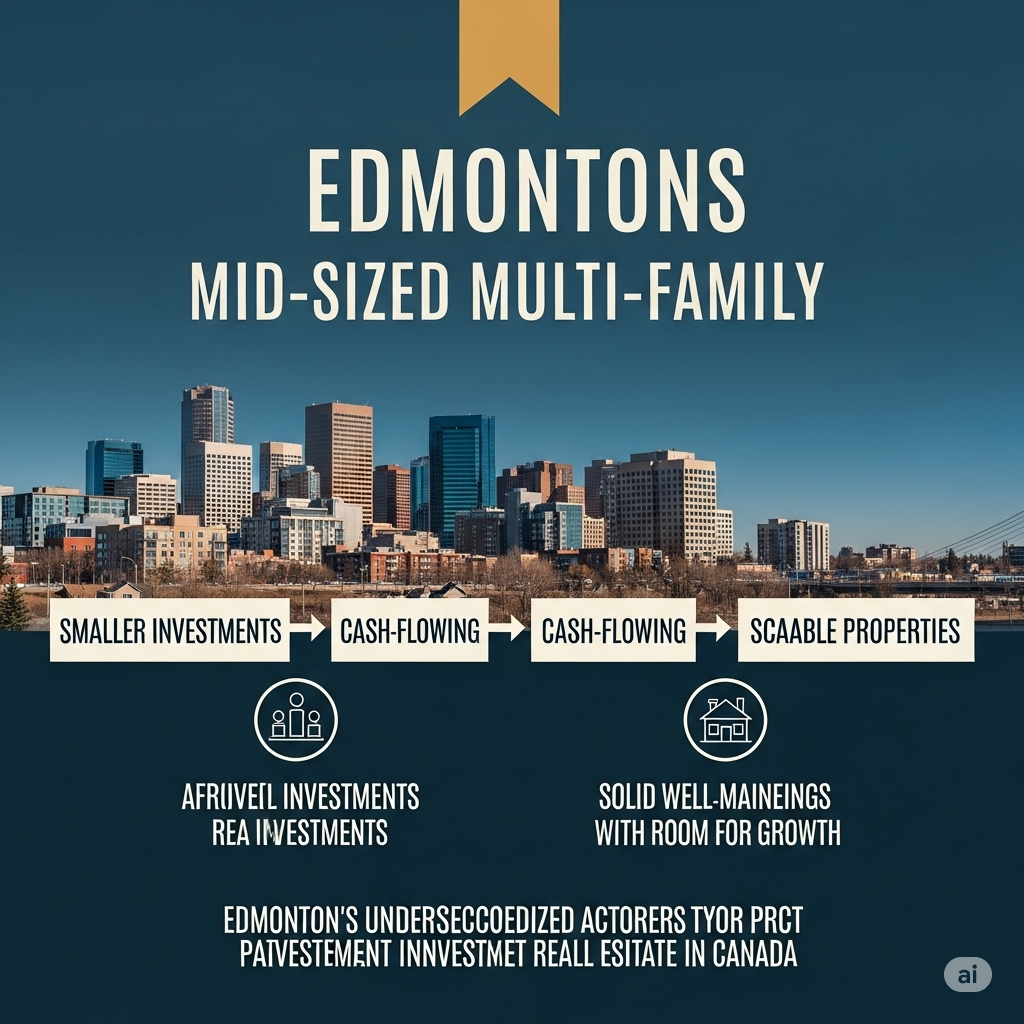
Edmonton mid-sized multi-family apartment buildings
Blog, Multifamily and New Builds

Edmonton’s Mid-Sized Multi-Family Market: Where Opportunity Meets Affordability

In real estate investing, some valuable opportunities can be found in markets that receive less attention than larger developments.Edmonton’s 10–20 unit apartment buildings are gaining attention among investors looking for rental income, portfolio growth, and long-term investment potential. The Mid-Sized Multi-Family market offers a balance between manageable property operations and opportunities to expand a real estate portfolio.Let’s explore what makes this segment worth considering. 1. The Mid-Sized Advantage: Not Too Big, Not Too Small The beauty of mid-sized multi-family buildings is their balance. More stability than a fourplex Less complexity than a 50+ unit high-rise Easier to manage than you might expect Financing is more flexible than you might think For the investor who wants to grow a serious portfolio without going corporate, this is the sweet spot. 2. Edmonton’s Numbers Just Make Sense Let’s talk about the numbers. Because in real estate, cash flow matters, and Edmonton delivers. Typical cap rates in this space are 5.5%–6.5%, which is impressive in today’s national landscape. But it’s not just about cap rates, it’s about what they represent. These buildings often: Cash flow will start from day one Have value-add potential through renovations and tenant turnover Offer steady, reliable income from a diverse tenant base Allow you to increase value by improving operations In other words, it’s not just about buying and holding. It’s about buying smart and optimizing over time. 3. Where to Invest in Edmonton Edmonton isn’t just one big market; it’s a collection of micro-neighborhoods, each with its own vibe. Here’s where mid-sized apartments shine: McCauley / Boyle Street: Close to downtown, lots of value potential North Central Edmonton: Affordable buildings, high cap rates Westwood / Blatchford area: Near LRT and NAIT, high rental demand South Central: Popular with students and working professionals The key is to look for areas where rent demand remains strong, turnover is manageable, and rents still have room to grow. 4. Edmonton’s Long-Term Outlook: Underrated but Resilient Edmonton may not have the glamour of Vancouver or Toronto, but it has something better: affordability, growth, and resilience. With continued population growth, solid employment trends, and a growing demand for rental housing, the market fundamentals are solid. Vacancy rates are falling. Rental rates are climbing. And mid-sized apartment buildings—especially those with 10–20 units—are positioned to benefit most. These properties offer the kind of rental housing the city needs: affordable, efficient, community-based living. 5. You Can Scale Without Losing Sleep One of the best parts? You don’t have to go it alone. There are professional property managers (like Green Casa’s sister contacts), experienced brokers, and commercial lenders ready to support investors entering the 10–20 unit space. With the right team, you can scale without being on call at midnight or juggling spreadsheets all weekend. Final Takeaway: Edmonton Is Open for Business If you’ve been waiting for a sign to go beyond fourplexes and get serious about cash-flowing, scalable real estate, this is it. Edmonton’s mid-sized apartment market offers the kind of opportunity that’s getting harder to find elsewhere in Canada: real income, solid buildings, and room to grow. Don’t wait until the rest of the country catches on. Frequently Asked Questions (FAQs) What is a mid-sized multi-family property in Edmonton? A mid-sized multi-family property typically refers to an apartment building with multiple rental units, such as 10–20 units. These properties allow investors to manage several rental units within one location. Why invest in mid-sized multi-family properties in Edmonton? Edmonton may appeal to investors because of its relative housing affordability, rental housing demand, and potential for long-term property investment. Returns depend on the purchase price, operating costs, financing, and local market conditions. What should investors consider before buying a 10–20 unit apartment building? Investors should review rental income, vacancy rates, maintenance costs, property taxes, financing terms, building condition, and local rental regulations before purchasing a property. Which Edmonton neighborhoods can investors explore for mid-sized apartment buildings? Investors can research areas such as McCauley, Boyle Street, Westwood, and South Central Edmonton. Each neighborhood has different property prices, tenant demographics, rental demand, and investment considerations. How can professional property management help multi-family investors? Professional property management can assist with tenant screening, rent collection, maintenance coordination, lease administration, and communication with tenants, helping owners manage multiple rental units more efficiently. Hafil Perincheeri Co-Founder & Director Linkedin Envelope Instagram Hafil Perincheeri is an engineer-turned-realtor, investor, and builder based in Calgary, Canada. As Co-Founder and Director of Greencasa, he specializes in home flips, property development, and investment strategies. Since 2019, he has guided clients in home buying, multifamily investing, and financing options like CMHC and MLI Select, ensuring transparent, informed decisions. Get A Free Quote Green Casa Contact Form Full NamePhone NumberEmailCityServices– Select –Property ManagementConstruction ConsultancyCapital InvestmentMLI Select Program GuidanceDescribe your Requirement:Submit

20-Unit Building Alberta
Blog, Multifamily and New Builds

Scaling Up in Alberta: What Investors Need to Know Before Buying a 20-Unit Building

Going from a small residential investment to a mid-sized apartment building is a milestone in any real estate journey. But it also comes with new rules, new challenges, and new rewards. Here’s a step-by-step breakdown of how Alberta real estate investors can scale from a 4-plex to a 20-unit multi-family building and why now might be the perfect time to do it. What Changes at 5+ Units? The difference between buying a 4-unit and a 20-unit building isn’t just scale—it’s category. 1–4 units = Residential 5+ units = Commercial Multi-Family This affects how you qualify for financing, how properties are valued, and what kind of professionals you’ll need on your team. Key differences: Feature Residential (1–4 Units) Commercial (5+ Units) Loan Basis Borrower’s income Property’s income (NOI) Appraisal Method Comparable sales Capitalization rate (Cap Rate) Down Payment As low as 5–20% 15–35% (lower with MLI Select) Amortization Up to 30 years Up to 50 years (MLI Select) Build Your Exit and Entry Strategy Before jumping into a 10–20 unit building, ask: Can I refinance my existing property to fund the down payment? Will I self-manage or hire a property manager? Is my next building stabilized, or does it need renovations? A successful scale-up involves leveraging past investments to fund future growth. Whether you’re selling your 4-plex or refinancing it, this is your launch pad. Cash Flow and Cap Rates Matter More Than Ever Unlike residential properties, where emotional appeal and comps drive value, commercial multifamily properties are primarily driven by income. Your job becomes finding buildings where: Rent can be increased Expenses can be optimized Vacancies can be reduced That’s how you raise Net Operating Income (NOI)—and when you do that, the building’s value goes up. For example:Increase NOI by $20,000/year in a market with a 5% cap rate, and you’ve just added $400,000 to your building’s appraised value. This is known as forced appreciation, and it’s where mid-sized investors can create real wealth. Prepare for Bigger Operational Demands 20 doors mean more moving parts: Tenants calling at odd hours Snow removal, lawn care, and boiler inspections Coordinating insurance, utilities, and common area repairs It’s no longer just collecting rent, it’s running a business.This is where working with an experienced property management company becomes less of a luxury and more of a necessity. Why Alberta Is a Great Place to Scale Right Now With relatively low property taxes, no rent control, and strong population growth, Alberta continues to attract smart investors from across Canada. Calgary is experiencing a surge in demand for rental units, particularly near LRT lines and in newer suburbs. Edmonton offers value buys in established rental neighborhoods with strong cash flow. Pair this with programs like CMHC MLI Select, and you have a recipe for responsible, accelerated growth. Final Thoughts: Think Bigger, But Think Smarter The move from a 4-plex to a 20-unit building doesn’t happen overnight. However, with strategic planning, a deep understanding of the market, and the right partnerships, it’s absolutely within reach. You’re not starting over, you’re scaling up. And Alberta is one of the best places in Canada to do it. Hafil Perincheeri Co-Founder & Director Linkedin Envelope Instagram Hafil Perincheeri is an engineer-turned-realtor, investor, and builder based in Calgary, Canada. As Co-Founder and Director of Greencasa, he specializes in home flips, property development, and investment strategies. Since 2019, he has guided clients in home buying, multifamily investing, and financing options like CMHC and MLI Select, ensuring transparent, informed decisions. Get A Free Quote Green Casa Contact Form Full NamePhone NumberEmailCityServices– Select –Property ManagementConstruction ConsultancyCapital InvestmentMLI Select Program GuidanceDescribe your Requirement:Submit

Scroll to Top

Compare