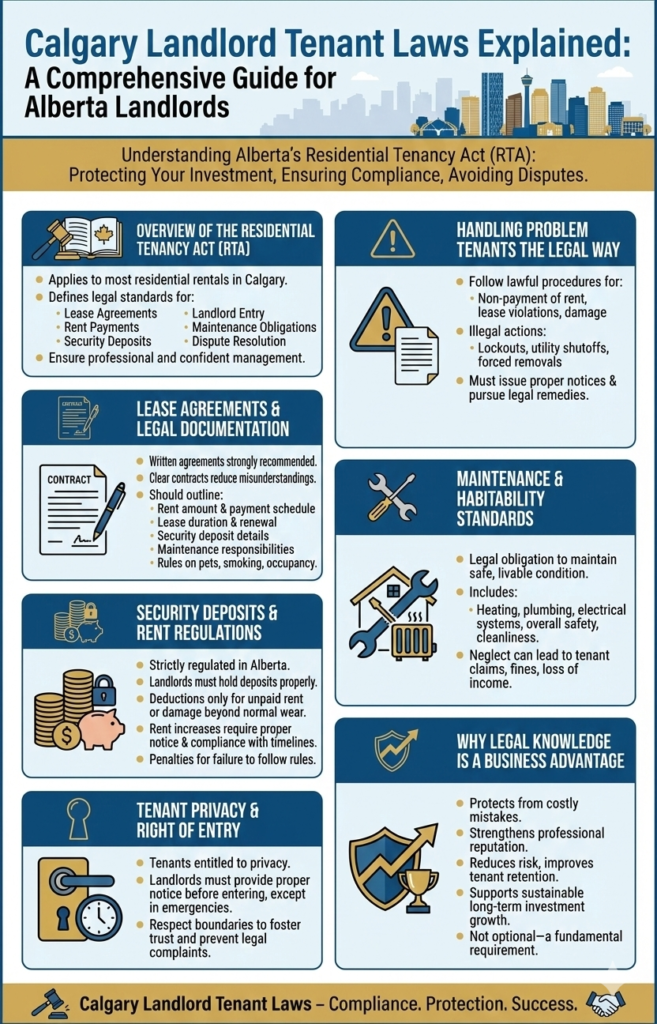

Understanding landlord-tenant laws in Calgary is essential for protecting your rental property, maintaining compliance, and avoiding legal disputes. Alberta’s Residential Tenancy Act (RTA) establishes clear rules governing rental relationships, ensuring fairness and accountability for both landlords and tenants.
Overview of the Residential Tenancy Act (RTA)
The Residential Tenancy Act applies to most residential rental agreements in Calgary. It defines legal standards for lease agreements, rent payments, security deposits, landlord entry, maintenance obligations, and dispute resolution. Landlords who understand the RTA are better positioned to manage rentals professionally and confidently.
Lease Agreements and Legal Documentation
While verbal agreements are legally recognized, written lease agreements are strongly recommended. A professional lease should clearly outline:
- Rent amount and payment schedule
- Lease duration and renewal terms
- Security deposit details
- Maintenance responsibilities
- Rules regarding pets, smoking, and occupancy
Clear contracts minimize misunderstandings and offer legal protection in the event of disputes.
Security Deposits and Rent Regulations
Alberta law strictly regulates security deposits. Landlords must hold deposits properly and may only deduct funds for unpaid rent or damage beyond normal wear and tear. Rent increases are also regulated, requiring proper notice and compliance with legal timelines. Failure to follow these rules can result in penalties or disputes.
Tenant Privacy and Right of Entry
While landlords retain ownership rights, tenants are entitled to a certain level of privacy. The RTA requires landlords to provide proper notice before entering a rental unit, except in emergencies. Respecting these boundaries fosters trust and prevents legal complaints.
Handling Problem Tenants the Legal Way
When tenants fail to pay rent, violate lease terms, or cause damage, landlords must follow lawful procedures. Alberta law prohibits lockouts, utility shutoffs, or forced removals. Instead, landlords must issue proper notices and, if necessary, pursue legal remedies through approved channels.
Maintenance and Habitability Standards
Landlords are legally obligated to maintain rental properties in safe, livable condition. This includes heating, plumbing, electrical systems, and overall cleanliness and safety. Neglecting maintenance responsibilities can lead to tenant claims, fines, or loss of rental income.
Why Legal Knowledge Is a Business Advantage
Understanding Calgary landlord-tenant laws protects landlords from costly mistakes and strengthens their professional reputation. Compliance reduces risk, improves tenant retention, and supports sustainable long-term investment growth.
A solid understanding of Calgary’s landlord-tenant laws is not optional; it is a fundamental requirement for responsible and profitable property ownership.