

Property management in Calgary is essential even before you take possession of a new property. Whether you’re working with a property management company in Calgary or buying as a homeowner, when purchasing a new build in Alberta, most buyers focus on finishes, layouts, and upgrades. But one of the most critical systems in any home is also the least visible — drainage.
When drainage works, you never notice it. When it fails, it becomes one of the most expensive and stressful problems a homeowner can face.
Poor lot grading, improper foundation drainage, or incorrectly placed downspouts can lead to basement flooding, foundation damage, mold, and long-term structural issues. These problems often appear months or even years after possession, making them harder to trace and fix.
For real estate investors and homeowners in Calgary and across Alberta, understanding drainage isn’t technical overkill — it’s essential protection for your investment.
Understanding Alberta Drainage Requirements for New Homes
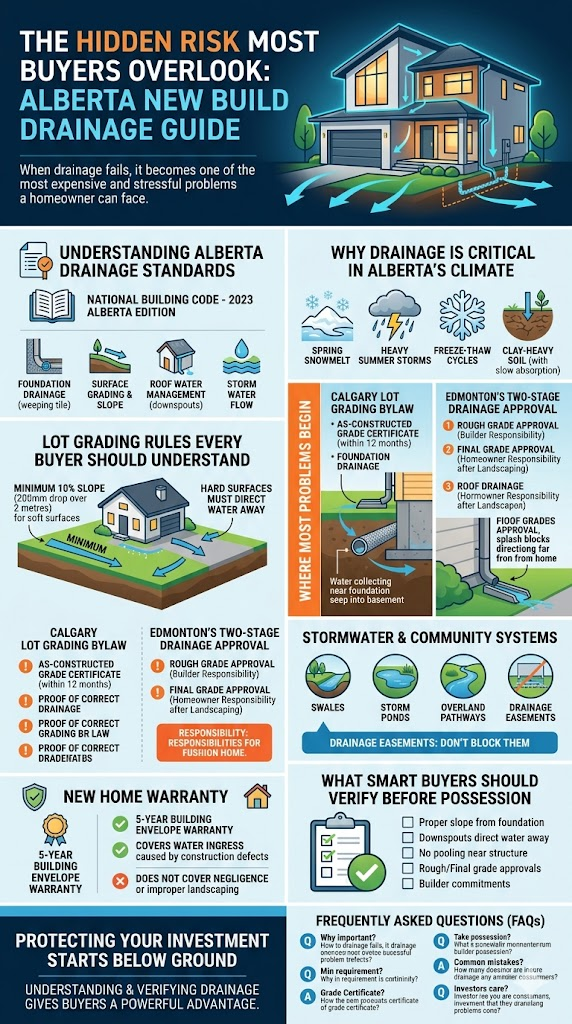
Drainage standards in Alberta are not optional; they are governed by the National Building Code – 2023 Alberta Edition, which came into force on May 1, 2024.
These regulations are enforced through municipal building permits and inspections in cities like Calgary and Edmonton, along with strict lot grading bylaws,
which are also reviewed by the best property management Calgary experts before property acquisition.
They cover multiple interconnected systems:
- Foundation drainage (weeping tile systems)
- Surface grading and slope requirements
- Roof water management (downspouts and discharge)
- Stormwater flows across lots and communities
Together, these systems are designed to move water safely away from your home, not toward it.
Why Drainage Is Especially Critical in Alberta’s Climate
Alberta presents unique environmental challenges that make proper drainage even more important.
Spring snowmelt, heavy summer storms, and frequent freeze-thaw cycles all place pressure on drainage systems. Add to that the prevalence of clay-heavy soil in many Calgary and Edmonton communities, and water management becomes even more complex.
Clay soil absorbs water slowly, which often leads to pooling around foundations. In new communities where landscaping is not fully established, this risk is even higher.
This is why even a small grading error can turn into a serious issue over time.
Lot Grading Rules Every Buyer Should Understand
One of the most important technical standards in Alberta is the required slope away from the home.
- A minimum 10 percent slope (200 mm drop over 2 metres) is required for soft surfaces like soil and grass
- Hard surfaces like driveways must still direct water away, even with lower slope requirements
This grading ensures water flows away from your foundation instead of collecting around it.
However, these standards only work if they are properly executed and verified.
Calgary Lot Grading Bylaw: What It Means for You
In Calgary, drainage compliance is enforced through a detailed lot grading bylaw.
Builders are required to submit an As-Constructed Grade Certificate within 12 months of occupancy. This document confirms that the lot was built according to the approved grading plan.
For buyers, this is more than paperwork, it’s proof that your property drains correctly.
Without this certification, you may face challenges if drainage issues arise later.
Edmonton’s Two-Stage Drainage Approval Process
In Edmonton, drainage approval happens in two stages:
- Rough Grade Approval (builder responsibility)
- Final Grade Approval (homeowner responsibility after landscaping)
This means many buyers take possession before final grading is completed.
If landscaping is not done properly, drainage problems can occur, and in some cases, homeowners may be responsible.
Foundation and Roof Drainage: Where Most Problems Begin
Two of the most common drainage failures occur at the foundation and roof level.
Foundation Drainage
Homes must include a perimeter drainage system (weeping tile) to redirect groundwater away from the structure. Without it, water pressure builds against the foundation walls.
Roof Drainage
Downspouts must discharge water far enough away from the home. If water collects near the foundation, it can seep into the basement.
A simple issue like a missing splash block can eventually lead to costly repairs.
Stormwater and Community-Level Drainage Systems
Drainage does not stop at your property line.
In many Alberta communities, water flows through shared systems such as:
- Swales
- Storm ponds
- Underground drainage pipes
- Overland drainage pathways
Some properties include drainage easements, which must remain unobstructed. Blocking these paths can lead to flooding not just for your property, but for neighboring homes as well.
New Home Warranty: What Protection You Actually Have

The Alberta New Home Warranty Program provides mandatory coverage for new builds.
The key protection for drainage issues is the 5-year building envelope warranty, which covers water ingress caused by construction defects.
However, it’s important to understand the limits:
- It covers construction defects
- It does NOT cover homeowner negligence or improper landscaping
If drainage problems arise, documentation and early reporting are critical to making a successful claim.
What Smart Buyers Should Verify Before Possession
Before taking possession of a new home in Alberta, buyers should confirm:
- Proper slope away from the foundation
- Downspouts directing water away from the home
- No visible pooling near the structure
- Rough and/or final grade approvals (depending on stage)
- Builder commitments for grading completion
Having professional representation or inspection support can significantly reduce your risk.
Conclusion: Protecting Your Investment Starts Below Ground
Drainage is not a visible upgrade, but it is one of the most important systems in your home. In Alberta’s climate, even small mistakes in grading or water management can lead to serious long-term damage. Understanding how drainage works and verifying it before possession gives buyers a powerful advantage.
Whether you’re a homeowner, or a real estate investor in Calgary or Edmonton, taking drainage seriously is not optional. It’s one of the smartest decisions you can make to protect your property and your financial future.
Frequently Asked Questions (FAQs)
Alberta’s climate and soil conditions increase the risk of water damage, making proper drainage essential for preventing foundation issues and basement flooding.
A 10 percent slope (200 mm drop over 2 metres) away from the foundation is required for proper surface drainage.
It is a document submitted by the builder confirming that the lot grading matches the approved plan and meets drainage requirements.
Yes, but only if the issue is caused by a construction defect. It does not cover homeowner-related issues like improper landscaping.
Yes, especially in Edmonton, but homeowners are responsible for completing landscaping and obtaining final grade approval.
Poor grading, improper downspout placement, missing splash blocks, and blocked drainage paths are common issues.
Absolutely. Drainage issues can significantly impact property value, tenant satisfaction, and long-term maintenance costs.

Hafil Perincheeri
Co-Founder & Director
Hafil Perincheeri is an engineer-turned-realtor, investor, and builder based in Calgary, Canada. As Co-Founder and Director of Greencasa, he specializes in home flips, property development, and investment strategies. Since 2019, he has guided clients in home buying, multifamily investing, and financing options like CMHC and MLI Select, ensuring transparent, informed decisions.