


Few things feel more uncomfortable than telling a tenant they have to leave.. Sometimes as a landlord you have no choice. The first step is always the same: you must deliver an eviction notice to tenant. I have been through this process times than I care to count. I want to help you get it right. Today you and I will walk through every type of eviction notice. We will cover the requirements and the costly mistakes you need to avoid. By the end you will feel confident handling the toughest situations.
What Is an Eviction Notice to Tenant. Why Is It So Important?
Let me start with the basics. An eviction notice to tenant is a written document. It informs a renter that they must move out by a date. It is not a court order. It is the first legal step in ending a tenancy. In most of Canada, including Alberta and BC you cannot simply tell a tenant to leave. You cannot change the locks. Throw their belongings out. You must use the eviction letter to tenant that follows provincial laws. I have seen landlords lose thousands in fines. They skipped this step. Used the wrong form. The eviction notice is your shield. Use it properly. The law protects you. Use it wrong. You could end up paying damages to the tenant.
The Most Common Reasons You Need to Serve an Eviction Notice
You cannot evict a tenant just because you feel like it. The law gives reasons. The common reason is non-payment of rent. If a tenant does not pay on time you can serve an eviction notice to tenant. This can happen soon as the day after rent was due. Another reason is damage to the property. If a tenant punches holes in walls or floods the bathroom you can act. Illegal activity on the premises like drug dealing is also grounds. If the tenant repeatedly disturbs tenants or ignores the lease rules you may issue an eviction letter to tenant. Each reason has notice periods and forms. I always tell landlords to keep a checklist. Know why you are evicting before you write a word.
The Different Types of Eviction Notices and When to Use Each One
Let me break down the common eviction notices. For non-payment of rent you typically serve a 14-day eviction notice to tenant. This gives the tenant two weeks to pay or move out. If they pay within those 14 days the eviction stops. If they do not you can apply to a tribunal for a possession order. For cause evictions, like damage or illegal acts the notice period is often 30 days. Sometimes it is less depending on the severity. For no-fault evictions, such as when you need to move into the property yourself the notice period is usually two months. You may owe the tenant compensation. The eviction process varies by province. In Alberta you use the RTDRS forms. In BC you use Residential Tenancy Branch forms. Never guess. Always download the eviction letter to tenant from your provincial government website.
How to Serve an Eviction Notice Properly So It Holds Up in Court
Serving the notice is as important as the content. You cannot just slide it under the door. Send a text message. The law requires service. In provinces you can hand the eviction notice to tenant directly to the tenant in person. You can also leave it with an adult at the unit if the tenant is not home. Some provinces allow mail or posting on the door with a witness. I recommend using methods. Hand-deliver it take a photo of the notice on the door. Send it by certified mail. Keep records. I once had a tenant claim they never received the eviction letter to tenant. Because I had a signed delivery receipt and a witness photo the tribunal ruled in my favor. Documentation is everything.
What Happens After You Serve an Eviction Notice: The Step-by-Step Process
You served the notice. Now what? You wait. If the tenant moves out by the deadline the eviction process ends. If they stay you must apply to your tenancy authority for an order of possession. In Alberta you file with the Residential Tenancy Dispute Resolution Service. In BC you file with the Residential Tenancy Branch. You will need to provide a copy of the eviction notice to tenant, proof of service and evidence of the reason. The authority will schedule a hearing. You and the tenant both get to tell your side. If the adjudicator agrees with you they issue an order of possession. That order gives you the right to evict. You still cannot remove the tenant yourself. You must then hire a bailiff or sheriff to physically remove them. The whole eviction notice process from start to finish can take one to four months.
Common Mistakes Landlords Make With Eviction Notices
I have seen many errors. Mistake one: using the form. Each province has eviction letter to tenant templates. Using an internet form can void the entire eviction. Mistake two: filling out the form incorrectly. Wrong dates, names, wrong address. Mistake three: serving the notice improperly. Mistake four: accepting rent after serving an eviction notice to tenant. In provinces accepting any rent resets the clock. You lose your grounds for eviction. Mistake five: trying to evict for a reason like the tenant complained about repairs. That is illegal. Mistake six: doing a self-help eviction. Changing locks shutting off utilities or removing doors is an offense in most provinces. Avoid these mistakes. Your eviction will go smoothly.
How to Handle an Eviction Notice When the Tenant Fights Back
Sometimes tenants dispute the eviction notice to tenant. They may claim the notice was not properly served.. They may say the reason is unfair. They may claim they paid rent on time. At the hearing you will need evidence. Bring your lease your rent records, photos of damage witness statements and proof of service. Stay calm and professional. The adjudicator is not your enemy. They just want the facts. If the tenant wins the dispute you may have to start over or even pay their costs. I always recommend trying to settle before the hearing. Offer a payment plan for rent. Agree to a move-out date. An eviction process is stressful for everyone. Sometimes a conversation solves more, than a court order.
Conclusion
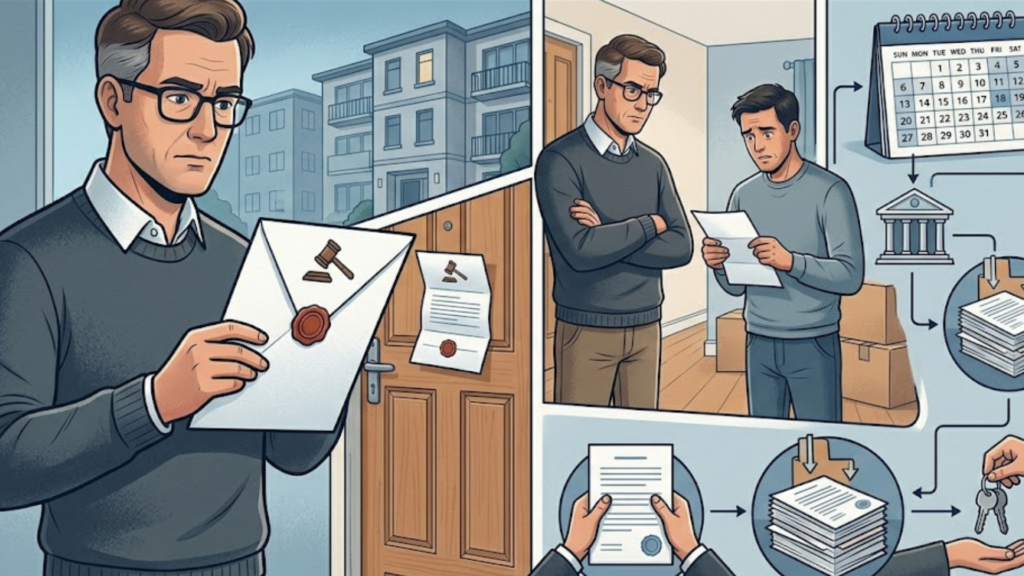
You now understand what an eviction notice to tenant is. You know when to use it how to serve it and what comes next. This is not a part of being a landlord but it is necessary. Follow the rules use the forms and never take the law into your own hands. I have been where you are. I promise that doing it right saves you time, money and stress. If you ever feel unsure consult a property management professional or your provincial tenancy authority. You have got this.
Frequently Asked Questions (FAQs)
In provinces, 14 days. The tenant can stop the eviction by paying all rent owed within that period.
Only if your lease specifically allows service. Otherwise use hand delivery or registered mail to be safe.
Document that you posted it. Take a photo. Then serve another copy by a method that leaves proof, like mail.
No, but a property management company or a paralegal can help ensure you use the forms and timelines.
One to four months, depending on the reason the tenants response and how busy your provincial tribunal is.

Hafil Perincheeri
Co-Founder & Director
Hafil Perincheeri is an engineer-turned-realtor, investor, and builder based in Calgary, Canada. As Co-Founder and Director of Greencasa, he specializes in home flips, property development, and investment strategies. Since 2019, he has guided clients in home buying, multifamily investing, and financing options like CMHC and MLI Select, ensuring transparent, informed decisions.