

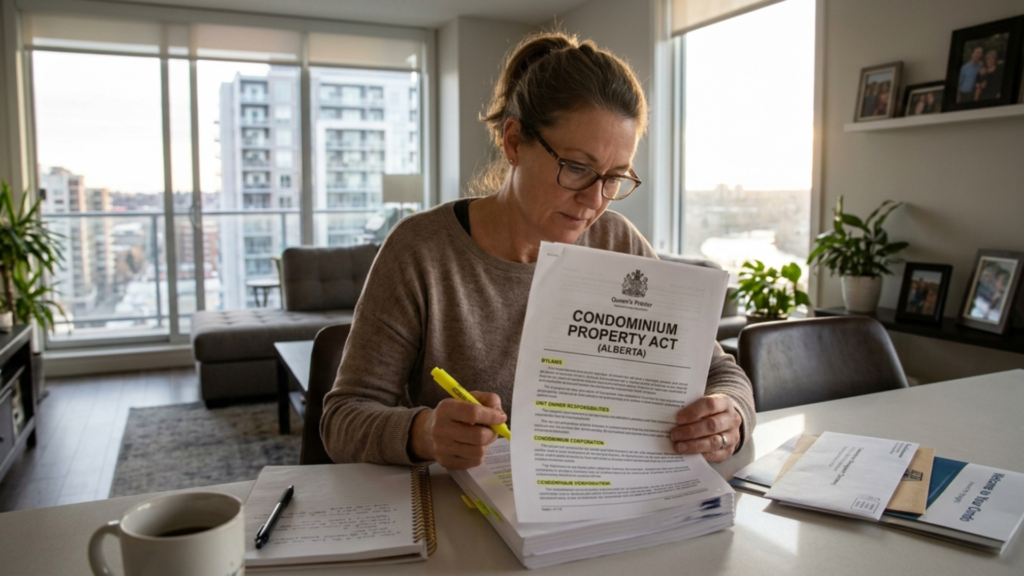
You own a condo. Are thinking about buying one in Alberta.. Have you ever read the Alberta Condominium Act? Most people have not. I was guilty of that too when I bought my condo. The Condominium Act is really important for every condo owner. Today you and I will explore what the Condominium Act is and why it affects your life. By the end you will know your rights, your responsibilities and how to protect yourself. This knowledge could save you from mistakes.
What Is the Alberta Condominium Act?
The Alberta Condominium Act is the law that governs all condominiums in Alberta. It sets the rules for how condos are created managed and governed. The Condominium Act covers everything from condo fees and reserve funds to board elections and dispute resolution. Every condo corporation in Alberta must follow the Condominium Act. It also protects the rights of individual unit owners. The Condominium Act ensures that owners have a say in how their building’s run. Without the Condominium Act condo living would be chaotic. I have seen how the Condominium Act provides structure and fairness in every condo community.
Why the Alberta Condominium Act Matters to You
You might think the Condominium Act is for lawyers and board members.. It affects you directly. The Alberta Condominium Act gives you the right to see records. It gives you the right to vote in board elections. It gives you the right to challenge bylaws. The Condominium Act also protects you from fee increases. Without the Condominium Act a board could do whatever they wanted with no accountability. I have seen owners use the Condominium Act to stop decisions by their board. Knowledge of the Condominium Act is power. It is your shield against mismanagement.
The Role of Condo Boards Under the Act

Condo boards are. Governed by the Condominium Act. The board manages the corporation. Makes decisions about maintenance, finances and rules. They are elected by the owners. They must follow the Condominium Act in everything they do. The Condominium Act requires boards to hold general meetings. It requires them to provide statements. It requires them to maintain a reserve fund. If a board violates the Condominium Act owners can take action. I have served on a board. Learned the hard way that the Condominium Act is not optional. It is the law. It must be followed.
Condo Fees and Reserve Funds Under the Act
The Condominium Act sets rules for condo fees and reserve funds. Fees must be reasonable. Used for legitimate expenses. The board must prepare a reserve fund study every five years. This study estimates repair costs. The reserve fund must be adequately funded to cover these costs. If the fund is too low special assessments may be needed. The Condominium Act requires transparency. Owners have the right to see the reserve fund study. I always recommend reviewing the reserve fund before buying a condo. The Condominium Act gives you that right. Use it.
Bylaws and Rules What the Act Allows
Bylaws are the rules that govern a condo community. They cover everything from restrictions to parking rules to noise limits. The Condominium Act allows condo corporations to create bylaws.. Those bylaws cannot violate the Condominium Act or the law. Bylaws must be reasonable. They must be enforced fairly. Owners have the right to propose changes to bylaws. The Condominium Act also requires that bylaws be registered with the land titles office. If a bylaw is unreasonable or unfair owners can challenge it. I have helped owners challenge bylaws that went far. The Condominium Act protects you.
Dispute Resolution Under the Act
Disputes happen in condo communities. The Condominium Act provides a process for resolving them. First you try to resolve the issue. If that fails you can mediate. If mediation fails you can apply to the Court of Queens Bench. The Condominium Act also allows for arbitration. I have seen disputes over noise, pets and parking resolved through these processes. The Condominium Act ensures that disputes are handled fairly and consistently. Without the Condominium Act disputes would drag on forever. Knowing the dispute resolution process gives you confidence to stand up for your rights.
Recent Changes to the Alberta Condominium Act
The Alberta Condominium Act has been updated in years. New rules require education for board members. New rules require voting for board elections. New rules require transparency in reserve fund studies. These changes make condo governance more professional and accountable. I welcome these changes. They make it easier for owners to participate and harder for boards to mismanage. If you own a condo stay informed about changes to the Condominium Act. The law. So should your knowledge.
Conclusion

You now understand the Alberta Condominium Act. Why it matters. It gives you rights as an owner. It holds boards accountable. It ensures governance. It sets rules for fees, reserve funds and bylaws. It provides a dispute resolution process. Whether you are a buyer or a long time owner knowing the Condominium Act is essential. I have used the Condominium Act to protect my rights and to help others. Do not be afraid of the law. Embrace it. The Condominium Act is your defense, in condo living.
Frequently Asked Questions (FAQs)
It is the law that governs all condominiums in Alberta. It sets rules for management, finances and owner rights.
The Condominium Dispute Resolution Tribunal. Owners can also challenge violations through the system.
Yes. All condominiums in Alberta are governed by the Alberta Condominium Act.
No. Boards must follow the Alberta Condominium Act. If they do not owners can take action.
You can read the act online. Many condo management companies and lawyers also provide resources.

Hafil Perincheeri
Co-Founder & Director
Hafil Perincheeri is an engineer-turned-realtor, investor, and builder based in Calgary, Canada. As Co-Founder and Director of Greencasa, he specializes in home flips, property development, and investment strategies. Since 2019, he has guided clients in home buying, multifamily investing, and financing options like CMHC and MLI Select, ensuring transparent, informed decisions.