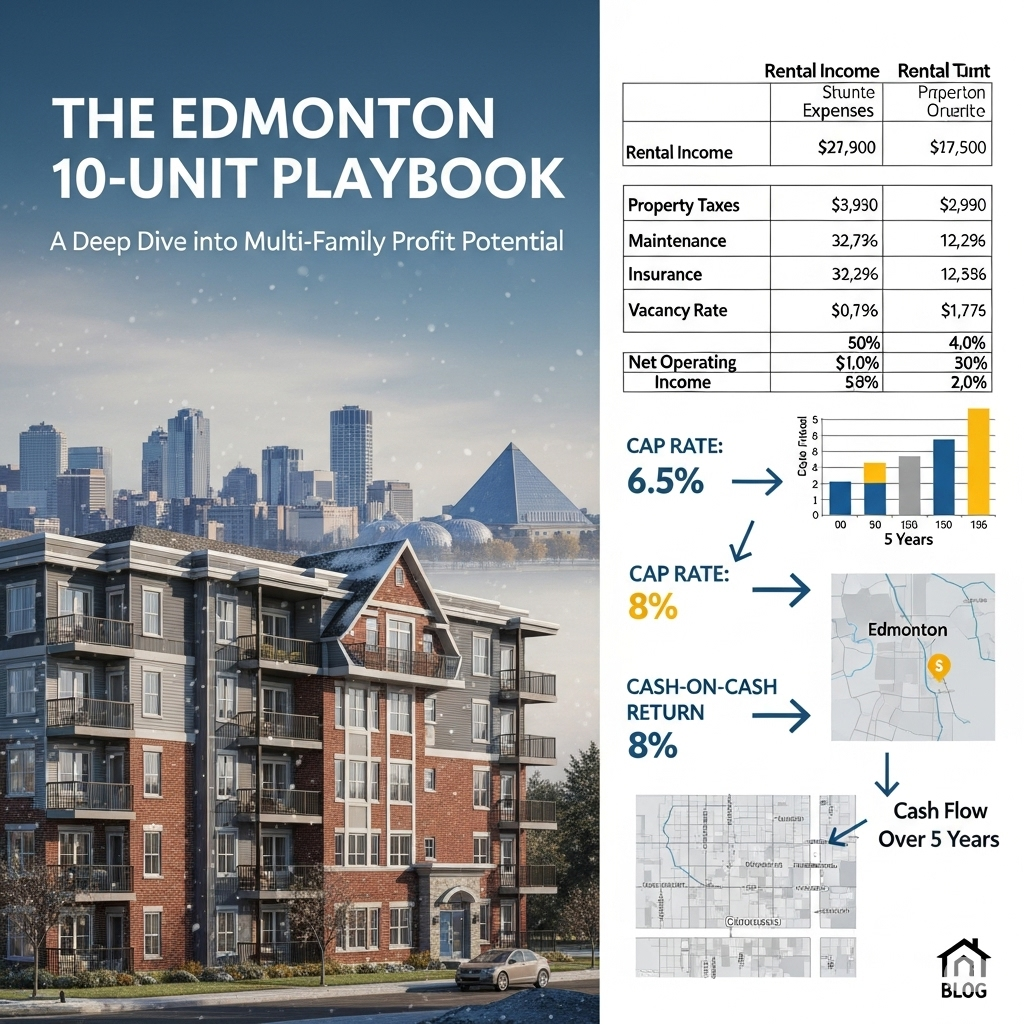

If you’ve ever dreamed of owning an apartment building but weren’t sure where to start, this is your roadmap. Edmonton is emerging as a multi-family hotspot with affordable entry points, a growing population, and higher yields than many Eastern cities. In this blog, we’ll show you how to evaluate a 10-unit property and make sense of the numbers.
What You’re Looking At
A 10-unit walk-up in south-central Edmonton. Listed at $1,050,000, with all units currently occupied.
- Average Rent per Unit: $1,200/month
- Monthly Gross Income: 10 x $1,200 = $12,000
- Annual Gross Income: $144,000
Pro Forma Snapshot
Here’s how to build a simple pro forma.
Annual Income:
✔ Rental Revenue: $144,000
Annual Expenses Estimate:
✔ Property Tax: $17,000
✔ Insurance: $5,000
✔ Utilities: $10,000
✔ Maintenance/Repairs: $8,000
✔ Management (8%): $11,520
✔ Admin/Other: $3,000
✔ Total Expenses: $54,520
📌 Net Operating Income (NOI): $144,000 – $54,520 = $89,480
Investment Metrics That Matter
- Cap Rate = $89,480 / $1,050,000 = ~8.5%
- GRM (Gross Rent Multiplier) = $1,050,000 / $144,000 = ~7.3
- Both metrics suggest a solid investment.
Why Edmonton Wins
Unlike cities like Toronto, Edmonton has:
- No rent control: Allowing annual rent increases to match market demand
- Lower property taxes and utility costs
- Units available under $110,000 per door
- An investor-friendly business climate
Financing This Property
Using CMHC-insured financing (like MLI Select), you could put down just 15% and stretch amortization to 40 or even 50 years, slashing your mortgage payments and maximizing cash flow.
Even a conventional loan with 25% down gives you positive cash flow due to Edmonton’s strong rental spreads.
Conclusion: Know the Numbers, Win the Deal
Understanding financial performance is the key to building real wealth in real estate. Edmonton’s multi-family sector offers a rare combo: affordability, cash flow, and appreciation upside. With a well-managed property and a strong team behind you, like Green Casa, you’re set up to scale.