
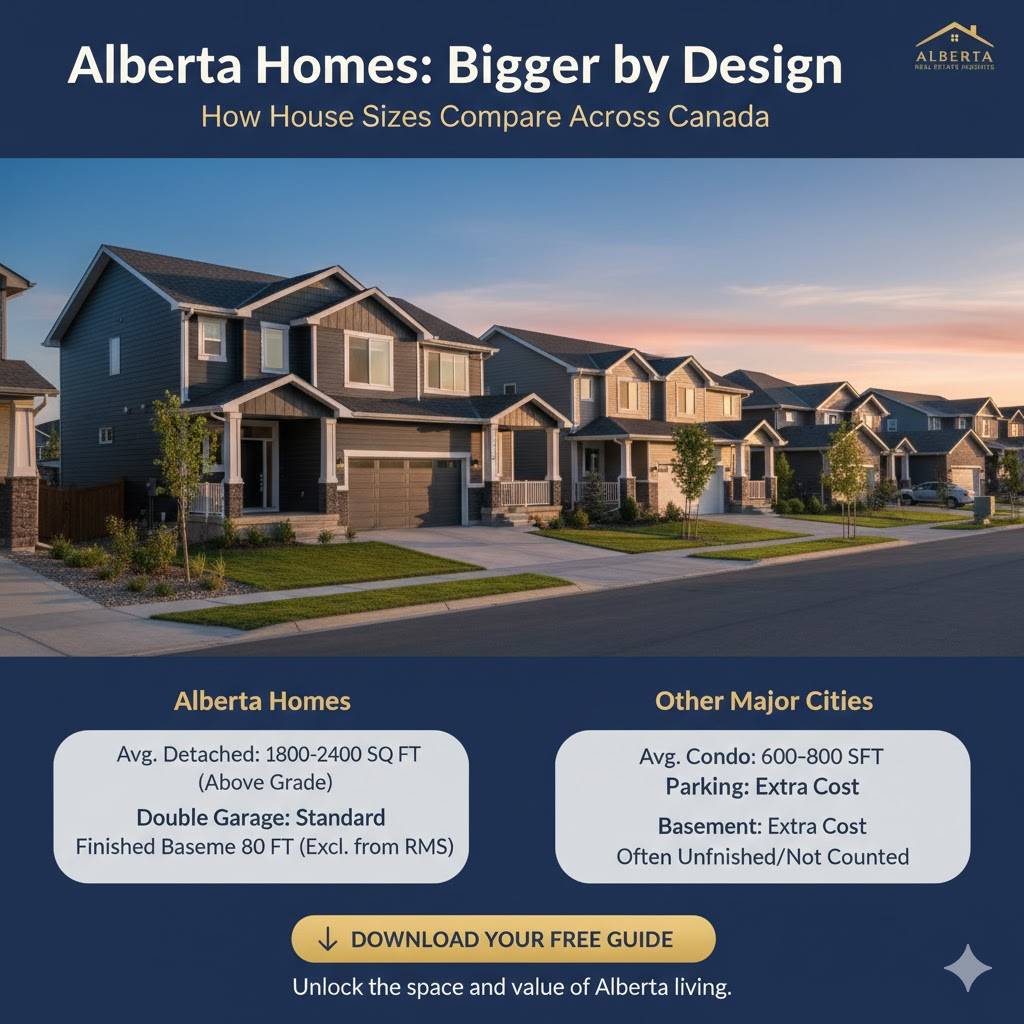
How House Sizes Compare Across Canada
If you are relocating within Canada, one of the first surprises is not the climate — it is the square footage. When comparing Alberta house sizes to the national average, a clear pattern emerges: Alberta homes are generally larger, more affordable per square foot, and measured more strictly than properties in many other provinces.
In markets like Toronto and Vancouver, affordability pressures have pushed average home sizes downward. In contrast, cities like Calgary and Edmonton continue to offer detached housing as the dominant form of ownership and with it, significantly more living space.
Here is what that means in practical terms.
The Price Per Square Foot Reality
To understand size, you must first understand affordability.
In high-cost metros like Toronto and Vancouver, price per square foot frequently exceeds $900+ in central areas. This compresses buyers into smaller condos and townhomes, often ranging between 600 and 900 square feet.
In Alberta, buyers often pay nearly half that per square foot in many segments of the market. As a result:
- The average detached home commonly ranges between 1,800 and 2,400 square feet above grade.
- Double garages are standard, not luxury upgrades.
- Dedicated home offices and bonus rooms are common in entry-level move-up homes.
- Finished basements often add another 800–1,200 square feet of functional space.
For the same budget, Alberta buyers frequently gain nearly double the interior space.
The RMS Advantage: Honest Measurement
Alberta uses a strict Residential Measurement Standard (RMS), regulated by the Real Estate Council of Alberta.
This matters more than most buyers realize.
Under RMS:
- Homes are measured using standardized interior guidelines.
- “Open-to-below” two-storey spaces cannot be counted.
- Only above-grade living space qualifies for official square footage.
- Basements are excluded from RMS totals, even if fully finished.
In many other provinces, listings may include total livable space, sometimes blending basement area or using builder-provided plans that are not independently verified.
What does this mean?
A Calgary home listed at 2,000 square feet may actually offer 3,000 square feet of total developed living space when including a finished basement, but only 2,000 square feet is officially advertised.
Alberta listings are conservative. Buyers often get more usable space than the headline number suggests.
The Bonus Room Culture
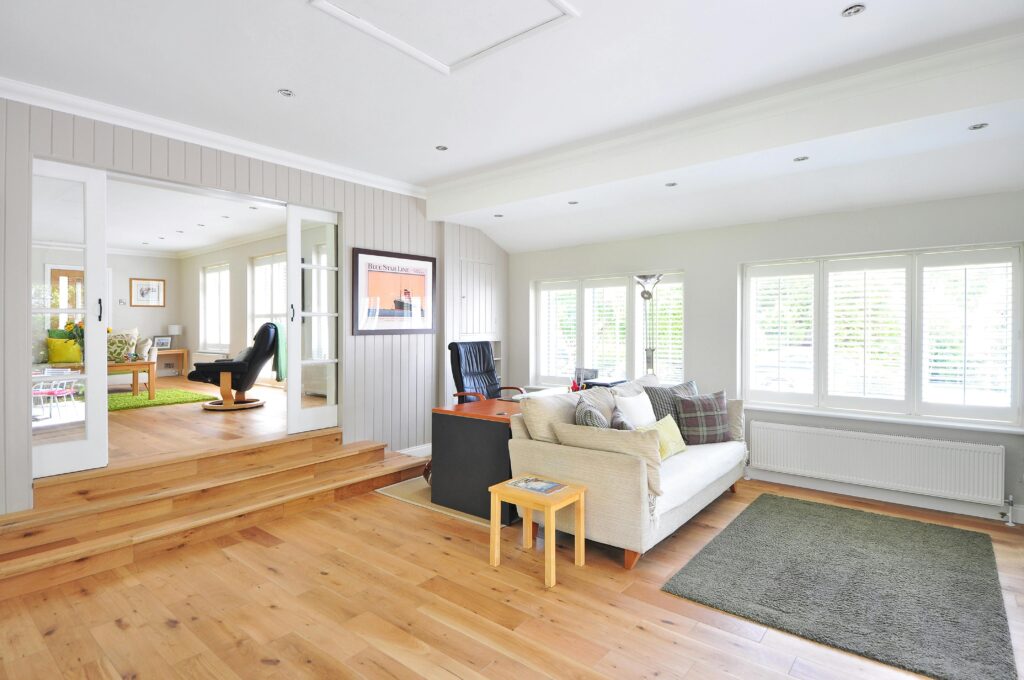
One defining feature of Alberta homes built after the 1990s is the “bonus room.”
Typically located above the garage on the second floor, this additional family room adds 300–400 square feet of flexible space. It functions as:
- A secondary living room
- A children’s play area
- A media room
- A remote work office
This design is far less common in older housing stock in Ontario or Quebec, where lot constraints and older architectural styles limit vertical expansion.
Lot Size vs. House Size
Newer suburban developments in Calgary and Edmonton are experiencing narrower lot widths, sometimes called “zero lot line” communities.
However, while lot sizes may shrink slightly, home sizes are not necessarily decreasing. Builders compensate by:
- Adding third-storey layouts
- Increasing vertical square footage
- Optimizing open-concept designs
The result is efficient land use while maintaining generous interior space.
The Basement Factor
Perhaps the most misunderstood difference between Alberta and other provinces is basement reporting.
In Alberta:
- Basements are typically fully developed.
- They often include bedrooms, bathrooms, and large recreation areas.
- They are excluded from official RMS square footage.
In other provinces, listings sometimes combine above-grade and below-grade space into one total number.
This means Alberta homes may appear smaller on paper but are often substantially larger in total usable area.
National Condo Trend vs. Alberta Detached Market
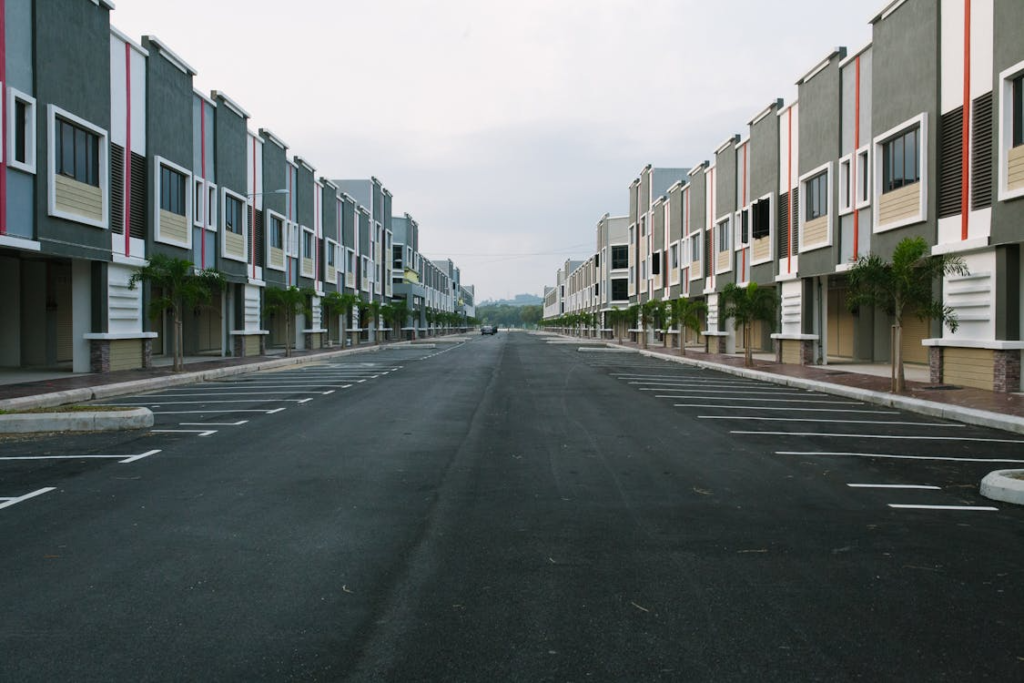
National housing averages are heavily influenced by condominium-heavy cities like Toronto and Vancouver.
As condo sales increase, the “average” Canadian home size declines.
In Alberta:
- Detached and semi-detached homes still dominate transaction volume.
- Even suburban condos often range from 850 to 1,000 square feet for two-bedroom layouts.
- Entry-level townhomes frequently exceed 1,200 square feet.
The provincial average is therefore weighted toward larger housing types.
Older Neighborhoods: Bigger Lots, Smaller Footprints
Mid-century bungalows (1950s–1970s) remain common in mature Alberta neighborhoods.
These homes often feature:
- 1,000–1,200 square feet above grade
- Massive 50-foot-wide lots
- Large backyards
While the house footprint may be modest, the land value is significant. Many of these properties are ideal for redevelopment, secondary suites, or future infill construction.
In contrast, similarly aged homes in Toronto or Vancouver often sit on far more expensive land parcels with much higher acquisition costs.
Why Alberta Homes Feel Bigger
Alberta homes feel larger because:
- Detached housing remains affordable.
- Vertical designs maximize usable space.
- Basements are typically developed.
- Measurement standards prevent inflated numbers.
- The market is not dominated by micro-condos.
The result is not just a statistical advantage; it is a lived experience of space.
Final Perspective
When comparing Alberta house sizes to the national average, the province stands out for space, transparency, and value.
While other major markets compress buyers into smaller units due to pricing pressure, Alberta continues to deliver detached homes with bonus rooms, double garages, finished basements, and family-oriented layouts, often for a fraction of the cost per square foot.
In Alberta, space is not a luxury upgrade. It is still part of the standard lifestyle.
Frequently Asked Questions for Alberta Homes
Q. Are Alberta homes really larger than the national average?
Yes. Alberta’s average detached homes are generally larger than the national average, particularly when compared to condo-dominated markets like Toronto and Vancouver.
Q. Why do Alberta listings sometimes look smaller on paper?
Alberta uses strict RMS standards that exclude basements and open spaces from official square footage.
Q. Do Alberta homes usually include finished basements?
Yes. Fully developed basements are very common and often add significant usable living space beyond the advertised size.
Q. Are lot sizes shrinking in Alberta?
In newer communities, lot widths are narrower. However, builders are compensating with taller designs and efficient layouts to maintain interior square footage.
Q. How do Alberta condos compare in size?
Alberta condos tend to be larger than those in high-density urban markets. Two-bedroom units often exceed 850 square feet.
Q. Is Alberta still affordable per square foot?
Compared to major metropolitan markets in Canada, Alberta continues to offer strong value per square foot.