Canada is facing a housing challenge that continues to grow every year. Population growth, immigration, and changing lifestyle preferences have increased the demand for rental housing at a pace that traditional development models struggle to keep up with. Apartment buildings and multi-unit rental properties have become one of the most critical solutions to this issue.
To support this need, the federal government introduced one of the most impactful financing programs available today for developers and investors: the CMHC MLI Select Program.
This program is not just about financing real estate. It is about shaping the future of rental housing in Canada.
What Is the CMHC MLI Select Program?
The CMHC MLI Select Program is a mortgage loan insurance initiative offered by the Canada Mortgage and Housing Corporation. It applies specifically to residential properties with five or more units, including purpose-built rental apartments, mixed-use buildings with residential components, and affordable housing projects.
Mortgage insurance through CMHC reduces the risk for lenders. When lenders face less risk, they are able to offer borrowers better loan terms. This makes it easier for investors and developers to move forward with projects that might otherwise be financially challenging.
In simple terms, the MLI Select Program makes apartment development more achievable and more financially sustainable.
Why the Program Was Created
Canada’s housing shortage is not a short-term problem. It requires long-term solutions, and rental housing plays a central role in that strategy.
The MLI Select Program was created to:
Encourage the construction of new rental housing
Support the preservation of existing apartment buildings
Promote affordability and energy efficiency
Improve accessibility and social outcomes in housing
Rather than simply offering financing, the program rewards projects that contribute positively to communities.
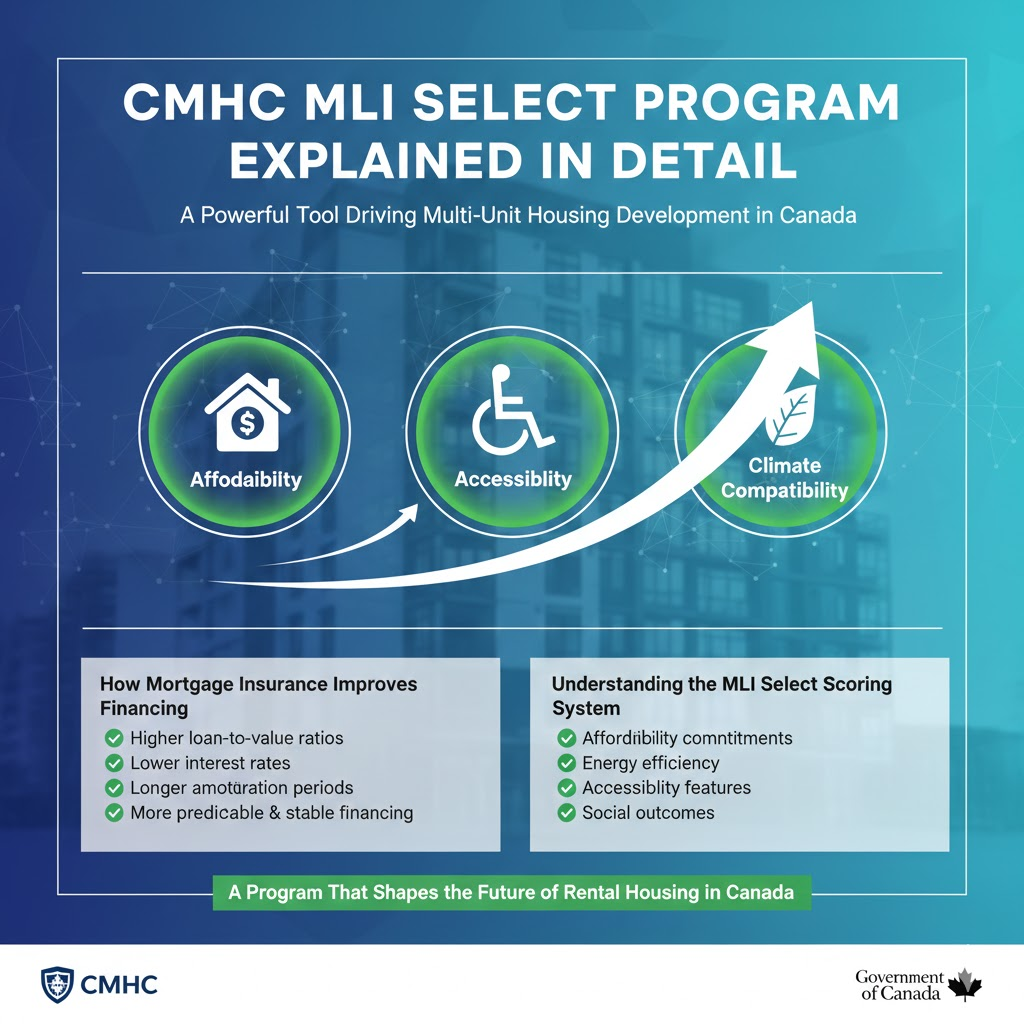
How Mortgage Insurance Improves Financing
Traditional commercial financing for multi-unit buildings often comes with strict conditions. Investors are typically required to provide large down payments, accept higher interest rates, and work with shorter amortization periods.
With CMHC mortgage insurance under the MLI Select Program, many of these challenges are reduced.
Investors may benefit from:
Higher loan-to-value ratios, reducing upfront capital requirements
Lower interest rates due to reduced lender risk
Longer amortization periods that improve monthly cash flow
More predictable and stable long-term financing
These advantages can dramatically change the financial performance of a project.
Understanding the MLI Select Scoring System
What truly sets this program apart is its point-based system.
Projects are evaluated and awarded points based on how well they align with CMHC’s housing priorities. These priorities focus on creating housing that is not only abundant but also responsible and sustainable.
Points are awarded in areas such as:
Affordability commitments for tenants
Energy efficiency and reduced environmental impact
Accessibility features for people with disabilities
Social outcomes, including supportive or community housing
The higher the score, the greater the financing benefits. This structure encourages developers to design better buildings while also improving their financial position.
Who Can Benefit From This Program?
The CMHC MLI Select Program is well-suited for:
Apartment building investors
Developers constructing new rental projects
Owners refinancing existing multi-unit properties
Builders incorporating affordable or sustainable housing features
Any project with five or more residential units should consider this program as part of its financing strategy.
Why It Matters for the Future of Real Estate
As rental demand continues to grow, multi-family properties remain one of the most stable and resilient asset classes. The MLI Select Program helps align private investment with public housing goals, creating long-term value for both investors and communities.
For anyone serious about apartment development or multi-unit investment, understanding this program is no longer optional it is essential.