Introduction
A rental lease is more than a stack of papers; it’s a mutual promise. For tenants, it offers security, privacy, and a safe place to call home. For landlords, it ensures their property will be respected and properly cared for. But sometimes, even with the best intentions, things don’t go as planned.
Lease violations happen, and when they do, both sides can feel stressed or even unfairly treated. For older tenants, especially seniors who value stability, a lease violation notice can feel overwhelming. For landlords, violations can mean financial strain or property concerns. At Green Casa Property Management in Calgary, we’ve seen it all, and our mission is to bridge that gap with compassion, fairness, and a clear path forward.
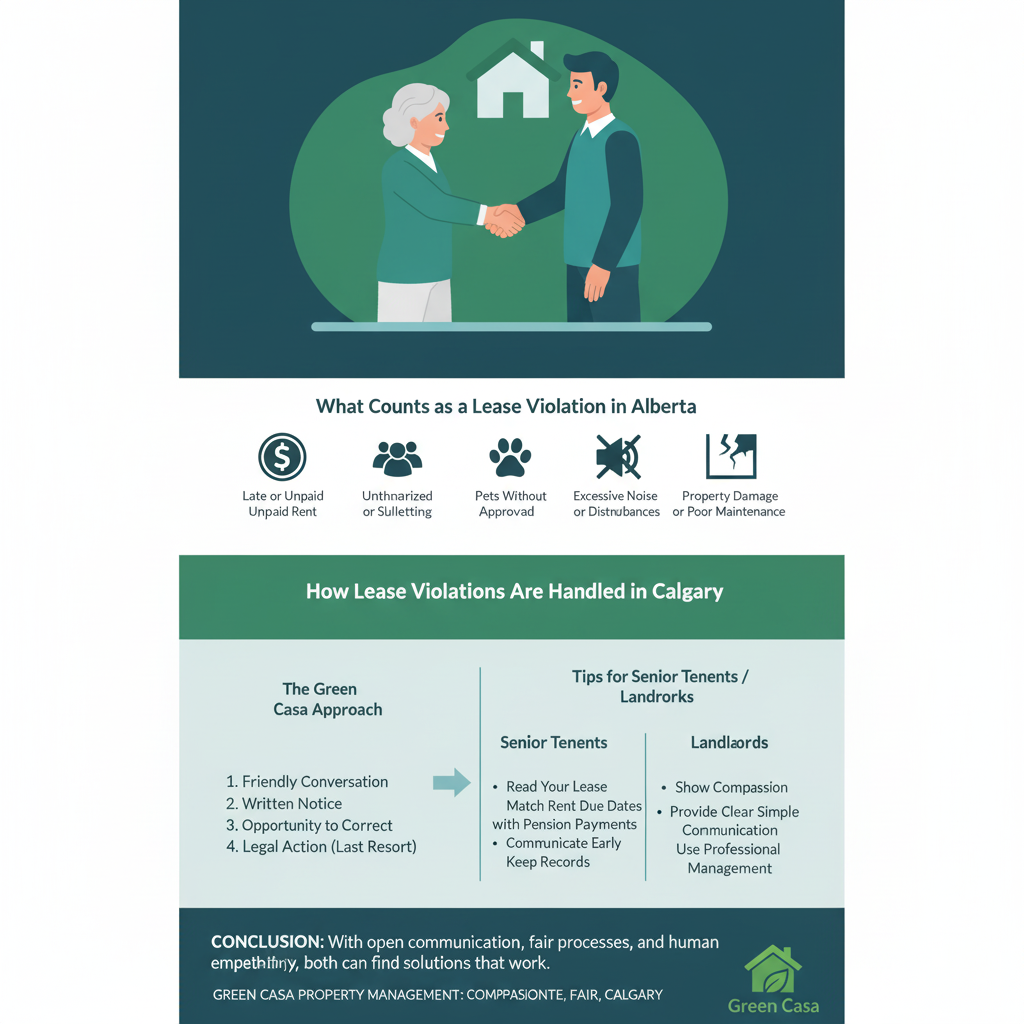
What Counts as a Lease Violation in Alberta
Lease violations are any actions that go against the written agreement. In Calgary, under Alberta’s Residential Tenancies Act (RTA), the lease sets the ground rules. Violations can be minor misunderstandings or serious breaches. Here are the most common ones:
- Late or Unpaid Rent
- Alberta law requires rent to be paid on time. A one-time delay might be forgiven, but repeated late payments are a breach. For seniors living on fixed incomes (like pensions), this can happen when payment schedules don’t align with due dates.
- Unauthorized Occupants or Subletting
- Letting a family member move in, or subletting to someone else without written approval, is a violation. This is especially common when seniors let relatives stay “temporarily” without realizing the lease requires notification.
- Pets Without Approval
- Many seniors benefit from having companion animals. But if the lease doesn’t allow pets, or specific types of pets, bringing one in without permission is a violation, even if the pet is well-behaved.
- Excessive Noise or Disturbances
- This might not seem like a senior issue, but it can cut both ways. Seniors may struggle with noise from younger tenants, or, in some cases, gatherings or TV volume can lead to complaints.
- Property Damage or Poor Maintenance
- Damage beyond normal wear and tear, like ignoring leaks, smoking indoors, or not reporting issues, falls under this category. Some seniors may unintentionally cause violations if health or mobility challenges make upkeep harder.
- Illegal Activity on the Property
- Rare, but serious. Any illegal activity, even by a guest, is an immediate and major violation.
Why Lease Violations Happen: Especially for Seniors
Not every violation stems from bad intentions. Seniors in particular may face unique challenges:
- Fixed or Limited Income: Pension schedules may clash with rent due dates, creating unintentional late payments.
- Health or Mobility Issues: Difficulty maintaining the property or notifying about repairs on time.
- Misunderstanding of Lease Terms: Some older tenants may not be familiar with the fine print or changing rules.
- Fear of Speaking Up: Seniors may hesitate to communicate issues to avoid “causing trouble,” leading to unreported problems.
Recognizing these realities is why Green Casa takes a compassion-first approach.
How Lease Violations Are Handled in Calgary
Here’s the typical process under Alberta law, and how Green Casa manages it with care:
- Friendly Conversation
- Before any formal action, we start with a phone call or meeting. Many issues, like unpaid rent or an unauthorized guest, can be resolved with understanding.
- Written Notice
- If the violation isn’t fixed, a written notice is required. For example, tenants usually have 14 days to resolve the issue or vacate, depending on the violation.
- Opportunity to Correct
- In most cases, tenants are given a fair chance to correct the problem, pay overdue rent, remove unauthorized pets, or fix damages.
- Legal Action or Eviction
- If problems persist, landlords may apply to the Residential Tenancy Dispute Resolution Service (RTDRS) or court. But eviction is always a last resort for Green Casa.
Tips for Senior Tenants
- Read Your Lease Thoroughly: Ask questions before signing, and don’t be shy about asking for clarifications.
- Match Rent Due Dates with Pension Payments: Speak to your landlord or property manager if timing is an issue.
- Communicate Early: If you’re struggling with repairs, visitors, or rent, let your landlord know. Silence often makes problems worse.
- Keep Records: Notes, letters, or receipts can protect you if there’s ever a dispute.
Tips for Landlords with Senior Tenants
- Be Flexible Where Possible: Adjust rent due dates to align with pension payments.
- Show Compassion: Understand that health or income challenges may cause unintentional violations.
- Provide Clear, Simple Communication: Seniors may not always be comfortable with digital-only communication.
- Use Professional Management: Green Casa ensures rules are enforced fairly, without landlords being “the bad guy.”
Green Casa’s Approach
At Green Casa, we believe lease violations should never feel like punishments; they’re opportunities for education, understanding, and resolution. We:
- Balance firm policies with compassionate listening.
- Ensure seniors feel respected, not threatened.
- Protect landlords’ investments while maintaining healthy, long-term tenancies.
Conclusion
Lease violations can be stressful, but they don’t have to damage the landlord-tenant relationship. With open communication, fair processes, and a touch of human empathy, both sides can find solutions that work.
For seniors, this means peace of mind. For landlords, it means protection of their investment. And for Green Casa, it’s about living up to our promise: property management that cares about people as much as properties.