Introduction
Buying your first 12-unit apartment building in Calgary is a leap into the big leagues of real estate. Unlike a duplex or triplex, the numbers are bigger, the risks are higher, but so are the rewards. And at the center of it all is one key decision: How do you finance the deal?
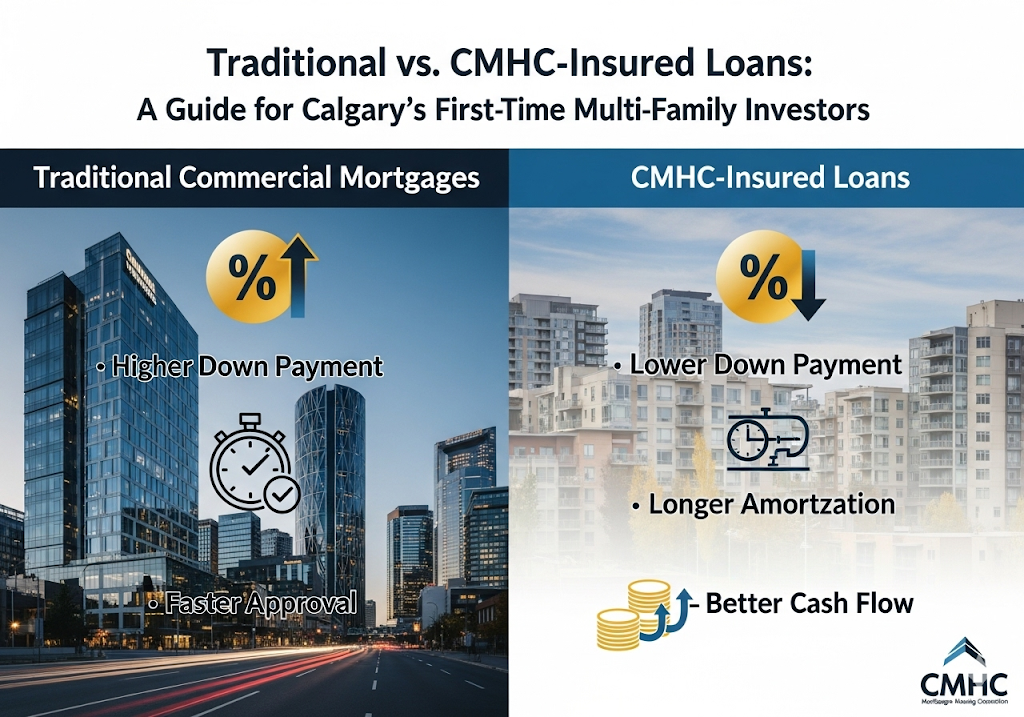
For first-time multi-family investors, two main financing routes exist: traditional commercial mortgages and CMHC-insured loans. Both can get you to the building, but the journey and outcomes are very different.
The Traditional Path: Commercial Mortgage
This is the “classic” way investors have financed for decades.
Typical terms:
- 25–30% down payment
- 20–25 years amortization
- Term renewal every 3–10 years
Why investors like it:
- Speed matters: Conventional financing can close in 4–6 weeks, making your offer attractive to sellers.
- Less paperwork: Banks mainly focus on your net worth, credit strength, and building cash flow—not on sustainability or affordability metrics.
- Best for value-add plays: If you’re planning to renovate units, raise rents, and refinance within 18–24 months, conventional financing is more practical.
Drawbacks:
- Cash-heavy: Ties up more of your capital.
- Higher payments: With shorter amortization, cash flow is squeezed.
- Renewal risk: Every 5 years or so, you renegotiate, often at higher rates.
The CMHC Path: Insured Financing for the Long Term
CMHC-insured loans, especially under the MLI Select program, have changed the financing landscape.
Typical terms:
- As low as 15% down (5% if strong affordability/energy criteria met)
- 40–50 years amortization
- Lower interest rates thanks to federal backing
Why investors love it:
- Cash efficiency: You control the same building with far less capital.
- Cash flow friendly: Long amortization = lower monthly payments = better stability.
- Rate protection: Lower interest rates mean you can weather downturns.
- Encourages responsible housing: Incentives align with social and environmental goals.
Challenges:
- Time-intensive: 3–6 months is common for approvals.
- Fees: Insurance premiums cut into short-term returns.
- Not for every building: Older properties may need upgrades to qualify.
Scenario: Two Investors, Two Choices
- Investor A (Conventional): Puts $600K down, closes in 45 days, and renovates units aggressively. After 18 months, refinances occur at a higher valuation.
- Investor B (CMHC): Puts $360K down, locks in a 40-year amortization. Lower monthly payments give them a stable cash flow to ride out any market bumps.
Both succeed, but the choice depends on personality and goals. Investor A is aggressive, Investor B is steady.
Why Calgary is the Ideal Test Market
- Population surge: Calgary is one of Canada’s fastest-growing cities thanks to interprovincial migration.
- Affordable entry prices: Multi-family buildings in Calgary still cost significantly less per unit than in Toronto or Vancouver.
- No rent caps: Investors can adjust rents to reflect market demand, improving pro forma projections for lenders.
- Pro-business policies: Alberta’s economy remains attractive to employers, ensuring strong rental demand.
Conclusion
For first-time apartment buyers in Calgary, the financing route you choose sets the tone for your investing career.
- Go conventional if you want speed, control, and flexibility.
- Go CMHC if you want to maximize leverage, lock in strong cash flow, and build long-term stability.
The good news? In Alberta, both doors open to a market with some of the best rental yields in Canada. The key is picking the financing path that matches your vision for the future.