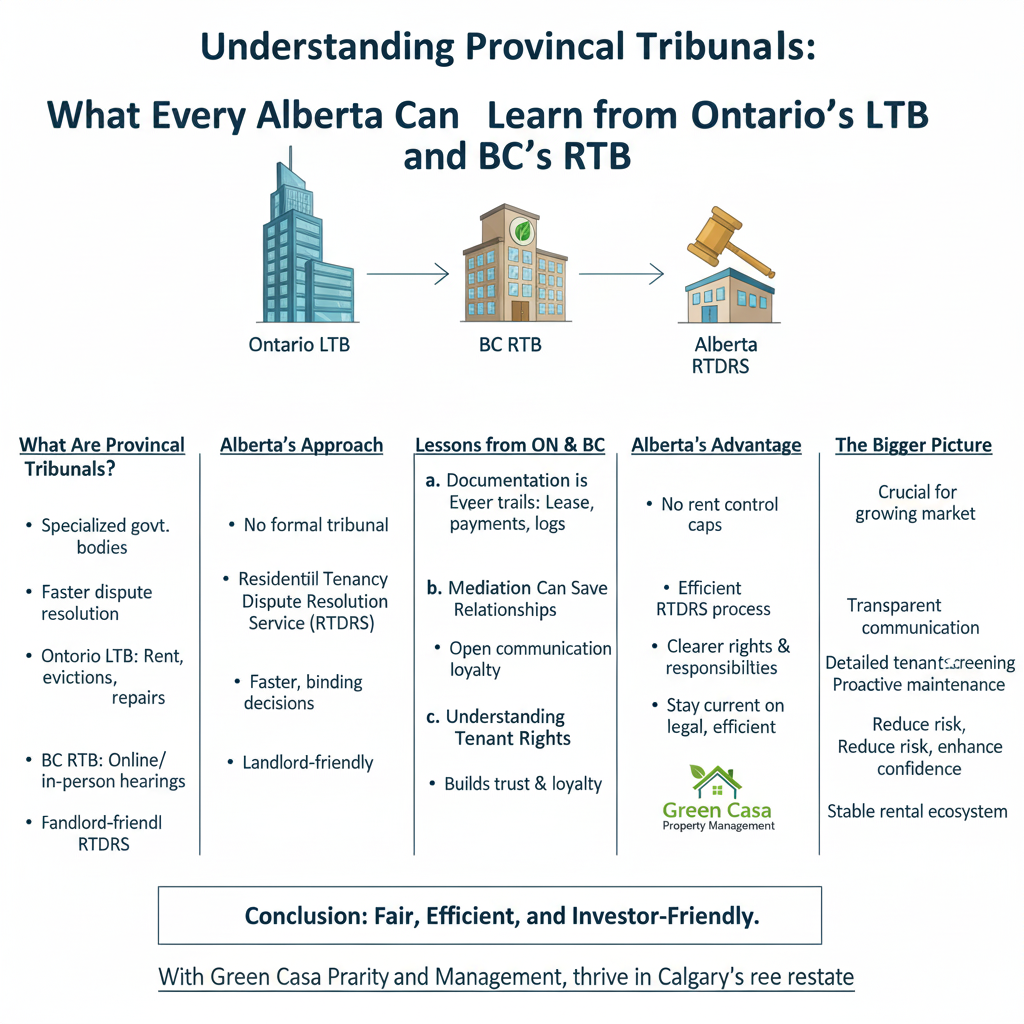
When it comes to rental management in Canada, every province operates under its own housing laws and tenant protection systems. Two of the most well-known examples are Ontario’s Landlord and Tenant Board (LTB) and British Columbia’s Residential Tenancy Branch (RTB), both of which serve as the official dispute resolution bodies between landlords and tenants.
While Alberta does not have the same type of tribunal structure, understanding how these provincial systems work can give Calgary investors and landlords valuable insight into how to navigate disputes, protect their investments, and build better relationships with tenants.
1. What Are Provincial Tribunals and Why Do They Matter?
Provincial tribunals are specialized government bodies designed to handle rental housing disputes quickly, fairly, and without the need for lengthy court processes.
For instance:
- The Ontario LTB manages hearings related to rent arrears, evictions, repairs, and lease violations.
- The BC RTB performs a similar role through online or in-person hearings, aiming for efficient dispute resolution.
These systems were created to streamline landlord-tenant conflicts, ensure legal compliance, and protect both parties’ rights.
For landlords, understanding how these tribunals function can help prevent missteps that lead to unnecessary costs or delays, especially as Alberta’s rental market continues to grow and evolve.
2. Alberta’s Approach: Simplicity and Speed
Unlike Ontario or BC, Alberta does not have a formal housing tribunal. Instead, disputes between landlords and tenants are handled through:
- The Residential Tenancy Dispute Resolution Service (RTDRS)
- Or, in more complex cases, through the Provincial Court of Alberta
The RTDRS offers landlords and tenants a more accessible way to resolve conflicts without needing to go through a full court process. Applications are often handled within weeks rather than months, and decisions are legally binding.
This system provides a balanced blend of efficiency and fairness, which makes Alberta a landlord-friendly province compared to others. It also reflects why cities like Calgary and Edmonton are leading real estate investment destinations — landlords have clearer rights, faster recourse, and fewer bureaucratic delays.
3. Lessons from Ontario and BC: What Calgary Investors Should Know
Even though Alberta’s system differs, there are valuable lessons from how other provinces manage landlord-tenant relationships:
a. Documentation is Everything
Tribunals like Ontario’s LTB heavily emphasize paper trails, lease agreements, payment records, maintenance logs, and communication records. Alberta landlords should follow the same principle.
Keeping organized documentation helps protect against disputes and ensures credibility during any RTDRS hearing.
b. Mediation Can Save Relationships
In both Ontario and BC, mediation often prevents small misunderstandings from becoming formal disputes.
Green Casa Property Management encourages landlords to resolve concerns through calm, open communication before they escalate. Mediation not only saves time and legal fees but also helps maintain long-term, respectful tenant relationships.
c. Understanding Tenant Rights Builds Trust
Ontario and BC have strong tenant rights laws, and while Alberta’s framework is more flexible, understanding your tenant’s perspective is key.
A transparent, respectful approach fosters tenant loyalty, meaning longer stays, fewer vacancies, and better property care.
4. Alberta’s Advantage: Clarity and Control for Landlords
One of the biggest advantages for Alberta investors is the province’s straightforward tenancy legislation.
Key benefits include:
- No rent control caps: Landlords can adjust rent annually to reflect market rates.
- Efficient dispute process: RTDRS decisions are typically faster than tribunal rulings in Ontario or BC.
- Landlord-friendly framework: Clear rights and responsibilities make it easier to manage properties and protect returns.
These factors create an ideal environment for both local investors and out-of-province buyers looking to enter Calgary’s growing rental market.
5. Why Green Casa Focuses on Preventive Management
At Green Casa Property Management, we believe that the best way to handle disputes is to prevent them.
Through transparent communication, detailed tenant screening, and proactive maintenance, our team minimizes conflict and keeps landlord-tenant relationships strong.
We also stay current with evolving tenancy laws across Canada, including how provincial tribunals like the LTB and RTB set best practices. This ensures that our clients’ properties are always managed ethically, legally, and efficiently.
6. The Bigger Picture: What This Means for Alberta’s Market
As Calgary continues to attract new residents and investors, understanding how tenancy governance works across Canada becomes even more important.
Learning from other provinces helps shape better management standards, reduce risk, and enhance investor confidence. With population growth, high rental demand, and a clear dispute process through RTDRS, Alberta offers one of the most balanced and stable rental ecosystems in the country.
Conclusion: Fair, Efficient, and Investor-Friendly
While provinces like Ontario and BC use tribunals to regulate rental disputes, Alberta’s system offers clarity, speed, and fairness through the RTDRS.
For investors and landlords in Calgary, this means fewer legal hurdles, faster resolution times, and greater control over their investments.
With Green Casa Property Management by your side, you gain not just experienced professionals but also a team that understands the laws, the markets, and the people who make Calgary’s real estate scene thrive.