

Green Casa Commercial

Get In Touch

Green Casa Popup Form

Latest News & Articles

Discover practical property tips, commercial insights, and industry updates from our experts.

Alberta Condominium Act
Blog, Condo Management

What Is the Alberta Condominium Act and Why Does It Matter?

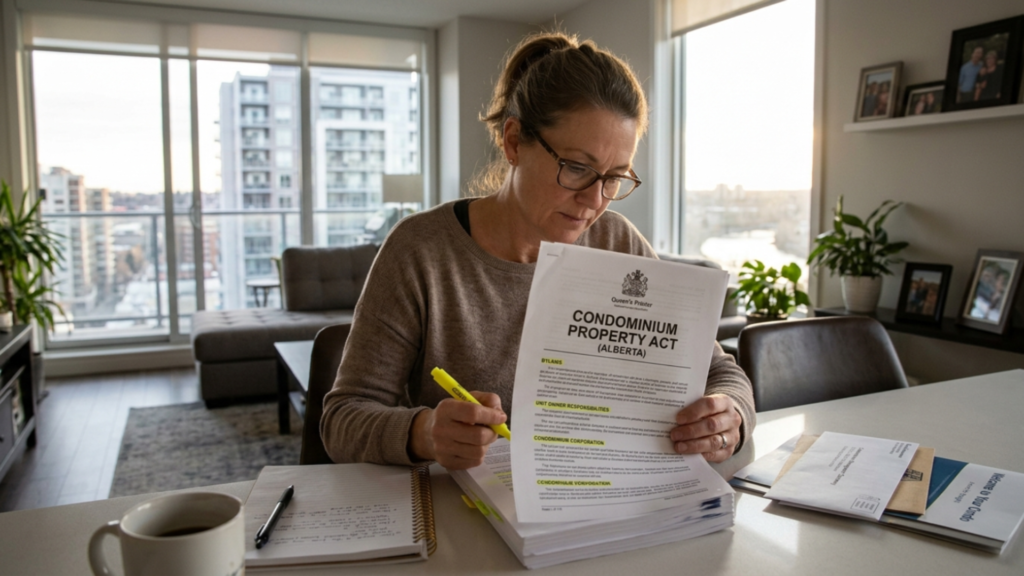
You own a condo. Are thinking about buying one in Alberta.. Have you ever read the Alberta Condominium Act? Most people have not. I was guilty of that too when I bought my condo. The Condominium Act is really important for every condo owner. Today you and I will explore what the Condominium Act is and why it affects your life. By the end you will know your rights, your responsibilities and how to protect yourself. This knowledge could save you from mistakes. What Is the Alberta Condominium Act? The Alberta Condominium Act is the law that governs all condominiums in Alberta. It sets the rules for how condos are created managed and governed. The Condominium Act covers everything from condo fees and reserve funds to board elections and dispute resolution. Every condo corporation in Alberta must follow the Condominium Act. It also protects the rights of individual unit owners. The Condominium Act ensures that owners have a say in how their building’s run. Without the Condominium Act condo living would be chaotic. I have seen how the Condominium Act provides structure and fairness in every condo community. Why the Alberta Condominium Act Matters to You You might think the Condominium Act is for lawyers and board members.. It affects you directly. The Alberta Condominium Act gives you the right to see records. It gives you the right to vote in board elections. It gives you the right to challenge bylaws. The Condominium Act also protects you from fee increases. Without the Condominium Act a board could do whatever they wanted with no accountability. I have seen owners use the Condominium Act to stop decisions by their board. Knowledge of the Condominium Act is power. It is your shield against mismanagement. The Role of Condo Boards Under the Act Condo boards are. Governed by the Condominium Act. The board manages the corporation. Makes decisions about maintenance, finances and rules. They are elected by the owners. They must follow the Condominium Act in everything they do. The Condominium Act requires boards to hold general meetings. It requires them to provide statements. It requires them to maintain a reserve fund. If a board violates the Condominium Act owners can take action. I have served on a board. Learned the hard way that the Condominium Act is not optional. It is the law. It must be followed. Condo Fees and Reserve Funds Under the Act The Condominium Act sets rules for condo fees and reserve funds. Fees must be reasonable. Used for legitimate expenses. The board must prepare a reserve fund study every five years. This study estimates repair costs. The reserve fund must be adequately funded to cover these costs. If the fund is too low special assessments may be needed. The Condominium Act requires transparency. Owners have the right to see the reserve fund study. I always recommend reviewing the reserve fund before buying a condo. The Condominium Act gives you that right. Use it. Bylaws and Rules What the Act Allows Bylaws are the rules that govern a condo community. They cover everything from restrictions to parking rules to noise limits. The Condominium Act allows condo corporations to create bylaws.. Those bylaws cannot violate the Condominium Act or the law. Bylaws must be reasonable. They must be enforced fairly. Owners have the right to propose changes to bylaws. The Condominium Act also requires that bylaws be registered with the land titles office. If a bylaw is unreasonable or unfair owners can challenge it. I have helped owners challenge bylaws that went far. The Condominium Act protects you. Dispute Resolution Under the Act Disputes happen in condo communities. The Condominium Act provides a process for resolving them. First you try to resolve the issue. If that fails you can mediate. If mediation fails you can apply to the Court of Queens Bench. The Condominium Act also allows for arbitration. I have seen disputes over noise, pets and parking resolved through these processes. The Condominium Act ensures that disputes are handled fairly and consistently. Without the Condominium Act disputes would drag on forever. Knowing the dispute resolution process gives you confidence to stand up for your rights. Recent Changes to the Alberta Condominium Act The Alberta Condominium Act has been updated in years. New rules require education for board members. New rules require voting for board elections. New rules require transparency in reserve fund studies. These changes make condo governance more professional and accountable. I welcome these changes. They make it easier for owners to participate and harder for boards to mismanage. If you own a condo stay informed about changes to the Condominium Act. The law. So should your knowledge. Conclusion You now understand the Alberta Condominium Act. Why it matters. It gives you rights as an owner. It holds boards accountable. It ensures governance. It sets rules for fees, reserve funds and bylaws. It provides a dispute resolution process. Whether you are a buyer or a long time owner knowing the Condominium Act is essential. I have used the Condominium Act to protect my rights and to help others. Do not be afraid of the law. Embrace it. The Condominium Act is your defense, in condo living. Frequently Asked Questions (FAQs) What is the Alberta Condominium Act? It is the law that governs all condominiums in Alberta. It sets rules for management, finances and owner rights. Who enforces the Alberta Condominium Act? The Condominium Dispute Resolution Tribunal. Owners can also challenge violations through the system. Do all condos in Alberta follow the act? Yes. All condominiums in Alberta are governed by the Alberta Condominium Act. Can a condo board ignore the Alberta Condominium Act? No. Boards must follow the Alberta Condominium Act. If they do not owners can take action. How can I learn more about the Alberta Condominium Act? You can read the act online. Many condo management companies and lawyers also provide resources. Hafil Perincheeri Co-Founder & Director Linkedin Envelope Instagram Hafil Perincheeri is an engineer-turned-realtor, investor, 10

Bare Land Condominium
Blog, Condo Management

Bare Land Condominium Explained: A Complete Guide for Buyers

I was looking at homes. I kept hearing the term “bare land condominium”. What does it mean? A bare land condominium is one of the misunderstood types of property ownership in Canada. I was confused when I first heard about it. Now I want to explain it in terms. By the end of this, you will know what a bare land condominium is, how it works and if it is right for you. What Is a Bare Land Condominium? Let me start with a definition. A bare land condominium is when you own the land your home’s on and you share some areas with your neighbors, like roads and parks. This is different from a condo where you only own the inside of your unit. In a land condominium you own the land and the house on it. You share some areas with your neighbors, like roads and utilities. These shared areas are managed by a group of owners called a condominium corporation. This type of ownership is common in duplexes, townhouses and some single family home communities. How Does a Bare Land Condominium Differ from a Condo? This is a question I get a lot. In a condo you own the inside of your unit but not the land. The condominium corporation owns the land and shared areas. You pay fees every month for maintenance of shared spaces. In a land condominium you own your land and your house. You only share some areas with your neighbors like roads and utilities. You have control over your property. You can change your house and yard easily.. You still pay fees every month for shared things like roads and utilities. I have owned both types. The difference is big. The Ownership Structure of a Bare Land Condominium When you buy a land condominium you become part of the condominium corporation. The corporation is made up of all the owners. They elect a board to manage areas. The board handles money, maintenance of shared things and enforcement of rules. Each owner has a vote based on their unit size or lot size. The corporation collects fees every month to cover road maintenance, snow removal, landscaping of shared areas and utility systems. This structure gives you ownership of your land while sharing costs for shared things. The Pros of Owning a Bare Land Condominium Why would someone choose a land condominium over a regular home? First you own the land. That means you have control over your property within the rules. Second you share the cost of things like roads and utilities. That can be cheaper than doing it all yourself. Third, the fees are often lower than condo fees because there are fewer shared things. Fourth you have privacy and space than a traditional condo. Fifth, you can usually have pets, gardens and changes easily. I have recommended land condominiums to buyers who want a home feel with shared cost benefits. The Cons of Owning a Bare Land Condominium course, there are downsides. You are still part of a condominium corporation. That means you have to follow rules and pay fees. You cannot do whatever you want on your property. There may be rules about fences, parking or exterior changes. You also share the cost of repairs to shared things. If the road needs to be fixed or the drainage system fails you share the bill. You also have control over the overall management of the community. I have seen owners get frustrated with decisions they disagreed with. Bare Land Condominium Fees: What Do They Cover? Fees in a land condominium cover shared things like road maintenance, snow removal, landscaping of shared areas, street lighting and utility systems. Some communities also have gates, security or clubhouses that add to the fees. The fees are generally lower than condo fees because there are fewer shared buildings and things.. They still require budgeting. I always tell buyers to review the fee structure. Ask what is included and what is not. Understanding the fees is essential when considering a land condominium. Common. Restrictions Every bare land condominium has rules. These rules govern what you can. Cannot do on your property. Common rules include fence height and materials exterior paint colors, types of roofing allowed, parking regulations and landscaping requirements. Some communities restrict the size or type of pets. Others have age restrictions. I have seen buyers fall in love with a home only to discover they cannot build the garage they wanted. Always review the rules before you buy. Request a copy from the condominium corporation or your real estate agent. Is a Bare Land Condominium Right for You? Here is my honest advice. A bare land condominium is a choice if you want to own your land and home but still want to share the cost of things like roads and utilities. It is also good if you want control than a traditional condo but do not want the full maintenance responsibility of a detached home. It is not ideal if you dislike rules and shared decision making. If you want freedom buy a detached home outside a condo corporation. If you want maintenance and amenities choose a traditional condo. I have helped many buyers find their fit. The right choice depends on your lifestyle and priorities. Conclusion You now understand what a bare land condominium is. You own your land and home share some areas and pay fees for shared things. It offers control than a traditional condo but less freedom, than a detached home. Review the rules, fees and reserve fund before buying. I have owned a land condominium and enjoyed the balance of control and shared costs. If it fits your lifestyle it can be a choice. Go find your home. Frequently Asked Questions (FAQs) What is a land condominium? It is a type of ownership where you own your land and home but share some areas with your neighbors like roads and utilities. How is a bare land condominium 10

Condo Management

Bare Land Condo vs Traditional Condo: Which Is Right for You?

You are ready to buy a home. You have two options: a bare land condo or a traditional condo. You are not sure which one is better. I have owned both land condos and traditional condos and I can tell you that they offer very different lifestyles. Today you and I will compare land condos and traditional condos in detail. We will look at costs, control, maintenance and lifestyle. By the end you will know exactly which type of ownership fits your needs for a land condo or a traditional condo. What Is a Bare Land Condo Compared to a Condo? Let me start with the basics. A bare land condominium means you own your lot and home a land condo. You share common areas like roads and utilities. A traditional condo means you own your unit but not the land, a condo. You share hallways, elevators and building systems with owners. Understanding a land condominium is essential before making a decision. The ownership structure, costs and lifestyle are completely different for a land condo and a traditional condo. I have helped many buyers choose between these two types of condos a land condo and a traditional condo. The right choice depends on your priorities for a land condo or a traditional condo. Cost Comparison: Which Is More Affordable for a Bare Land Condo or a Traditional Condo? Let us talk money for a land condo and a traditional condo. A bare land condo generally has monthly fees for a bare land condo. You are not paying for elevators, gyms or concierge services for a land condo. You pay for roads, snow removal and utilities for a bare land condo. A traditional condo has fees to cover building maintenance, insurance and amenities for a traditional condo. However the purchase price of a land condo can be higher because you are buying land for a bare land condo. A traditional condo has a purchase price because you are buying only a unit for a traditional condo. I have seen buyers choose one over the other based on their budget for a land condo or a traditional condo. The total cost of ownership is what matters for a land condo and a traditional condo. Control and Freedom: Which Gives You More for a Bare Land Condo or a Traditional Condo? Control is where a bare land condo shines for a land condo. You own your land and home a land condo. You can paint, landscape and renovate freely within the bylaws for a bare land condo. You have your entrance and outdoor space for a bare land condo. A traditional condo offers control for a traditional condo. You share walls, floors and ceilings for a condo. You need board approval for changes for a traditional condo. You have privacy and less outdoor space for a traditional condo. I have lived in both a bare land condo and a traditional condo and the freedom of a land condominium is significant for a bare land condo. If you value control and privacy a bare land condo is the choice for a bare land condo. Responsibility: Which Is Easier for a Bare Land Condo or a Traditional Condo? Maintenance is a trade off for a land condo and a traditional condo. In a land condo you maintain your home and yard for a bare land condo. You are responsible for the roof, windows, landscaping and exterior of your home for a land condo. The condominium corporation handles shared infrastructure like roads and utilities for a bare land condo. In a condo you are responsible only for the interior of your unit for a traditional condo. The corporation handles everything including the roof, windows, hallways, elevators and landscaping for a traditional condo. If you want maintenance a traditional condo is easier for a traditional condo. If you enjoy gardening and home projects a bare land condominium offers that opportunity for a land condo. Lifestyle: Which Suits You for a Bare Land Condo or a Traditional Condo? Each offers a lifestyle for a bare land condo and a traditional condo. A bare land condo community often feels like a neighborhood for a land condo. You have your home, yard and street for a bare land condo. Neighbors are close. Not sharing walls for a bare land condo. A traditional condo feels more urban for a condo. You share areas and amenities for a traditional condo. You may have a gym party room and rooftop terrace for a condo. You are closer to shops, restaurants and transit for a condo. I have recommended land condos to families and traditional condos to professionals for a bare land condo and a traditional condo. Think about your routine for a bare land condo or a traditional condo. Do you want a yard and street for a land condo?. Do you want amenities and walkability for a traditional condo? Resale. Investment Potential for a Bare Land Condo and a Traditional Condo Which is a better investment for a bare land condo and a traditional condo? Both can appreciate well. For different reasons for a bare land condo and a traditional condo. A bare land condominium includes land ownership, which’s limited and valuable for a bare land condo. Land values generally increase over time for a land condo. A traditional condo offers convenience, which appeals to renters and young professionals for a traditional condo. It may be easier to rent out for a condo. I have seen both types perform well for a land condo and a traditional condo. The key is location and condition for a land condo and a traditional condo. Choose a managed community or building for a bare land condo and a traditional condo. Review the reserve fund and bylaws for a land condo and a traditional condo. A good investment is about more than the type of ownership for a land condo and a traditional condo. How to Decide Which Is Right for You for a Bare 10

Freehold vs Leasehold
Property Management Services

Freehold vs Leasehold in Canada: Which Property Ownership Is Right for You?

You want to buy a home.. You have a big decision to make. Should you buy freehold or leasehold? Knowing what freehold property means is the start. You also need to understand how leasehold works and which one is better for you. Today we will compare freehold and leasehold in detail. We will look at costs, control, appreciation and lifestyle. By the end you will know which type of ownership fits your budget and plans. What Is Freehold in Property and How Does It Compare to Leasehold? Let me refresh your memory. What does freehold property mean? It means you own the building and the land forever. You have no landlord, no ground rent and no lease expiration. Leasehold means you own the building but rent the land from a landlord. The lease is for a fixed period, 99 years. You pay ground rent. You have restrictions. The value of a leasehold decreases as the lease gets shorter. I have owned both types and the differences are real. Freehold is simple. Leasehold is complicated. Freehold is ownership. Leasehold is a long-term rental of the land. The Real Costs of Freehold vs Leasehold Lets talk money. This is where the choice really matters. With freehold you pay the purchase price. You pay property taxes. You pay all maintenance and repairs. With leasehold you pay a purchase price but you also pay ground rent. In some cases ground rent can be hundreds or thousands per year. You also pay for your share of building maintenance and land lease renewal fees. Over 20 years a leasehold can cost more than a freehold because of these fees. I have seen buyers choose leasehold for the upfront cost only to pay more over time. Understanding property helps you see the bigger picture. Freehold is expensive upfront but cheaper in the long run. Freedom: Freehold Wins Every Time This is where freehold truly shines. With freehold you are in charge. You can renovate, paint or replace without asking permission. You can have pets plant a garden or build a deck. With leasehold you have limits. You need approval for changes. There are rules about pets, noise and even the color of your door. I had a friend who wanted to install air conditioning in a leasehold condo. The landlord refused. He had to suffer through summers. In a home that would never happen. When you ask what freehold property means the answer is freedom. You make the rules. Appreciation and Investment Value Freehold properties generally appreciate faster and more consistently than leasehold. Why? Because freehold includes the land. Land is limited. Its value goes up over time. Leasehold does not include land ownership. As the lease gets shorter the property value goes down. Lenders also prefer freehold. They offer mortgage rates and terms. I have seen leasehold properties sit on the market because buyers know the lease is short. If you are buying for investment freehold is the winner. If you are buying for lifestyle freehold still wins. It is a better asset to own. Freehold properties are an investment. When Leasehold Might Make Sense I have been fair far. Let me be honest about when leasehold can be a choice. If you are buying in a high-cost area like downtown Vancouver leasehold might be the affordable option. The purchase price can be 30 to 50 percent lower than freehold. If you are buying for a term leasehold might work. If you are buying for income the numbers might still make sense.. You need to check the lease terms carefully. How many years are left? What are the renewal terms? What is the ground rent? I always say, if you understand freehold property you can make a decision about whether leasehold is worth the trade-offs. Leasehold has its advantages. Risks of Leasehold You Need to Know Leasehold has hidden risks. The lease can expire. If the landlord does not renew you lose everything. Even if they renew the new terms may be more expensive. Ground rent can increase dramatically. There may be assessments for major repairs. The building may have restrictions on who can live or how you can use the unit. I have seen leasehold owners lose sleep over lease renewals. Freehold owners never worry about that. If you are risk-averse freehold is the choice. Freehold is an option. How to Check If a Property Is Freehold or Leasehold This is easier than you think. Ask your real estate agent to check the title. The title will clearly state freehold or leasehold. You can also check the property listing. Most listings will say. If you are unsure ask the seller or the real estate lawyer handling the sale. I always recommend getting a title search. That document shows who owns the land and for how long. If you are still unsure what freehold property means ask a professional. It is better to ask a question than to make a million-dollar mistake. Conclusion You now understand the difference, between freehold and leasehold. Freehold means owning the land and building with no lease or ground rent. It gives you control, better appreciation and peace of mind. Leasehold is cheaper upfront. Comes with ongoing costs, restrictions and risks. I have owned both. I always choose freehold when I can. It is simpler and more rewarding. When you are ready to buy ask the questions. Check the title.. If you are still wondering what freehold property means remember: it is the gold standard of homeownership. Choose wisely. Frequently Asked Questions (FAQs) What are the types of condominiums in Calgary? There are apartment condos, townhouse condos, bare land condos and duplex or fourplex condos. Which type of condo is the most affordable in Calgary? Bare land condos often have fees, but the price of the condo can vary. Apartment condos in buildings can be more affordable. Do all condos have fees? Yes, all condominiums in Calgary have fees. Can I renovate my condo unit? Yes,. You may need permission 10

Condominiums in Calgary
Blog, Condo Management

A Guide to the Different Types of Condominiums in Calgary, Alberta

You want to buy a condo in Calgary. Then you find out there are many types. There are condos, townhouse condos, bare land condos and more. You need to know about the types of condominiums in Calgary before you make a decision. I have helped many people buy condos. I want to share what I know. Today we will look at every type of condo in Calgary. By the end you will know which type of condo is right for you and your money. What Is a Condominium? How Does It Work in Calgary? First lets start with the basics. A condominium or condo is when you own your unit and share some areas with other owners. These areas can include hallways, elevators, parking, gyms and landscaping. All owners pay fees to take care of these shared areas. Condos have a board of directors that makes sure everything runs smoothly. This board is made up of owners who were elected by the owners. They make sure the building is in condition and that everyone follows the rules. This is how all types of condominiums in Calgary work. Apartment Condos The Most Common Choice Apartment condos are what people usually think of when they think of condos. They are buildings with many units. You own your unit. You share walls and floors with your neighbors. These condos often have amenities like a gym party room and underground parking. They are popular in downtown Calgary and other areas. The monthly fees can be high because of the amenities and maintenance. Apartment condos are great if you want a life with minimal work. Townhouse Condos: The Best of Both Worlds Townhouse condos are like row houses. You own your unit, which has two or three floors. You have a yard or patio. You share one or two walls with your neighbors. You have your own entrance. This type of condo is very popular in Calgary because it offers space and privacy. The condo fees are usually lower because there are amenities. You are responsible for the outside of your unit unless the condo corporation takes care of it. I have recommended townhouse condos to families who want a home feel without all the work. Bare Land Condos: A Unique Ownership Structure Bare land condos are different. You own the land your home’s on and you share some areas with your neighbors. This type of condo is common in duplexes and fourplexes. You are responsible for your home, including the roof and landscaping. The condo fees are often lower because there are shared amenities. This type of condo can be an option because it gives you more control and lower maintenance costs. I have helped people buy land condos when they wanted a detached home feel without all the work. Condominium Corporations and Their Role Every condo has a corporation. The corporation is made up of all the owners, who elect a board of directors. The board handles the money hires managers and makes sure everyone follows the rules. They also plan for repairs. If the corporation does not have money you may have to pay extra fees. I always tell people to review the condo corporation documents before buying. A run corporation means a well-maintained building. Condo Fees: What They Cover. Why They Vary Condo fees are important to consider. They cover maintenance, insurance and utilities for shared areas. The fees vary depending on the building and the corporation. In Calgary monthly condo fees can range from 200 dollars to over 800 dollars. Newer buildings may have fees but they can increase over time. Older buildings may have fees but they are often better maintained. I have seen people choose a condo with fees only to have to pay extra later. Always ask about the reserve fund. The Pros and Cons of Each Condo Type Lets look at the pros and cons of each type of condo. Apartment condos offer convenience and amenities. They can have high fees and less privacy. Townhouse condos offer space and a home feel but they require more work. Bare land condos offer control and lower costs. They may not have all the amenities. The right choice depends on your lifestyle. If you travel often an apartment condo might be best. If you have a family a townhouse condo might be better. If you want a detached home feel a bare land condo could be the answer. I have owned all types of condominiums in Calgary. Each one was right for me at different times. Conclusion You know about the different types of condominiums in Calgary. Each type has its benefits and drawbacks. Think about your lifestyle, your budget, and what you want. Review the condo corporation documents. Ask about the reserve fund. I have helped many people find their condo and these tips have always worked. Calgary has a condo for everyone you just need to find the one that fits you best. Frequently Asked Questions (FAQs) What are the types of condominiums in Calgary? There are apartment condos, townhouse condos, bare land condos and duplex or fourplex condos. Which type of condo is the most affordable in Calgary? Bare land condos often have fees, but the price of the condo can vary. Apartment condos in buildings can be more affordable. Do all condos have fees? Yes, all condominiums in Calgary have fees. Can I renovate my condo unit? Yes,. You may need permission from the board for big changes. Always check the rules before starting any work. What is an assessment? A special assessment is a fee that you have to pay when the reserve fund is not enough to cover repairs. Green Casa Co-Founder & Director Linkedin Envelope Instagram Hafil Perincheeri is an engineer-turned-realtor, investor, and builder based in Calgary, Canada. As Co-Founder and Director of Greencasa, he specializes in home flips, property development, and investment strategies. Since 2019, he has guided clients in home buying, multifamily investing, and financing options like CMHC and 10

residential vs commercial real estate
Real Estate

Residential vs Commercial Real Estate Investment: Which Path Is Right for You?

You are ready to invest in estate but you have a big decision to make: residential or commercial property. I have invested in both types of properties. I can tell you that they are completely different. Today we will compare the two types of real estate investments. We will look at the costs, returns, risks, relationships with tenants and financing options. By the end of this you will know which path is right for you based on your goals, your personality and your bank account. This decision will affect your investing journey for years to come. What Is Residential Real Estate Investment? Residential real estate investment means buying properties where people live. This includes family homes, duplexes, townhouses, condos and apartment buildings with up to four units. You rent these properties out to people who will live there. This is where most new investors start, because it is easier to get into. You can buy a single family home with a payment of 5 to 20 percent. The financing process is straightforward. The tenants are people and you can relate to them. I started with a duplex and it helped me learn the basics of real estate investing. Residential investing is familiar. It is easy to understand because you have lived in a home yourself. That makes it more comfortable for you. What Is Commercial Real Estate Investment? Commercial real estate investment includes properties that are used for businesses. This includes office buildings, retail spaces, warehouses, industrial units and apartment buildings with five or more units. You rent these properties out to businesses or to tenants. The leases are usually longer. They can last from 5 to 10 years. The tenants are companies, not families. The numbers are bigger. A small commercial property can cost 1 million dollars or more. The down payment is usually 25 to 35 percent and the financing process is more complex. I did not invest in properties until I had several residential properties because it is a different game with higher stakes and higher rewards. The Costs and Financing Differences Let us talk about money. Residential properties are cheaper to buy. They are easier to finance. You can get a mortgage with a 5 percent down payment and a 25 year amortization period. The interest rates are lower. Commercial properties require a 25 to 35 percent down payment. The amortization periods are shorter, usually 15 to 20 years. The interest rates are higher. The purchase price is also much higher. A decent commercial building can cost 1 to 5 million dollars, which’s a lot of money. Commercial leases often include triple net clauses, which means the tenant pays property taxes, insurance and maintenance. This reduces your expenses. I have found that commercial properties often have cash flow but the upfront cost is intimidating. Returns and Cash Flow Comparison Residential properties generate returns from rent and long term appreciation. The cash flow is steady. It is often modest. A single family home might generate 200 to 500 dollars per month after expenses. Commercial properties can generate higher returns. A located retail or industrial property can yield 8 to 12 percent return on investment. The leases are longer. The rents increase regularly. If a commercial property is vacant it can hurt more. A residential vacancy of one month can lose 2,000 dollars while a commercial vacancy of six months can lose 60,000 dollars or more. I have experienced both. I can tell you that residential properties are slow and steady while commercial properties are high risk, high reward. Tenant Relationships and Management Residential tenants are individuals and families. They can be emotional. They call you about every issue and they have a personal connection to the property. Managing them requires patience and people skills. Commercial tenants are businesses. They care about the propertys functionality. They want to know if the property has parking, if the HVAC system is reliable and if they can load deliveries easily. They are less emotional. They are more demanding about specific needs. They also have lawyers reviewing the leases. I have found that managing residential properties is hands on and personal while managing commercial properties is more professional and distant. Both types of properties have their challenges. Vacancy and Risk Vacancy is the risk in both residential and commercial properties. Residential vacancies are usually shorter. You can find a new tenant in 30 to 60 days. Commercial vacancies can last 6 to 12 months or more because there are commercial renters. The search is longer. The financial impact is larger. I remember having a retail space sit empty for eight months and it hurt. Residential vacancies are also painful. They are easier to recover from. The risk is lower because there are always people looking for homes. Commercial properties are more sensitive to the economy. A recession can hit businesses first. Tax Benefits of Each Investment Both residential and commercial properties offer tax advantages. With properties you can deduct mortgage interest, property taxes, insurance, maintenance and depreciation. You can also claim capital cost allowance. With properties you can deduct all the same expenses, plus tenant improvements, lease commissions and professional fees. The depreciation rates are higher for properties and you can also defer capital gains through a 1031 exchange or similar rules in Canada. I have used both to reduce my tax burden but commercial tax planning is more complex. You need an accountant who understands commercial real estate. Which One Is Right for You? Here is my honest advice: start with properties if you are new to real estate investing. The barriers are lower. The mistakes are cheaper. You will learn how to manage tenants maintain properties and generate cash flow without risking everything. Once you have owned a residential properties and understand real estate investing then consider commercial properties. You will need capital and more patience but the returns can be life changing. If you have the funds and the risk tolerance commercial properties can accelerate your wealth. If 10

Freehold in Property
Blog, Real Estate

What Is Freehold in Property? A Complete Guide for First Time Buyers

You have been scrolling through real estate listings and keep seeing the word freehold.. What does it actually mean? Understanding what freehold in property is one of the important things you will learn as a buyer. I was confused by this term when I bought my home. Today you and I will break it down in language. By the end you will know what freehold means, how it differs from other types of ownership and why it matters for your purchase decision. What Is Freehold in Property The Simple Definition Let me give you an explanation. What is freehold in property? It means you own both the house and the land it sits on. There is no lease, no landlord and no monthly ground rent. You are the absolute owner. You can do anything you want with the property subject to local zoning and building codes. You can renovate, knock down rebuild, sell or pass it to your children. Freehold is the common type of homeownership in Canada. Most single family homes and many townhouses are freehold. When you buy a property you are buying the land under your feet and everything on top of it. Freehold vs Leasehold What Is the Difference? This is the question I get often. What is freehold in property compared to leasehold? In a leasehold you own the house but not the land. You lease the land from a landlord for 99 years. You pay ground rent. You have restrictions on what you can do. The value of leasehold properties decreases as the lease shortens. Freehold on the hand gives you full ownership forever. There is no expiring lease. No one can take the land back from you unless you fail to pay property taxes. I have seen buyers choose freehold over leasehold for peace of mind. Freehold means freedom. Leasehold means limits. The Advantages of Freehold Ownership Why do buyers prefer freehold? The benefits are substantial. First you have control. You can renovate, expand or landscape without asking permission from a landlord. Second you do not pay ground rent. You never pay fees for the land itself. Third freehold properties generally increase in value faster than leasehold because the land is yours. Fourth you can pass the property to your children without lease expiration worries. Fifth financing is easier. Lenders prefer freehold because it is a secure asset. I have owned both freehold and leasehold properties. I can tell you freehold is simpler and more rewarding in the long run. The Responsibilities of Freehold Ownership Freehold is not all freedom. With ownership comes responsibility. You are responsible for every repair every maintenance issue and every upgrade. When the roof leaks you fix it. When the furnace breaks you replace it. When the driveway cracks you repave it. There is no condo board or landlord to share costs. You also pay property taxes, full insurance and all utility connection fees. Understanding what freehold in property means understanding that you are fully responsible for the propertys condition. I always tell buyers to budget 1 to 2 percent of the property value for maintenance. On a 500,000 dollar home that is 5,000 to 10,000 dollars per year. Freehold is freedom. Freedom comes with bills. What to Look for When Buying a Freehold Property This is a common source of confusion. A freehold condo or townhouse means you own the unit and your share of the elements.. You do not own the land exclusively. You share it with owners. You pay condo fees for maintenance of areas. You are bound by condo board rules. Is that freehold? Yes, in the sense that the condo corporation owns the land collectively.. It is not the same as a detached single family home. When people ask what freehold in property is they are usually thinking of a detached house.. Townhouses can also be freehold meaning no condo fees. Always check the description. If you own the land under your townhouse you are freehold. Freehold. Townhouses What Buyers Need to Know This is a common source of confusion. A freehold condo or townhouse means you own the unit and your share of the elements.. You do not own the land exclusively. You share it with owners. You pay condo fees for maintenance of areas. You are bound by condo board rules. Is that freehold? Yes, in the sense that the condo corporation owns the land collectively.. It is not the same as a detached single family home. When people ask what freehold in property is they are usually thinking of a detached house.. Townhouses can also be freehold meaning no condo fees. Always check the description. If you own the land under your townhouse you are freehold. Freehold vs Fee Simple Are They the Same? You might also see the term fee simple. Are fee simple and freehold the same? In Canada yes. Freehold and fee simple are often used interchangeably. Both mean you own the property outright with no time limit. There is no landlord, no ground rent and no lease expiration. The only exception is if there are covenants on the title, such as an easement for utilities.. Those are rare and minor. What freehold in property in Canada is fee simple ownership. It is the most complete form of ownership you can have. Conclusion You now understand what freehold in property is. It means owning the house and the land with no lease, no landlord and no expiration date. Freehold gives you freedom, control and better long term value. It also comes with full responsibility, for maintenance, repairs and taxes. I have owned homes for years and would not have it any other way. The peace of mind is worth every repair bill. If you are buying, choose freehold when you can. Your future self will thank you. Frequently Asked Questions (FAQs) What is freehold in property ownership? It means you own the house and the land it sits on with no lease or ground rent. You 10

condo rentals in calgary
Condo Management

Why Short Term Condo Rentals in Calgary Are a Smarter Choice Than Hotels

You are coming to Calgary. You need a place to stay. Your first thought might be to book a hotel. Have you thought about short term condo rentals in Calgary instead? I have stayed in both hotels and short term condo rentals in Calgary. I can tell you that the difference is huge. Today we will compare the two options. You will see why short term condo rentals in Calgary offer space, better value and a more authentic experience. By the end you may never book a hotel room again. More Space Means More Comfort Short term condo rentals in Calgary give you space. Hotel rooms are small. Even the fancy ones only give you a bed, a bathroom and a small desk. Short term condo rentals in Calgary give you a living room, a separate bedroom and often a dining area. You have room to stretch out. You have space to work. You have a place to gather with family or friends. I remember staying in a downtown hotel for a week and feeling like I was in a box. The trip I booked a short term condo rental in Calgary through a condo management company in Calgary. I had a kitchen, a balcony and a living room. It felt like my home. That extra space makes a difference. Save Money with a Kitchen Having a kitchen in a short term condo rental in Calgary saves you money. Eating out for every meal is expensive. In a hotel you are stuck with the restaurant or room service. A short term condo rental in Calgary gives you an equipped kitchen. You can cook breakfast, pack lunches. Even prepare dinner. That saves you a lot of money on meals.. If you have dietary restrictions cooking for yourself is a big deal. I love stopping at the grocery store picking up fresh ingredients and making my own meals. It is healthier and cheaper. Many short term condo rentals in Calgary also include spices and cooking oil so you do not have to buy everything. Live Like a Local Short term condo rentals in Calgary let you live like a local. Hotels are designed for tourists. You are surrounded by travelers and generic decor. A short term condo rental in Calgary puts you in a neighborhood. You shop at stores. You eat at cafes. You experience Calgary the way the locals do. I have discovered gems because I stayed in a condo in Inglewood or Kensington. The condo management company in Calgary can also give you insider tips on the restaurants, parks and attractions. That local knowledge makes a difference. Better Value for Groups and Families Short term condo rentals in Calgary are better for groups and families. If you are traveling with a group or family hotels can be a nightmare. You have to book rooms, which costs a fortune and separates everyone. A short term condo rental in Calgary gives you bedrooms in one unit. Everyone stays together. You save money. Create a better experience. I traveled with my family once and booked a three bedroom condo. We had a shared living room for games and meals. Each couple had their private space. That would have been impossible in a hotel. A condo management company in Calgary can help you find the unit for your group size. More Privacy and Quiet Short term condo rentals in Calgary give you privacy and quiet. Hotel walls are thin. You hear the neighbors, the hallway chatter and the street noise. Short term condo rentals in Calgary are often in buildings with quieter neighbors. You get privacy and a better night sleep. Also you do not have housekeeping knocking on your door at 8 AM. You control your schedule. I value my sleep much to risk a noisy hotel. A short term condo rental in Calgary gives me the peace I need to work and enjoy my trip. Flexible Check In and Check Out Short-term condo rentals in Calgary offer check-in and check-out. Hotels have check in and check out times. If your flight arrives early you might wait hours for your room. If you have a flight you may have to kill time before the airport. Many short term condo rentals in Calgary offer check in options. You can often arrange for check in or late check out with the condo management company in Calgary. Some units even have entry so you can let yourself in at any time. That flexibility is a lifesaver when travel plans change. Amenities That Match Hotel Offerings Short term condo rentals in Calgary have amenities that match hotel offerings. You might worry that a short term condo rental lacks hotel amenities.. Many buildings have pools, fitness centers and rooftop terraces. They have secure parking and concierge services too. A professional condo management company in Calgary will list all amenities. You get the best of both worlds: the comfort of a home and the perks of a hotel. I have stayed in condos with gyms and nicer pools than most hotels. Conclusion Short term condo rentals in Calgary offer space, better value, a kitchen, local living, privacy, flexibility and often better amenities than hotels. I have switched to short term condo rentals in Calgary for all my travel. I have never looked back. Whether you are here for a weekend or a month a short term condo rental in Calgary will make your stay more enjoyable. Do your research read reviews and book through a condo management company, in Calgary. You will thank yourself on day one. Frequently Asked Questions (FAQs) Are short term condo rentals in Calgary more affordable than hotels? For stays yes. The nightly rate plus fees is often lower than a hotel especially when you factor in the cost of eating out. Can I book a short term condo rental for one night? Some allow it. Most have a minimum stay of 2 to 3 nights. Check the listing. Ask the condo management company 10

Real Estate Investors
Real Estate

How to Avoid the Mistakes New Real Estate Investors Make

You are excited to buy your first rental property. The numbers look great on paper. The neighborhood seems like it is about to take off. Before you sign anything let me save you from the mistakes I made when I started out. Real estate investing can absolutely build wealth, but it can also drain your bank account quickly if you fall into common traps. Today you and I are going to walk through the errors new investors make and exactly how to dodge them. By the time we are done you will save thousands of dollars. Actually sleep better at night. 1. Falling in Love with the Property I have watched many new investors fall in love with a real estate investment property and ignore the numbers. You walk into a home with hardwood floors, a stunning renovated kitchen and a beautiful backyard. You imagine yourself living there. Suddenly you forget that the roof is 25 years old the furnace is ancient and the neighborhood has a crime rate that keeps going up. Here is a tip for real estate investment that took me years to learn: separate your emotions from the numbers. The real estate investment property is a business asset, not your dream home. I have walked away from properties that would have been terrible investments. The best deals are often the ones. They need work. They have the best numbers. I always look for real estate investment properties that make sense financially. 2. Not Factoring in All Expenses Investors almost always make this mistake. They calculate their costs as just the mortgage payment for their real estate investment.. What about property taxes? Insurance? Maintenance? Property management fees? Vacancies? I cannot tell you how times I have seen a real estate investment property that looked great on paper but lost money every single month because of hidden costs. Use the 50 percent rule as your reality check for your real estate investment. That rule says half your rental income will go to expenses for your real estate investment. If your rent is 2,000 dollars a month budget 1,000 dollars for expenses for your real estate investment. If your mortgage is 1,200 dollars, congratulations you are losing 200 dollars every month on your real estate investment. A solid tip for real estate investing is to underpromise and overbudget. Always add a 10 percent buffer to your expense estimates for your real estate investment. This way you will be prepared for any costs for your real estate investment. 3. Skipping the Home Inspection You found a real estate investment property and you want to move fast. The market is competitive so you think about waiving the home inspection to make your offer more attractive for the real estate investment. Do not do it. That is a game. Hidden issues like foundation cracks, mold, old knob and tube wiring or major plumbing problems can cost you tens of thousands of dollars for your real estate investment. I always recommend getting an inspection from a licensed professional for my real estate investment. If the seller refuses to allow an inspection walk away from the real estate investment. Use the inspection report to negotiate a price or ask the seller to make repairs before closing for your real estate investment. A hundred dollars for an inspection can save you 20,000 dollars in surprise repairs for your real estate investment. 4. Overpaying for the Property In a market it is so easy to get caught up in bidding wars for a real estate investment. You offer 10,000, 20,000 or even 50,000 dollars above asking to secure the deal for your real estate investment.. Remember this: your profit comes from the spread between what you pay and what you earn from your real estate investment. Overpaying eats into your returns immediately for your real estate investment. Real estate investment is about buying right not buying fast. Set a price before you make an offer for your real estate investment and stick to it no matter what. I have lost bidding wars. Felt disappointed but later I found even better deals for my real estate investment. There is always another real estate investment property. Do not get emotional about a real estate investment property. 5. Ignoring the Neighborhood The real estate investment property itself is half the story. The neighborhood determines your demand, your property value and your tenant quality for your real estate investment. Drive through the area at times of day. Is it quiet at night? Are the neighboring homes well maintained? Are there schools, parks and transit nearby? Look up crime statistics and future development plans for the neighborhood of your real estate investment. A real estate investment property in a declining neighborhood might be cheap. It will be hard to rent and even harder to sell. I always spend time in a neighborhood before I buy a real estate investment property. That local knowledge is a tip for real estate investment success. You need to know the neighborhood of your real estate investment. 6. Underestimating the Cost of Turnover When a tenant moves out you will spend money before the one moves in for your real estate investment. Cleaning, painting, repairs and advertising all cost money for your real estate investment.. You will lose at least two weeks of rent while the unit sits empty for your real estate investment. Budget for turnover costs to at least one month of rent for your real estate investment. On a 2,000 dollar rental that is 2,000 dollars for your real estate investment. If you do not plan for this you will be caught completely off guard when a tenant leaves your real estate investment. I recommend setting aside a turnover fund for each real estate investment property. That way you are never stressed when a lease ends for your real estate investment. 7. Taking on Much Debt Too Quickly Leverage is powerful in real estate investment but it is also dangerous for your 10

Scroll to Top

Compare