
Green Casa Commercial

Get In Touch

Green Casa Popup Form

Real Estate

Home Renovation Ideas
Blog, Real Estate

7 High-ROI Home Renovation Ideas That Actually Pay Off in 2026

Let me ask you this: have you ever spent a lot of money on a home renovation and then wondered if you would ever get that money back? I have been in that situation. It is not a good feeling. The truth is that not all home renovation ideas are the same. Some projects can give you back than double what you spent while others can waste your money with little to show for it when you sell your home. According to the Cost vs. Value Report eight of the ten best home renovation ideas in 2026 are projects that improve the outside of your home. If you are planning to sell your home or just want to make your money work harder it is really important to know which home renovation ideas give you the returns. In this guide we will look at seven high-ROI home renovation ideas that are based on data so you can make smart decisions that actually pay off. Why Smart Homeowners Focus On Curb Appeal Before we look at home renovation ideas lets talk about why projects that improve the outside of your home are better than projects that improve the inside. As Paul Rassam, the founder of RooferBros.com, says: “A new garage door or front door can make a difference because it shows that your home is well taken care of.” Buyers form an opinion of your home in a few seconds after they pull into the driveway. That’s why the best home renovation ideas focus on making a first impression. Projects that improve the outside of your home are also usually less expensive than projects that improve the inside of your home but they can give you a better return on your investment. Garage Door Replacement Is The Best Home Renovation Idea If you are only going to do one of these home renovation ideas you should replace your garage door. The numbers are amazing: a new garage door costs about $4,672. It can add about $12,526 to the value of your home, which is a return on investment of 268%. This is the home renovation idea that gives you the return on investment in the country for the second year in a row. Since the garage door is a part of the front of your home an old door can make your home look like it is not well taken care of. A new garage door can make your home look newer and more expensive. Steel Entry Door Replacement Is A Home Renovation Idea Another project that can improve the outside of your home is replacing your front door with a steel entry door. This costs about $2,435. It can add about $5,270 to the value of your home, which is a return on investment of 216%. This is one of the affordable home renovation ideas that can make a big impact. A new front door can improve the curb appeal of your home. Make it more secure and energy efficient. Buyers feel safer when they walk up to a home with a modern front door, and that can lead to higher offers. Manufactured Stone Veneer Is A Way To Add Luxury To Your Home If you want to add some elegance to your home, you should consider using manufactured stone veneer. This costs $11,000 but it can add about $22,880 to the value of your home, which is a return on investment of 208%. Adding stone veneer to the front of your home can make it look end and custom which can make it stand out from other homes in your neighborhood. This is one of those home renovation ideas that can make buyers stop and stare. They are willing to pay more for a home that looks amazing. Fiber-Cement Siding Replacement Is A Great Home Renovation Idea Replacing your siding with fiber-cement siding is another project that can improve the outside of your home. This costs $19,000 but it can add about $21,600 to the value of your home, which is a return on investment of 114%. This type of siding is also very durable. Can resist fire, which can make it a good choice for homeowners. Buyers are looking for homes that’re low maintenance, which makes this one of the smartest home renovation ideas. Minor Kitchen Remodel Is An Interior Project If you want to improve the inside of your home you should start with a minor kitchen remodel. This is one of the interior projects that can give you a good return on investment. A minor kitchen remodel can include replacing the doors and handles on your cabinets installing appliances updating your countertops and improving your flooring. This can return 113% of its cost which is a lot better than a major kitchen remodel. Buyers are looking for kitchens that’re functional and have modern appliances, which makes this one of the smartest home renovation ideas. Midrange Bathroom Remodel Is A Home Renovation Idea Bathroom remodels are another type of project that can give you a good return on investment. A midrange bathroom remodel costs about $26,138. Can return about 80% of its cost. Master bathroom remodels can return 60% to 75% of your investment. To get the results you should focus on updating the fixtures using neutral tile finishes and improving the lighting. Buyers are looking for bathrooms that’re functional and have a spa-like feel, which makes this one of the smartest home renovation ideas. Midrange Bathroom Remodel Is A Home Renovation Idea Sometimes the simplest home renovation ideas can give you the biggest bang for your buck. Painting the inside of your home with colors can cost about $2 to $6 per square foot and can return about 107% of its cost. A fresh coat of paint can make a room look brighter and more inviting. Buyers like homes that’re clean and neutral, which makes this one of the smartest home renovation ideas. Smart home renovation ideas are not about spending a lot of money. 10

Canadian Real Estate Market
Real Estate

The Canadian Real Estate Market in 2026: What You Need to Know

If you are thinking about buying or selling a house in Canada this year, you might have noticed that the Canadian real estate market is different now than it was a years ago. The Canadian real estate market is not crazy like it was during the pandemic. Now it is calmer and more stable. This year, the Canadian real estate market will be about things getting back to normal. People making smart choices. If you are a buyer who’s worried about interest rates or a seller who is wondering if it is a good time to sell you need to know what is going on in the Canadian real estate market. In this guide I will tell you about the predictions, what is happening in different parts of the country and some practical tips so you can make good decisions. The Big Picture: What is Happening in 2026? The Canadian real estate market was slow because people were worried about the economy.. Now, the Canadian real estate market is starting to improve. The Canadian Real Estate Association says that the number of homes sold in Canada will go up by 5% in 2026. British Columbia and Ontario are doing well. This is news after last year was slow. We should not get too excited. It is not like the market is going to take off. When it comes to the price of homes different people have predictions. The Canadian Real Estate Association thinks that the average price of a home in Canada will go up by about 1.5% to around $688,955 in 2026. Royal LePage thinks that the price will go up by 2% to around $823,344 by the end of 2026. Either way the Canadian real estate market is getting more stable after a few years. The price of homes is not going up and down like it used to. What is Driving the 2026 Market? Interest Rates are Stable One of the things that is affecting the Canadian real estate market this year is interest rates. The Bank of Canada said that it is not going to lower interest rates. They are staying at 2.25%. For buyers this means that interest rates are not going to go down. It also means that buyers can plan better because they know what to expect. Knowing that interest rates are not going to change has actually made some buyers more confident. There are a Lot of People Who Want to Buy Something about the Canadian real estate market in 2026 is that there are a lot of people who want to buy homes. People who are between 30 and 34 years old and people who are between 35 and 39 years old are the two groups of people in Canada. Many of them have been waiting for years to buy their second home. The Canadian real estate market is finally starting to see these people buy homes. Different Parts of the Country Are Doing Things The most important thing to know about the Canadian real estate market in 2026 is that it is not the same everywhere. Some parts of the country are doing well. Some parts are not. This is creating experiences for buyers and sellers. What is Happening in Different Parts of the Country Ontario: A Good Time to Buy The real estate market in Ontario is doing well for buyers. The price of homes in Ontario is going down. The average price of a home in Ontario went down by 5.5% to $756,900 in May. In the Toronto area prices went down by 4.6%. The number of homes sold went up by 6.3%. If you are a buyer in Ontario this is a time to buy a home. If you are a seller you need to be realistic about the price of your home. British Columbia: Things are Getting Better The Canadian real estate market in British Columbia is getting better. The average price of a home in British Columbia is going to go up by 3% to $982,800 in 2026. The number of homes sold is going to go down a bit this year. There are a lot of homes for sale in British Columbia, which is keeping the price of homes from going up much. Quebec and the Prairies: The Best Places to Buy If you are looking for places to buy a home in the Canadian real estate market, look at Quebec and the Prairies. Quebec City is going to have the increase in home prices with an 8% increase. The Montreal area and Winnipeg are going to have 5% increases. Halifax, Edmonton and Regina are going to have 4% increases. These cities did not have price increases during the pandemic so they are more affordable now. What Buyers Need to Know in 2026 If you are planning to buy a home in the real estate market this year take your time. You do not have to rush. In some cities, there are a lot of homes for sale so you can look around until you find the one. This is different from the few years when homes were selling quickly. For first-time buyers the Canadian real estate market is more accessible than it has been in years. The government has changed some rules to make it easier for people to buy homes. You can now buy a home that costs up to $1.5 million. You can pay it off over 30 years. The government is also giving first-time buyers some money back. You should know that some buyers are not in a hurry to buy because they are not sure about the economy. If you are waiting for prices to go down remember that prices might not go down that much. You should buy a home when you find one you like and can afford. What Sellers Need to Know in 2026 For sellers the Canadian real estate market in 2026 is different. You cannot just list your home. Expect to get a 10

Living in Calgary
Blog, Real Estate

Townhouse Living in Calgary: Pros, Cons and Buying Tips

Calgary is a city with different neighborhoods and housing options. Townhouses are a choice for many people. A townhouse is a compromise between a condo and a detached home. I’ve helped many people in Calgary find their townhouse. Today we’ll look at the pros and cons of townhouse living in Calgary. By the end you’ll know what to look for and how to make a purchase. Why Townhouses Are Popular in Calgary The real estate market in Calgary is special. Townhouses are popular for reasons. They offer space than a condo. They are more affordable than a home. They are often in neighborhoods. Young. Professionals like townhouses. They offer a balance of space, cost and location. I’ve seen townhouse communities do well in Calgary. Townhouses are a choice for many buyers. The Pros of Townhouse Living in Calgary Here are the pros. Affordability is an advantage. Townhouses are more affordable than homes. They are also more affordable than condos in prime areas. You get space for your money. You often get a yard or patio. Many townhouses have attached garages. This is a benefit in Calgary winters. You also get a sense of community. Townhouse complexes often have shared spaces. I like the community feel of townhouse living. Townhouses are all about balance. The Cons of Townhouse Living in Calgary There are also cons. You share walls with neighbors. This can be noisy. You have privacy than a detached home. You may have to pay condo fees. These can add to your costs. You have to follow rules. Some complexes restrict pets, parking or renovations. The yard is often small. This may not work for everyone. I’ve dealt with neighbors and restrictive rules. Townhouses have trade-offs. Be aware of these cons. What to Look for in a Calgary Townhouse When buying a townhouse in Calgary look for things. Check the location. Is it near transit, schools and shopping? Calgary is a city. Location matters. Check the condition of the building. Look at the roof, windows and siding. Calgary winters are harsh. These elements need to be in shape. Check the condo fees and reserve fund. A managed corporation is essential. I use a checklist for every purchase. A managed townhouse is not worth it. Do your homework. Calgary Neighborhoods with Great Townhouses Some neighborhoods have townhouses. The Beltline has townhouses. They are close to downtown and amenities. Inglewood has charm with modern townhouses. Evanston and Sage Hill have townhouses. They are popular with families. Mahogany and Seton have lake communities with townhouses. These are great for lovers. I’ve explored these neighborhoods with buyers. Townhouses in these areas are a lifestyle choice. How to Finance a Townhouse in Calgary Financing a townhouse is like financing any home. You can use a mortgage. You need a payment. Condo townhouses have requirements. The building must meet the lender’s criteria. Some lenders are stricter than others. I recommend working with a mortgage broker. They can find the rates. A townhouse without financing is unattainable. Get pre-approved before you start looking. Common Mistakes When Buying a Townhouse There are mistakes to avoid. Skipping the home inspection is an one. A qualified inspector can find issues. Ignoring condo fees is another. These add to your costs. Not reading the bylaws is a mistake. You may be surprised by restrictions. Overlooking the reserve fund is a risk. A low reserve fund means special assessments. I’ve seen buyers make these mistakes. A smart purchase requires planning. Conclusion You now understand townhouse living in Calgary. Townhouses offer space than condos and more affordability than detached homes. They are popular in neighborhoods. Calgary has options for townhouse buyers. Consider the pros and cons, location and financing. I’ve helped many buyers find their townhouse. Your first home is a decision. Take your time. Choose wisely. Calgary has a townhouse, for everyone. Frequently Asked Questions (FAQs) What is a townhouse in Calgary? A townhouse is a -level home that shares walls with neighbors. It’s a housing option in Calgary Are townhouses in Calgary affordable than detached homes? Yes townhouses are usually more affordable than homes in Calgary. Do all townhouses in Calgary have condo fees? No some townhouses are freehold. Have no fees. Others are condo townhouses with fees. What neighborhoods in Calgary have townhouses? The Beltline, Inglewood, Evanston Sage Hill, Mahogany and Seton are areas. What should I look for when buying a townhouse in Calgary? Check the location, building condition, condo fees, reserve fund and bylaws. Green Casa Co-Founder & Director Linkedin Envelope Instagram Hafil Perincheeri is an engineer-turned-realtor, investor, and builder based in Calgary, Canada. As Co-Founder and Director of Greencasa, he specializes in home flips, property development, and investment strategies. Since 2019, he has guided clients in home buying, multifamily investing, and financing options like CMHC and MLI Select, ensuring transparent, informed decisions. Get A Free Quote Green Casa Contact Form Full NamePhone NumberEmailCityServices– Select –Property ManagementConstruction ConsultancyCapital InvestmentMLI Select Program GuidanceDescribe your Requirement:Submit

Tax deductions
Blog, Real Estate

Rent as a Tax Deduction for Businesses and Home Offices

You have a business that you run from your home. Every month you pay rent for the space you use. You might have heard that you can deduct this rent from your taxes.. Can you really deduct rent for your specific situation? I have been running a business from my home for a time and I have been claiming this deduction. Today we will go through the rules for rent as a tax deduction. By the time we are done you will know how to claim it and what to avoid. The Basic Rule for Rent Deductions Let me start with the rule. Can you deduct rent for your business? Yes, but only for the part of your home that you use for business. You cannot deduct all of your rent if you live in the space. You can only deduct the part that you use for work. The Canada Revenue Agency is very clear about this. The space you use for business must be your place of business. You must use it all the time. I have been claiming this deduction for a time. The key is to use the space for business and to use it all the time. Can you deduct rent for your home office? It depends on how you use the space. How to Calculate Your Rent Deduction Calculating your rent deduction is not hard. First measure the space you use for your home office. Measure the space in your home. Divide the space you use for your office by the space in your home. That will give you a percentage. Multiply your rent by that percentage. That is the amount you can deduct. For example if your office is 200 feet and your home is 2,000 square feet you use 10 percent of your home for your office. If your annual rent is 24,000 dollars you can deduct 2,400 dollars. I have been using this formula for a time. It is simple. It works. Can you deduct rent for your business? Use this formula to find out. Expenses You Can Deduct Along with Rent Rent is not the thing you can deduct. You can also deduct things like heat, electricity and water. You can deduct your internet and phone costs. You can also deduct insurance and property taxes. These are all based on the percentage as your rent. I have been deducting all of these things for a time. It adds up to a lot of money. Can you deduct rent by itself? No,. It is part of a bigger group of deductions. What Counts as a Home Office? The Canada Revenue Agency has rules for what counts as a home office. The space must be your place of business. You must use it all the time. You must use it for work. A spare bedroom that you also use as an office does not count. A dedicated office with a door counts. I have an office in my home. It is clearly separate from the rest of the house. Can you deduct rent for a space that you share with someone ? No the space must be for you. Documenting Your Rent Deduction You need to keep track of your rent deduction. The Canada Revenue Agency might ask to see proof. Keep copies of your lease. Keep copies of your rent receipts. Keep a map of your home that shows where your office is. Keep a log of how you use your office. I have been keeping these records for a time. They have helped me a lot during audits. Can you deduct rent without keeping track of it? It is much harder to prove. Keep records. Common Mistakes with the Rent Deduction There are some mistakes that people make with this deduction. Claiming much space. Claiming the deduction when you do not meet the requirements. Not keeping records. Claiming expenses as business expenses. I have seen these mistakes lead to audits. The Canada Revenue Agency takes home office deductions seriously. Can you deduct rent for your business? Only if you follow the rules. Avoid these mistakes. Why You Should Claim the Rent Deduction Claiming the rent deduction can save you a lot of money. It reduces the amount of money you have to pay in taxes. It is a deduction for people who run businesses from their homes. I have saved a lot of money over the years. The deduction is worth the effort. Can you deduct rent for your business? Yes, if you qualify. Do not miss out on this benefit. Conclusion You now understand how rent works as a tax deduction for businesses and home offices. Rent is deductible, for the part of your home that you use for business. Calculate the percentage of space you use for work. Deduct rent, utilities and other related expenses. Keep records. I have been using this deduction for a time and I have saved a lot of money. Can you deduct rent for your home business? Yes, if you meet the requirements. Do not miss out on this deduction. Frequently Asked Questions (FAQs) Can you deduct rent for a home office? Yes, if you use the space all the time and only for business. You can only deduct the part of your rent that you use for business. How much of my rent can I deduct? You can deduct the percentage of your home that you use for business. Calculate the footage of your office and divide it by the total square footage of your home. Can I deduct things like heat and electricity along with rent? Yes. You can deduct things like heat, electricity and water. You can also deduct your internet and phone costs. What if my office's not a separate room? The space must be used only for work. A space that you share with someone else does not qualify. What records do I need to keep? Keep copies of your lease rent receipts, a map of your home 10

ROI
Blog, Real Estate

Cap Rate vs ROI: Which Metric Should You Really Be Using?

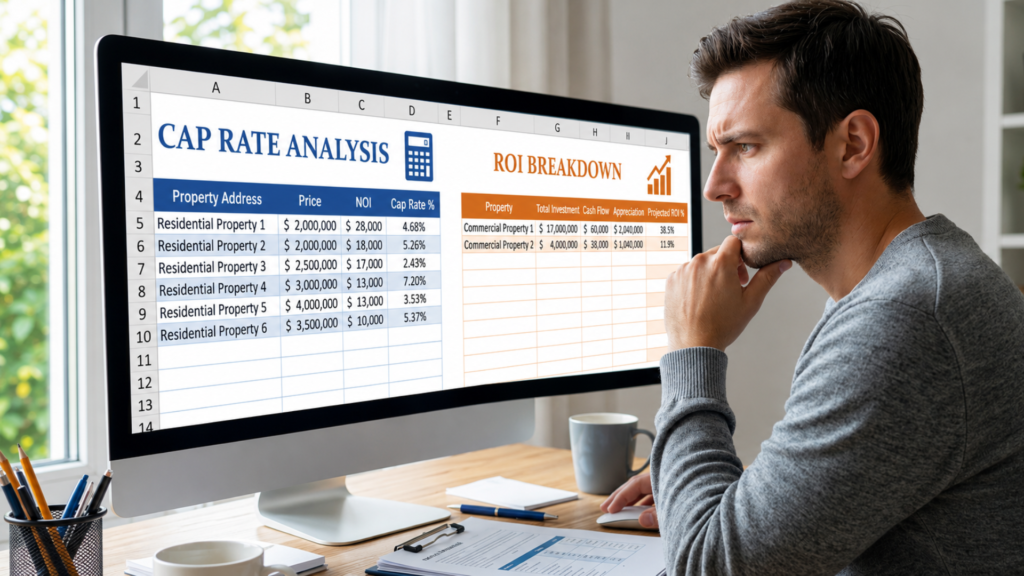
You are looking at an investment property. Your spreadsheet has lots of numbers. You see cap rate and ROI. Feel confused. Which one should you use? I have been in your shoes staring at numbers and wondering what matters most. Today we will compare cap rate and ROI. We will look at what each measures, when to use each and which one’s more important for your investment goals. By the end you will know which metric to focus on. What Is a Cap Rate? Let me quickly explain what a cap rate is. It measures how money a property makes in a year based on its income and purchase price. It does not include financing costs. It gives you an idea of the propertys income potential. It is great for comparing properties in the same area. What is a cap rate in life? It is a tool for evaluating how cash a property can bring in. It is widely used by real estate investors. It is less useful for investors who use financing. What Is ROI. How Is It Different? ROI stands for Return on Investment. It measures the return on the money you invest. It includes cash flow, appreciation and tax benefits. It also includes your payment and closing costs. Return on investment gives you the picture of your investment performance. For example if you put $50,000 down on a property and earn $10,000 per year in cash flow plus $15,000 in appreciation your Return on investment is 50 percent. That is very different from the cap rate. Understanding the difference between cap rate and Return on investment is crucial. Which Metric Is More Important? The answer depends on your investment strategy. If you are buying for cash flow cap rate is more important. It tells you how income the property generates. If you are buying for long-term wealth building ROI is more important. It tells you the return on your money. I have used both throughout my investing career. For my cash flow properties I focus on cap rate. For my appreciation plays I focus on ROI. Both metrics have their place. Knowing what a cap rate is and how it compares to ROI helps you choose the focus. The Problem with Cap Rates Cap rates have a spot. They ignore financing costs. They ignore appreciation. They ignore tax benefits. A property with a 4 percent cap rate might be an investment than a 6 percent cap rate property because it appreciates faster. I have seen investors miss out on opportunities because they only looked at the cap rate. They focused on cash flow. Missed the bigger picture. What is a cap rate without considering financing? It is incomplete. Use it as a starting point, not the answer. The Problem with ROI Return on investment can be misleading too. It depends heavily on your financing. Two investors can buy the property with different down payments and get very different Return on investment. ROI also includes appreciation, which is not guaranteed. A property can go down in value. Return on investment can also be manipulated by accounting. I have seen investors inflate their Return on investment by using assumptions. Always use numbers. Remember, what is a cap rate compared to ROI? It is more stable and predictable. How I Use Both Metrics Together Let me share my approach. I use cap rate to screen properties. I look for a cap rate that meets my cash flow goals. Then I calculate Return on investment using my financing terms. I look at the return over 5 and 10 years. I consider cash flow, appreciation, mortgage paydown and tax benefits. If both numbers look good I dig deeper. This two-step approach helps me avoid deals. Understanding what a cap rate and Return on investment are together makes me a better investor. Which Metric Should You Use? If you are an investor start with cap rate. It is simpler and easier to understand. It helps you compare properties objectively. Once you have a deals under your belt start tracking Return on investment. It gives you the picture. If you are financing your properties Return on investment is more relevant. If you are buying all cash cap rate is more important. I have used both throughout my career. Both have value. What is a cap rate in your investing journey? It is your filter. Conclusion You now understand the difference between cap rate and Return on investment. What is a cap rate? It is a measure of income potential. What is Return on investment? It is a measure of return. Both are tools. Use cap rate, to screen properties. Compare cash flow. Use Return on investment to evaluate returns including financing and appreciation. I have used both throughout my investing career. They have helped me make decisions. Now you have these tools too. Use them wisely. Frequently Asked Questions (FAQs) What is the difference between cap rate and ROI? Cap rate measures return based on income and purchase price. ROI measures total return including cash flow, appreciation and tax benefits. Which is more important cap rate or ROI? It depends on your strategy. Cap rate is more important for cash flow investors. ROI is more important for long-term wealth building. Does ROI include financing? Yes. ROI includes your payment, mortgage payments and total returns. It is a complete measure. Can a property have a cap rate but low ROI? Yes. If the property does not appreciate or has maintenance costs the ROI may be lower than the cap rate suggests. Should I use cap rate or ROI when comparing properties? Use both. Cap rate helps you compare income potential. ROI helps you compare returns. Both are valuable. Green Casa Co-Founder & Director Linkedin Envelope Instagram Hafil Perincheeri is an engineer-turned-realtor, investor, and builder based in Calgary, Canada. As Co-Founder and Director of Greencasa, he specializes in home flips, property development, and investment strategies. Since 2019, he has guided clients in home buying, multifamily 10

What Is a Cap Rate
Real Estate

What Is a Cap Rate? A Simple Guide for New Real Estate Investors

You are ready to buy your investment property. You have saved your payment and found a property that looks promising. Then someone asks you about the cap rate of the investment property. Your heart sinks. What is a cap rate of a real estate investment. Why does everyone keep talking about it? I remember being in your shoes confused by all the real estate jargon. Today you and I will break down what is a cap rate in language. By the end, you will understand this metric of real estate investing and how to use it to make smarter investment decisions. What Is a Cap Rate in Simple Terms? What is a cap rate of a real estate investment in terms? Let me give you the definition. A cap rate is a number that indicates the expected return on a real estate investment property. It stands for capitalization rate of the real estate investment. A cap rate of a real estate investment measures the net income of a real estate property divided by its purchase price. For example if a real estate property generates 10,000 dollars in income each year and costs 200,000 dollars the cap rate of the real estate investment is 5 percent. The higher the cap rate of the real estate investment the the potential return on your real estate investment. The lower the cap rate of the real estate investment the the return on your real estate investment. Understanding what is a cap rate of a real estate investment helps you compare real estate properties quickly. How Do You Calculate a Cap Rate? How do you calculate a cap rate of a real estate investment? The formula is simple. Cap Rate of a real estate investment equals Net Operating Income divided by Purchase Price of the real estate investment. Net Operating Income is your rental income minus all operating expenses of the real estate investment. Operating expenses include property taxes, insurance, maintenance, management fees and vacancies of the real estate investment. They do not include your mortgage payment for the real estate investment. For example if your real estate property rents for 24,000 dollars per year and your expenses are 8,000 dollars your Net Operating Income is 16,000 dollars. If you paid 320,000 dollars for the real estate property your cap rate of the real estate investment is 5 percent. Knowing what is a cap rate of a real estate investment and how to calculate it gives you a tool for evaluating real estate deals. Why Do Investors Use Cap Rates? Why do real estate investors use cap rates of real estate investments? Cap rates of real estate investments are used to compare real estate investment properties. They give you a snapshot of potential returns on your real estate investment. A real estate property with a 6 percent cap rate of the real estate investment might be more attractive than one with a 4 percent cap rate of the real estate investment.. Cap rates of real estate investments are not the whole story. They do not account for appreciation, financing or tax benefits of the real estate investment. They also do not account for changes in income or expenses of the real estate investment. I use cap rates of real estate investments as a starting point. They help me filter out real estate deals quickly. Understanding what is a cap rate of a real estate investment helps you make comparisons of real estate investments. What Is a Good Cap Rate? What is a good cap rate of a real estate investment? This is the question everyone asks. A “good” cap rate of a real estate investment depends on the market the real estate property type and your goals for the real estate investment. In general a cap rate of a real estate investment between 4 and 8 percent is common for real estate properties in Canada. Higher cap rates of real estate investments often mean risk. A real estate property in a declining neighborhood might have a 10 percent cap rate of the real estate investment. A real estate property in a downtown location might have a 4 percent cap rate of the real estate investment. I have owned both types of real estate properties. The lower cap rate of the real estate investment property appreciated over time. The higher cap rate of the real estate investment property gave cash flow. When you understand what is a cap rate of a real estate investment you can choose the balance for your goals for the real estate investment. Cap Rates and Risk Cap rates of real estate investments and risk are closely tied. Higher cap rates of real estate investments usually mean risk. The real estate property might be in a desirable area. The tenant base might be less stable. The building might need maintenance. Lower cap rates of real estate investments usually mean risk. The real estate property is likely in an area with strong demand. Understanding what is a cap rate of a real estate investment helps you assess risk. I have seen real estate investors chase cap rates of real estate investments and regret it. They ended up with problem real estate properties and unhappy tenants. Always consider risk alongside return on your real estate investment. How to Use Cap Rates When Analyzing a Deal How to use cap rates of real estate investments when analyzing a deal. Let me walk you through an example. You are looking at two real estate properties. Real estate Property A costs 500,000 dollars. Has a Net Operating Income of 25,000 dollars. That is a 5 percent cap rate of the real estate investment. Real estate Property B costs 400,000 dollars. Has a Net Operating Income of 28,000 dollars. That is a 7 percent cap rate of the real estate investment. On paper real estate Property B looks better. Look deeper. Real estate Property B is in a neighborhood with declining real estate property values. Real estate 10

Home Selling Mistakes
Real Estate

The Costly Home Selling Mistakes Nobody Talks About

Selling your home is a deal. It is one of the financial things you will ever do. Here is the thing: even small mistakes can cost you a lot of money. I have seen people sell their homes and make mistakes that cost them thousands of dollars. It is sad to see. The truth is: many of these mistakes are not talked about. Real estate agents do not like to bring them up. Friends and family do not think to mention them. Today I want to talk about the home selling mistakes nobody talks about. I want to share some tips for selling your home that will help you get the price you want. By the time we are done you will know what to watch out for and how to sell your home for the price. 1. Overpricing Your Home Overpricing is the mistake people make when selling their home. People often think their home is worth more than it really’s. I understand. You have lived in your home for a time. You have made memories there. Buyers are smart. They look at homes in the area and compare prices. If your price is too high your home will sit on the market for a time. Then buyers will start to wonder what is wrong with it. Eventually you will have to lower the price. I have seen this happen times. One tip for selling your home is to price it right from the start. Look at what other homes in your area’re selling for. Your heart might want a price but the numbers do not lie. 2. Ignoring Repairs Repairs might seem like no big deal but they can make a big difference. Buyers see a faucet and think there might be bigger problems. They might offer a price or decide not to buy your home at all. Fix those problems before you put your home on the market. Replace broken switches. Fix holes in the wall. Paint over scratches. These small fixes do not cost much. They make a big difference to buyers. I have seen buyers pay price for a home just because it looked well taken care of. One of the important tips for selling your home is to take care of the little things. 3. Poor Photography Most buyers look at homes online before they visit in person. If your photos are bad you will not get visitors. Dark, blurry or poorly taken photos will turn buyers off. They will just keep looking at homes. Hire a photographer to take pictures of your home. It is worth the money. Use light. Take pictures of every room. Show the outside and the backyard. Good photos will attract buyers and get you better offers. I have seen homes sell quickly just because they had photos. One of the important tips for selling your home is to have good photos. 4. Neglecting Curb Appeal The impression of your home is important. Buyers often decide if they like your home before they even go inside. If your lawn is overgrown your paint is peeling or your porch is cluttered buyers will not want to visit. Mow your lawn. Trim your bushes. Plant some flowers. Make your home look nice from the outside. I have seen homes sell faster just because they looked nice from the street. One of the overlooked tips for selling your home is to make the outside look nice. 5. Being Unavailable for Showings If buyers cannot see your home they cannot buy it. It is that simple. Be flexible with showing times. Let buyers visit in the evening or on weekends. Keep your home clean and ready to show at all times. Leave during showings. Give buyers space. I have seen sellers lose buyers because they were not flexible. One of the practical tips for selling your home is to make it easy for buyers to visit. 6. Taking Low Offers Low offers can be frustrating. The truth is: they are not personal. Buyers are just trying to get the deal they can. Do not let your emotions get in the way. Make a counteroffer. Negotiate. Keep talking. I have seen sellers turn offers into good deals just by staying calm and negotiating. One tip for selling your home is to separate your emotions from the sale. 7. Skipping the Home Inspection Some sellers skip the home inspection to save a hundred dollars. That is a mistake. The inspection can find problems that you can fix before you sell. If you do not do the inspection buyers might find problems. Ask for a lower price or repairs. I have seen deals fall apart because of surprise problems. One of the valuable tips for selling your home is to do the inspection. It will save you stress and money in the run. 8. Overlooking Closing Costs Closing costs can add up quickly. You will have to pay commissions, legal fees and sometimes transfer taxes. Many sellers forget to budget for these costs. Are surprised at the end. Ask your agent for an estimate. Plan. One of the practical tips for selling your home is to know how much money you will get after all the costs. 9. Rushing the Process Selling your home takes time. Rushing can lead to mistakes. Do not accept the offer without thinking about it. Do not skip steps. Do not stress yourself out. Take your time. I have seen sellers rush into decisions. Regret it later. One of the tips for selling your home is to be patient and take your time. The right buyer will come along.   Conclusion Now you know the home selling mistakes nobody talks about and how to avoid them. Price your home right fix repairs use good photos make your home look nice be available negotiate calmly do the inspection, budget, for closing costs and do not rush. These tips will help you sell your home for the price and reduce your stress. 10

Selling Your Home
Blog, Real Estate

A Stress-Free Guide to Selling Your Home in Today’s Market

Selling your home can feel like a ride. One minute you are excited about your adventure. The minute you are overwhelmed by showings, offers and endless to-do lists. I have been through this process times and I know exactly how you feel. Today you and I are going to chat about a stress approach to selling your home. By the end you will have a plan and the confidence to navigate this journey without losing your mind. Start with a Pre-Sale Home Inspection I wish I had done a sale home inspection on my first sale. It is one of the moves you can make when selling your home. You hire an inspector to go through your home before you even list it. They will find issues you probably missed. Then you can fix them. Adjust your price for selling your home. This way, there are no surprises when the buyer conducts their inspection of your home. I have seen deals fall apart because of repair requests when selling a home. One tip for selling your home is to be proactive rather than reactive. It saves you stress and money when selling your home. Set a Realistic Timeline Selling a home takes time. I know we all want a sale of our home but rushing rarely helps. The whole process typically takes 60 to 90 days from listing to closing. That includes marketing your home, showings, offers, negotiations, inspections and finally closing. Plan your move of your home accordingly. Give yourself breathing room. I have seen sellers stress themselves out by trying to sell their home fast. One of the practical tips for selling your home is to give yourself enough time to do it right. Patience pays off when selling your home. Create a Marketing Plan with Your Agent Your real estate agent should come to you with a marketing plan for selling your home. This is not about putting a sign in the yard. It should include photos of your home, a virtual tour online listings on major platforms, open houses and social media promotion. Ask your agent for the details. Understand how they plan to reach buyers for your home. I have seen homes sell in days because of creative marketing for selling a home. One of the effective tips for selling your home is to get the word out to as many qualified buyers as possible. Price Competitively for Your Market Let us talk about pricing your home. This is the most important decision you will make when selling your home. Price high. You scare away buyers. Price low. You leave money on the table. Your agent will provide a market analysis for selling your home. This shows you sales of similar homes in your area. Use this data. Do not let your emotions guide your price for selling your home. I have seen sellers resist this advice and regret it later. One of the valuable tips for selling your home is to trust the market data, not your heart. Prepare for Showings with Ease Showings can be disruptive. I know it feels like your life is on display when selling your home.. A little preparation goes a long way. Keep your home clean and tidy at all times. Create a cleaning checklist. Put away items like family photos and clutter. Make sure the lights are on and the curtains are open. Create an inviting atmosphere in your home. I have seen buyers make offers simply because the home felt welcoming. One of the tips for selling your home is to make it easy for buyers to imagine themselves living there. Negotiate Offers Like a Pro When offers start rolling, stay calm. This is where the real work begins for selling your home. Review each offer carefully. Look at the price the closing date and any conditions. Work with your agent to negotiate the terms for you when selling your home.. Here is the hard part: do not take low offers personally. It is not about you. It is business when selling a home. I have seen skilled negotiators get thousands for their homes simply by staying calm and strategic. One of the important tips for selling your home is to separate your emotions from the transaction. Plan Your Move Well in Advance Do not leave your move to the minute. Start packing. Declutter as you go. Sort items into three piles: keep, donate and toss. Hire a moving company well in advance. Arrange for utilities to be transferred. Change your address with the post office and all your important contacts. I have seen sellers scramble at the minute and create unnecessary stress when selling their home. One of the practical tips for selling your home is to have a moving plan from day one. Conclusion You now have a stress guide to selling your home. Start with a -sale inspection, for selling your home. Set a timeline. Create a marketing plan with your agent. Price competitively when selling your home. Prepare for showings. Negotiate like a pro.. Plan your move well in advance. I have used these strategies successfully. Know they work for selling a home. Selling your home can be an experience. You just need the approach and the right mindset. You have got this. Frequently Asked Questions (FAQs) What is a sale home inspection? It is an inspection done before you list your home for sale. It identifies issues you can fix or disclose upfront. It prevents surprises during the buyer inspection when selling your home. How do I know if my home is priced correctly? Compare it to sales of similar homes in your area. Your agent will provide a market analysis for selling your home. What should I do during showings? Leave the home during showings. Take your pets and valuables with you. Let buyers explore freely without feeling watched when selling your home. What is the common mistake sellers make? Overpricing is the common mistake when selling a home. 10

Property Taxes in Alberta
Blog, Real Estate

Understanding Property Taxes in Alberta: A Guide for Homeowners and Investors

Property taxes are one of the costs of owning a home. Many people do not understand how they work. Whether you own a home or invest in estate you need to understand property taxes in Alberta. I have been paying property taxes for a time and I have learned a lot. Today we will go over how property taxes are calculated, how to challenge your assessment and how to budget for them. By the end of this you will know what you are paying for and how to manage this cost. What Are Property Taxes and How Are They Calculated? Property taxes are fees that property owners pay to their city or town every year. These fees pay for things like schools, roads, police, fire departments and parks. Your property tax bill is based on two things: the value of your property and the tax rate set by your city or town. The value of your property is determined by your city or town every year. It is supposed to be the same as what your property’s worth. The tax rate is set by your city or town based on what they need to spend. If you multiply the value of your property by the tax rate you get your tax bill. I have seen property tax bills go up a lot in some areas over the years. How Property Assessments Work in Alberta In Alberta property assessments are done every year by your city or town. They look at what similar properties in your area have sold for. They think about things like where your property’s how big it is how old it is and what shape it is in. They also think about any improvements you have made to your property. The assessment is not the same as an appraisal of your home. It is a way to value your property for tax purposes. I have seen assessments that’re higher than what the property could really sell for. That can be frustrating. The good news is that you can challenge your assessment if you think it is wrong. Why You Should Review Your Property Assessment A lot of people do not pay attention to their property assessment notice. That is a mistake. Your assessment affects how much you pay in taxes. If your assessment is too high you are paying much in taxes. You have the right to challenge your assessment. In Alberta you have 60 to 90 days to file a complaint after you get your notice. You need to have evidence to support what you are saying. This might include recent sales of similar properties or a professional appraisal of your home. I have challenged assessments before. I have saved a lot of money. It is worth trying. How to Appeal Your Property Assessment Appealing your assessment is not that hard. First look at your assessment notice. Compare it to what similar properties in your area have sold for. If you find any problems, gather evidence. Contact the people who do assessments for your city or town. They might change your assessment without you having to do anything. If they do not you can file a complaint. You will need to give them evidence and pay a fee. The complaint will be heard by a review board. I have gone to these hearings by myself. I have won. You do not need a lawyer. It can help. Property Taxes and the 50 Percent Rule There is a rule in real estate investing that says your expenses will be about half of your income from rent. Property taxes are a part of those expenses. They can be one of the costs. In some cities property taxes can be one percent or more of the value of the property. For a 500,000 dollar home that is 5,000 dollars per year. That is a lot of money. I always think about property taxes when I am investing in estate. It helps me not to pay much for a property. Understanding property taxes is important for real estate investing. Tax Deductions for Rental Property Owners If you own a property you can deduct your property taxes as a business expense. This means you will pay less in taxes. You can also deduct costs like the interest on your mortgage, insurance and maintenance. Keep track of all your expenses. You will need them when you do your taxes. I think it is an idea to use special software to keep track of everything. It saves time. Reduces mistakes. Your property tax deduction can save you a lot of money in taxes. It is one of the things about owning a rental property. How to Budget for Property Taxes Property taxes can be a surprise if you do not plan for them. They are usually due once or twice a year. A lot of people set up a savings account just for property taxes. They put a money in it every month. That way they have the money when the tax bill comes. Some mortgages include property taxes in the payment. This is called impounding. I think this is the way to do it. It makes sure you never miss a payment. You can also set up a payment plan with your city or town. Conclusion You now understand property taxes in Alberta. They are based on the value of your property and the tax rate set by your city or town. Look at your assessment every year. Challenge it if you think it is wrong. Budget for taxes as part of your expenses. Deduct them if you own a property. I have been dealing with property taxes for some time, and I have saved a lot of money by challenging assessments. Do not ignore your property tax notice. It is your money that’s at stake. Property taxes in Alberta are a thing to understand. Property taxes can be a cost. If you understand how they work you can manage them. 10

Scroll to Top

Compare