

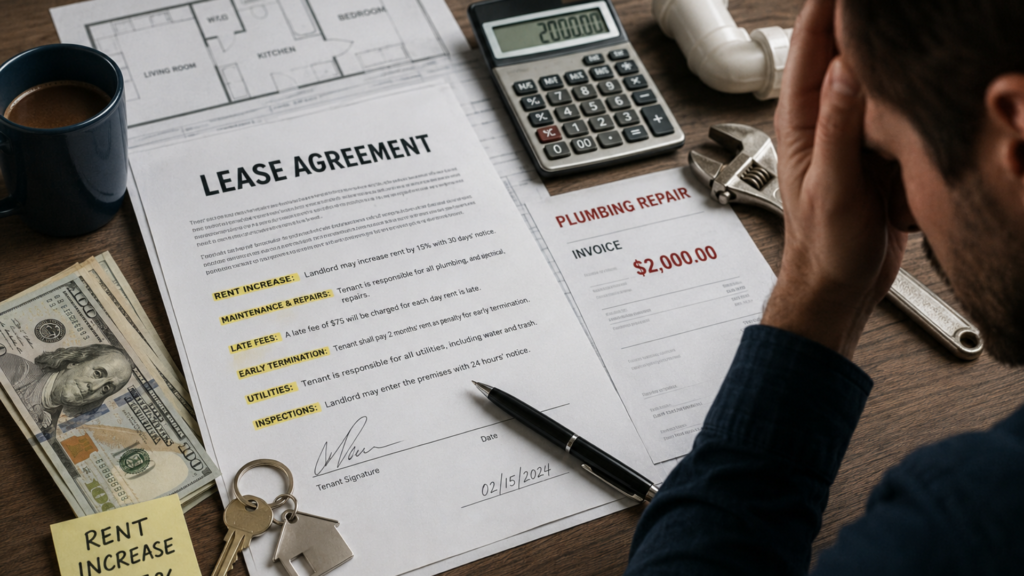
I want to tell you a story about a friend of mine. He found this nice downtown loft and he loved it. The light fixtures were great. He signed the lease agreement really fast. In under ten minutes. He did not even read the agreement he just looked at the rent amount. Six months later he found out that he had to pay for a two-thousand-dollar plumbing repair. His rent also went up by fifteen percent because he missed a part in the agreement. We have all been in a hurry to sign the agreement. I want to tell you that the agreement is like a minefield. It can cost you a lot of money if you are not careful. In this guide we will look at ten hidden traps in lease agreements. How to avoid them.
1. Racing Through the Fine Print
This happens to all of us. The landlord is waiting for us we have the key. We just want to move in. Rushing through the lease agreement is a big mistake. The fine print is where the landlord hides the costs. These costs include administration fees, cleaning charges and late penalties. I always tell people to read the agreement. It is like a treasure map where every line could lead to something or something bad. You must read each section loud if you have to. It takes an hour to read the agreement and that one hour could save you from a lot of surprise charges.
2. Misunderstanding Who Pays for Repairs
The maintenance part of the lease agreement is where the problems start. Some lease agreements use language like “the tenant is responsible for all repairs.” This could mean that you have to pay to fix the roof the heating system or the foundation. I have seen small business owners go out of business because their agreement made them responsible for all the repairs. A fair agreement will separate the repairs that the landlord has to do from the small repairs that you have to do. If your lease agreement does not do this you need to ask for definitions before you sign.
3. Overlooking the "Additional Rent" Trap
You have budgeted for the base rent in your lease agreement. If you look at page five you might find the “additional rent” part. This can include property taxes, building insurance and maintenance fees for the areas. I have seen agreements where the additional rent was double the payment. Before you agree to a agreement you need to get a written estimate of all these extra charges. Your agreement should not be a guessing game. You need to know the cost of renting the place.
4. Misreading the Renewal and Termination Rules
Your lease agreement will say what happens when the term ends. Some agreements will automatically renew for a year unless you give notice sixty days in advance. Others will require a written termination letter sent in a way. If you miss this deadline in your agreement you will be locked into another year that you might not want. On the hand if you need to leave early your lease agreement might charge you a “liquidated damages” fee that is equal to the remaining rent. You need to study the expiration and exit strategy parts of your agreement carefully. It is very important.
5. Assuming the Lease Agreement Is Non-Negotiable
Most renters do not know that the lease agreement is a starting point for a conversation, not a decision. I have negotiated rents, added break clauses and changed the maintenance responsibilities in many agreements just by asking. Landlords want a tenant and they are often willing to change the agreement to get one. Do not be afraid to cross out clauses or add addendums. A flexible agreement that works for both parties is better than an one that leaves you unhappy and struggling.
6. Ignoring the Use Clause Restrictions
Your agreement will say how you can use the property. For renters this might mean no home-based businesses or no pets. For businesses it can prohibit activities restrict signs or limit the hours of operation. I have heard stories of people who signed a agreement for a space only to find out they could not cook food on-site because the agreement said it was for office use only. Always check your intended use with the permitted use clause in the lease agreement. If the language is too narrow ask for it to be broadened before you commit.
7. Failing to Document the Property’s Condition
Your lease agreement will usually say that you have to return the property in the condition it was in except for normal wear and tear.. Without evidence of the original condition you are at the landlord’s mercy when it is time to move out. I always take a video and photos of the property before I move in. I attach these to the agreement as an appendix if possible. If the landlord tries to charge you for a -existing stain your documented evidence will protect you.
8. Missing the Notice Period for Moving Out
This trap is very common and very frustrating. Your lease agreement will have a clause that says how days before moving out you have to give written notice. Often thirty, sixty or even ninety days. If you forget many agreements will automatically renew for a month. Charge you an extra month’s rent. I recommend setting a reminder six months into your lease to check the notice period. Your agreement will not remind you. If you miss the window you will pay dearly for that mistake.
9. Ignoring Subletting and Assignment Clauses
Life can change quickly. Maybe you get a job in another city or your partner moves in. Your lease agreement will have rules about who can live on the property. Many agreements require the landlord’s written permission for any subtenant or additional occupant. If you bring in a roommate or sublet without approval you are breaking the agreement.. That can lead to immediate eviction. Always check your agreement before making any changes to occupancy and get every approval in writing.
10. Skipping Professional Legal Review
I have saved the important mistake for last. Your lease agreement is a binding document and unless you have studied contract law you will miss something. A lawyer can spot clauses, illegal provisions or hidden liability that you would never catch. Spending three hundred dollars on a review of your agreement is a fraction of what it could cost you in a dispute. If you cannot afford a lawyer look for free tenant advocacy groups in your city. Never sign a agreement without a pair of expert eyes.
Conclusion

Signing a lease agreement without knowing what you are doing is like playing a game without knowing the rules. You will probably lose money. By recognizing these ten traps you have already taken the step to protecting your wallet. Read your agreement carefully like you are looking for hidden treasure. Every clause you understand is money you keep. Every negotiation you win is a victory for your budget. So slow down ask questions take notes and never let anyone pressure you into signing a agreement that you do not fully trust. Your future finances will be very grateful.
Frequently Asked Questions (FAQs)
No. A lease agreement is a fixed contract. Changes can only be made if both you and the landlord agree in writing and sign an amendment.
A break clause allows you to end the lease agreement early. After a certain period. With a specific notice. It gives you flexibility if your circumstances change.
Usually yes, unless your lease agreement has a specific liquidated damages clause. However landlords are often required to try and re-rent the unit in states.
Never. If it is not written into the lease agreement itself or in a signed addendum it is practically unenforceable. Always get everything in writing.
Most lease agreements require thirty to sixty days written notice. Always check your document as some require, up to ninety days.

Hafil Perincheeri
Co-Founder & Director
Hafil Perincheeri is an engineer-turned-realtor, investor, and builder based in Calgary, Canada. As Co-Founder and Director of Greencasa, he specializes in home flips, property development, and investment strategies. Since 2019, he has guided clients in home buying, multifamily investing, and financing options like CMHC and MLI Select, ensuring transparent, informed decisions.