


Moving out of a home is really stressful. You clean every surface fix every hole and still worry about getting your deposit. Will your landlord keep your money because of that spot on the carpet? As a property management company in Calgary Green Casa sees this fear all the time. The secret to feeling better is understanding what is considered wear and tear in rental properties. Today we are going to go through this. I will show you what normal aging looks like what is not acceptable and how to protect your money. By the end you will feel calm and confident.
What Normal Wear and Tear Really Means
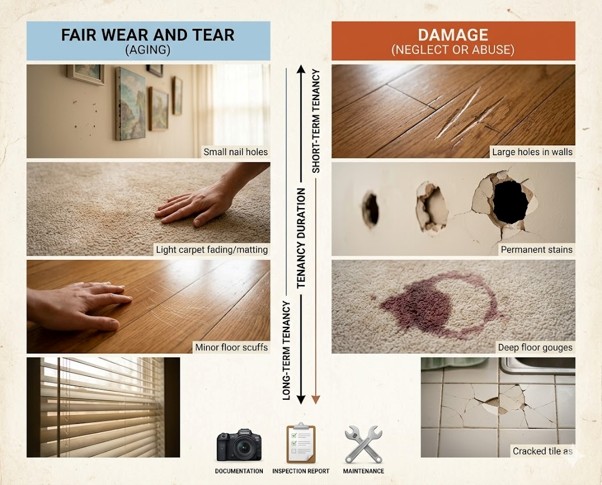
Let me explain this in terms. Normal wear and tear is the natural aging that happens when someone lives in a home. It is not about being careless or abusive. It is life. For example paint that fades because of the sun is wear and tear. A big hole in the wall is damage. Carpet that gets a flat where you walk is normal wear and tear. Burn marks from an iron are damage.
The definition of wear and tear matters because it decides what your landlord can take from your security deposit. In Alberta landlords cannot charge you for aging. They can only charge for damage that goes beyond use. At Green Casa we follow this rule carefully because we want things to be fair for everyone.
Examples of Fair Wear and Tear You Can See
Let me give you some examples of fair wear and tear so you can picture it in your own home. On walls small nail holes from hanging pictures are fine. Small scuffs that wipe off with a cloth are fine. On floors carpet that looks a little flat near the couch or in the hallway is normal. Hardwood floors might have scratches from walking and that is okay.
On appliances rubber seals around the fridge door might get hard over time. Oven racks might change color from heat. On countertops old laminate might have stains even after cleaning. On windows blinds might look faded from years of sunshine. These examples show that landlords expect some signs of life. You should never be punished for living in a home.
Where You Cross the Line into Real Damage

Now let us talk about the side. When does normal. Tear turn into damage that you can be charged for? Big holes in walls from moving furniture or from anger are damage. Carpet stains from wine, pet accidents or paint are damage. Broken windows, cracked tiles missing cabinet doors and burned countertops are all damage. Much dirt, mold or trash also count as damage.
I once managed a property where a tenant left mattresses in the backyard. That is not. Tear. That is neglect. Knowing where the line is protects you as a tenant. Helps landlords be reasonable. At Green Casa we use one question: Would this problem exist if the tenant had been careful? If yes it is probably damage.
How Long You Lived There Changes the Rules
Time changes things. The definition of wear and tear shifts depending on how many years you lived in that home. A tenant who stays for one year should leave the place looking the same as when they moved in with only small signs of life. A tenant who stays for five years will naturally cause aging. Paint that lasts five years probably needs to be repainted. Carpet that is rated for five years will show wear. Appliances that are ten years old might break down no matter how nicely you treated them.
Landlords cannot charge you for aging that would have happened even if you were perfect. For example if a carpet was already ten years old when you moved in its useful life is over. The landlord cannot charge you for stains because that carpet had no value left. This is a protection that most tenants do not know about.
Your Move In Inspection Is Your Protection
Your strongest protection starts on day one before you even bring in your first box. Do a walkthrough with your landlord or property management company in Calgary. Go through every room together. Test every light switch, every faucet and every appliance. Write down every scratch, stain and scuff on the move in report. Take photos and videos with time stamps. Save them to the cloud, not your phone. This document becomes your proof of what was there.
Without it a landlord could blame you for damage that existed before you arrived. At Green Casa we give every tenant an inspection form with photo attachments. We also encourage you to add your notes. A thorough move in inspection makes it easy to apply the definition of wear and tear when you move out because you have clear evidence of where things started.
How to Track Wear and Tear During Your Tenancy
Please do not wait until moving day to think about this. Throughout the time you live there keep a log. Write down any cracks, leaks or issues. Report maintenance problems in writing away. If something breaks from use tell your landlord immediately. That way they can fix it before it becomes a problem. Also take photos once a year to show the aging. If you ever end up in a dispute over your deposit this documentation is very helpful.
The Residential Tenancy Dispute Resolution Service in Alberta loves evidence. A landlord with no photos and no inspection report will struggle to prove anything. A tenant with photos and a signed move in report will almost always win. Knowing the rules and having documentation gives you peace of mind.
What Landlords Cannot Deduct No Matter What
There are things that landlords cannot charge you for even if you caused the issue if the item had already lived its full life. Carpet usually lasts 8 to 10 years. Paint lasts 3 to 5 years. Appliances 10 to 15 years. If a carpet is 12 years old when you move out its value is zero. The landlord cannot charge you for stains because they would have needed to replace it. Similarly if you lived in a unit for 8 years the landlord cannot charge you for painting because any normal home would need paint by then.
This is called depreciation. Many tenants do not know this. End up paying for things they should not. As a property management company in Calgary we apply depreciation fairly. We only charge for the remaining life of an item. For example if a carpet had 2 years of life left and you damaged it you pay for 2 years worth of value not a replacement.
How Green Casa Handles Wear and Tear Disputes
At Green Casa we believe in being open and honest. When you move out we do an inspection with you side by side. We compare the condition to your move in photos. If we see damage beyond wear and tear we show you the evidence right there. Then we get two repair quotes from contractors. You can look at the quotes. Even call the contractors yourself to ask questions. We only deduct the cost of repair or the depreciated value of replacement.
We never charge for our time or for basic cleaning. Our goal is to return your deposit whenever possible. We also provide a written statement explaining every deduction. If you disagree we want you to ask questions. Most disputes end with a conversation. We have found that when tenants really understand the definition of wear and tear conflicts go away.
Conclusion
Understanding wear and tear protects your money and your sanity. You now know the definition of wear and tear real life examples and exactly what crosses the line into damage. You also know how time and depreciation affect what you owe.. You have learned the power of a good move, in inspection and ongoing photo documentation. At Green Casa we work hard to treat tenants and landlords fairly. Use what you have learned on your move out. Keep your photos. Give your forwarding address in writing.. Please remember normal aging is never your fault. You have got this.
Frequently Asked Questions (FAQs)
It means the aging from normal use over time not including neglect, abuse or accidental damage. Alberta law does not spell it out exactly so your inspection reports are the key.
No, unless your lease says you must hire a cleaner. Vacuuming and spot cleaning are on you. Routine carpet cleaning is usually the landlord’s cost.
Small nail holes, scuffs that wipe away faded paint from sunlight and tiny cracks from the building settling are all normal.
In Alberta they have ten days from the later of your move out date. When you give them your forwarding address.
Yes, absolutely. Send a written request with your evidence. If that does not work, file with the Residential Tenancy Dispute Resolution Service. You have one year to do it.

Hafil Perincheeri
Co-Founder & Director
Hafil Perincheeri is an engineer-turned-realtor, investor, and builder based in Calgary, Canada. As Co-Founder and Director of Greencasa, he specializes in home flips, property development, and investment strategies. Since 2019, he has guided clients in home buying, multifamily investing, and financing options like CMHC and MLI Select, ensuring transparent, informed decisions.