


Green Casa Commercial

Get In Touch

Green Casa Popup Form

Blog

Your blog category

Restrictive Covenants in Alberta
Blog, Condo Management

Restrictive Covenants in Alberta What Every Property Owner Should Know

You bought a house in a neighborhood in Alberta. The neighborhood looks great.. Then you find out there are rules that say what you can and cannot do with your property. These rules are called covenants. Every property owner in Alberta needs to know what restrictive covenants are. I have owned properties with these covenants. Helped other people deal with them. Today we will talk about how these covenants work in Alberta what they mean for your rights and how to deal with them. By the end of this you will know what to do if you have covenants on your property. How Restrictive Covenants Work in Alberta In Alberta a restrictive covenant is a rule that says what you can and cannot do with your land. This rule is written on the property title. The person who developed the neighborhood created this rule. It can last forever. Everyone who owns the property after that has to follow this rule. In Alberta the Land Titles Act says that restrictive covenants are legal long as they make sense and are clear. So what is a covenant in Alberta? It is a way to keep neighborhoods looking nice and consistent. It can also limit what you can do with your property. The History of Restrictive Covenants in Alberta Covenants have been around for a long time in Alberta. A time ago developers used them to create fancy neighborhoods. They controlled how big houses could be, what they looked like and even who could live there. Thankfully, some of those rules are no longer allowed. Today restrictive covenants are used to keep property values high. Neighborhoods looking nice. You can find them in neighborhoods that were built in the 1970s and 1980s. Understanding what covenants are helps you understand why your neighborhood looks the way it does. Some of these rules are old. Do not make sense anymore. Some are still important. How Restrictive Covenants Impact Your Building Plans If you want to build or fix up your house restrictive covenants can get in the way. They might say how tall your house can be. They might say what your house has to look like on the outside. They might even say what color your roof can be. They might say how big your garage or shed can be. I have seen people have trouble getting building permits because their plans did not follow the covenants. Before you start any project check your property title. Knowing what the restrictive covenants are on your property can save you a lot of trouble. Restrictive Covenants and Home Businesses A lot of covenants say you cannot run a business from your house. This means you cannot work from home. This is common in neighborhoods where people live. If you want to start a business from your house check your property title. Some of these rules are very broad. Say you cannot do any kind of business. Others are more specific. I have seen people unable to obtain licenses for daycares, home offices, and even hair salons because of covenants. Knowing what the restrictive covenants are on your property can make a difference in whether you can work from home or not. How to Enforce a Covenant in Alberta In Alberta the courts are in charge of enforcing covenants. Any property owner who is affected by someone not following the rules can go to court. Ask for help. The court will look at what happened and how bad it was. The court will also think about whether the rule’s still important. I have seen courts make people follow the rules even when the neighborhood has changed. I have also seen courts say that old rules do not have to be followed. If you want to enforce a covenant you should talk to a lawyer. What is the point of having a covenant if you cannot make people follow it? Defenses to Covenant Enforcement There are things you can say if someone tries to enforce a restrictive covenant against you. The rule might be too vague to enforce. The neighborhood might have stopped following the rule. The rule might go against what’s fair. It might be impossible to follow the rule because the neighborhood has changed. I have seen people successfully argue that a rule was not important anymore.. You are not guaranteed to win. You need a lawyer to help you make your case. Knowing how to defend yourself against a covenant can save you a lot of money and trouble. The Role of the Condominium Act and Restrictive Covenants In condominiums the Condominium Act is more important than covenants.. Some older condominiums still have restrictive covenants on the title. Newer condominiums follow the act. Have their own rules. The act gives owners freedom. It also has a way to solve disputes. If you own a condominium in Alberta your rights are governed by the act, not the restrictive covenants.. The restrictive covenants might still apply to your unit. So what are covenants in a condominium? They might not be as important as the rules. Conclusion You know about restrictive covenants in Alberta. They are rules on property titles that say what you can and cannot do. They can affect what you build what businesses you can. How you live. They are enforced by the courts. Can be hard to remove. Before you buy a property or start a project check your title. I have seen many people get in trouble because they did not know about the restrictive covenants. Knowing what the restrictive covenants are on your property can be helpful or hurtful. Knowing what you have is the step, to dealing with it. Frequently Asked Questions (FAQs) Are covenants enforceable in Alberta? Yes. In Alberta restrictive covenants are legally enforceable long as they make sense and are clear. Can a restrictive covenant be removed in Alberta? Yes,. It is hard to do. You need a court order or an agreement from all the owners. 10

Rental Income Strategies
Blog, Tenant Tips

Maximizing Your Rental Income Strategies That Actually Work

You have a property and you want to make more money from it. Just raising the rent is not always the answer. There are ways to get more money from your rental property. I have been a landlord for a time and I have tried many different things. Today, we will look at some rental income strategies that really work to increase your income without losing your good tenants. By the end of this you will have a plan to make more money from your rental property. Strategy One Increase Rent In A Way The most obvious way to get more rental income is to raise the rent. You have to do it right. Never raise the rent by than 5 to 10 percent at a time. If you raise it by 20 percent at once your tenants will leave. You have to give them notice. In places that means telling them three months ahead of time. You have to explain why you are raising the rent and show them what they get for the money. You should also tell them about inflation. I have found that tenants are okay with increases every year. A 3 percent increase each year is easier for them to accept than a 15 percent increase every five years. Strategy Two Reduce The Time Your Property Is Empty When your property is empty you do not make any money. To reduce the time it’s empty you have to start looking for new tenants early. Send notices to your tenants 60 days before their lease ends. If they are not going to stay you should list your property away. Use photos and write a great description. Make sure the rent is right from the start. I have seen properties sit empty for months because the rent was too high. You have to keep your property in condition. Happy tenants stay longer. You can use a property condition report to help you take care of your property and avoid neglect. Strategy Three Add Value To Your Property You can get money for your property if you add some value to it. You do not have to fix up the kitchen. Just doing a small things can make a big difference. You can put in lights paint the walls or get a new bathroom sink. You can also replace the carpets with new floors. If you do not have a washing machine and dryer in the property you can add them. If you have space you can add a parking spot. I have seen people raise the rent by 100 to 200 dollars per month by making a few small changes. You should focus on the things that tenants like the most. Strategy Four Offer Deals To Your Tenants Sometimes you can get money by offering your tenants a deal that is based on excellent rental income strategies. It sounds strange. Just listen. You can offer them a month of rent if they sign a 12 month lease at a higher rent. They will pay money overall but they will feel like they got a good deal. This works well in areas where there are a lot of properties for rent. You can also offer them parking or free utilities if they pay a higher rent. I have done this before. It works. It attracts tenants who might have looked at properties otherwise. Strategy Five: Reduce Your Expenses Getting money is only half of it. You also have to reduce your expenses. You should look at your property taxes. Are you paying much? You can challenge the taxes if you think they are too high. You should also look at your insurance. You can shop around to find a deal. You can reduce your utility bills by using energy lights and thermostats. You should also take care of your property to avoid repairs. A property condition report can help you find problems before they become issues. I have saved a lot of money by catching problems Strategy Six Think About Short Term Rentals If your property is in a location you might want to think about renting it out for short periods of time. You can use websites like Airbnb to rent out your property. You can make money this way than by renting it out for a long time. There are some downsides. You will have to do work and the property will get worn out faster. You will also have to clean it often. Some cities have rules about short term rentals so you should check on that before you start. I have done this before with properties in tourist areas. I made money but it was also more work. Strategy Seven Offer Extra Services Tenants will pay for things that make their lives easier. You can offer them services for a fee. You can offer to take care of their pets clean their house or mow their lawn. You can also charge them for parking or storage. In some buildings you can rent out the room. I have seen people charge extra for parking spots. You should think about what your tenants need and what they would pay extra for. A property condition report can help you find ways to make money. Strategy Eight Review Your Lease Your lease can also affect how money you make. You should think about how much you charge for a security deposit. You should also charge a fee if the tenant pays their rent late. You can include a fee for cleaning the property when they move out. If you allow pets you can charge a deposit. You have to make sure your lease is fair and protects your income. I have seen people lose money because their lease was not good. You should review your lease every year. Conclusion You now have eight rental income strategies to maximize your income. You can raise the rent in a way. You can reduce the time your property’s empty. You 10

Alberta Condominium Act
Blog, Condo Management

What Is the Alberta Condominium Act and Why Does It Matter?

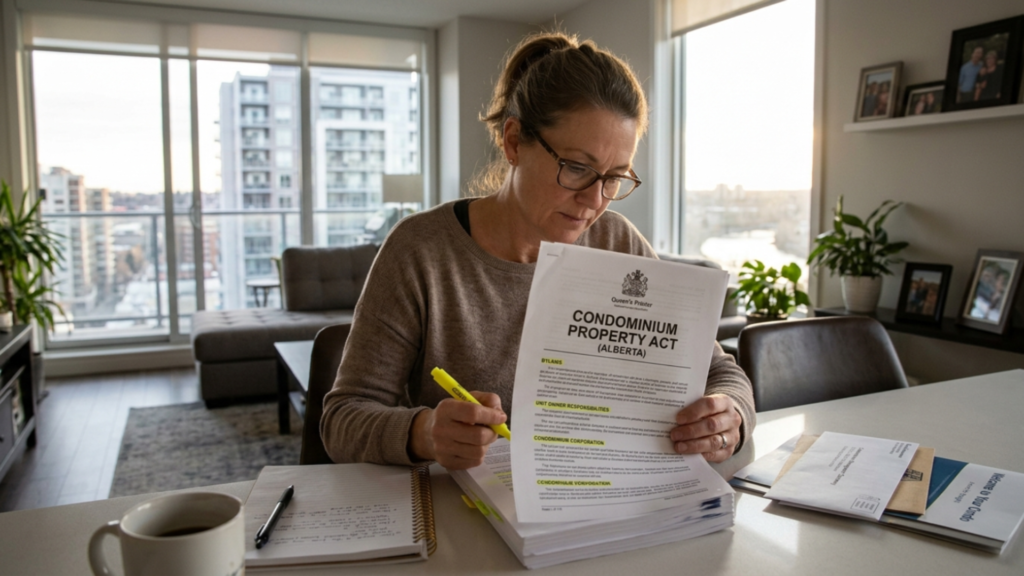
You own a condo. Are thinking about buying one in Alberta.. Have you ever read the Alberta Condominium Act? Most people have not. I was guilty of that too when I bought my condo. The Condominium Act is really important for every condo owner. Today you and I will explore what the Condominium Act is and why it affects your life. By the end you will know your rights, your responsibilities and how to protect yourself. This knowledge could save you from mistakes. What Is the Alberta Condominium Act? The Alberta Condominium Act is the law that governs all condominiums in Alberta. It sets the rules for how condos are created managed and governed. The Condominium Act covers everything from condo fees and reserve funds to board elections and dispute resolution. Every condo corporation in Alberta must follow the Condominium Act. It also protects the rights of individual unit owners. The Condominium Act ensures that owners have a say in how their building’s run. Without the Condominium Act condo living would be chaotic. I have seen how the Condominium Act provides structure and fairness in every condo community. Why the Alberta Condominium Act Matters to You You might think the Condominium Act is for lawyers and board members.. It affects you directly. The Alberta Condominium Act gives you the right to see records. It gives you the right to vote in board elections. It gives you the right to challenge bylaws. The Condominium Act also protects you from fee increases. Without the Condominium Act a board could do whatever they wanted with no accountability. I have seen owners use the Condominium Act to stop decisions by their board. Knowledge of the Condominium Act is power. It is your shield against mismanagement. The Role of Condo Boards Under the Act Condo boards are. Governed by the Condominium Act. The board manages the corporation. Makes decisions about maintenance, finances and rules. They are elected by the owners. They must follow the Condominium Act in everything they do. The Condominium Act requires boards to hold general meetings. It requires them to provide statements. It requires them to maintain a reserve fund. If a board violates the Condominium Act owners can take action. I have served on a board. Learned the hard way that the Condominium Act is not optional. It is the law. It must be followed. Condo Fees and Reserve Funds Under the Act The Condominium Act sets rules for condo fees and reserve funds. Fees must be reasonable. Used for legitimate expenses. The board must prepare a reserve fund study every five years. This study estimates repair costs. The reserve fund must be adequately funded to cover these costs. If the fund is too low special assessments may be needed. The Condominium Act requires transparency. Owners have the right to see the reserve fund study. I always recommend reviewing the reserve fund before buying a condo. The Condominium Act gives you that right. Use it. Bylaws and Rules What the Act Allows Bylaws are the rules that govern a condo community. They cover everything from restrictions to parking rules to noise limits. The Condominium Act allows condo corporations to create bylaws.. Those bylaws cannot violate the Condominium Act or the law. Bylaws must be reasonable. They must be enforced fairly. Owners have the right to propose changes to bylaws. The Condominium Act also requires that bylaws be registered with the land titles office. If a bylaw is unreasonable or unfair owners can challenge it. I have helped owners challenge bylaws that went far. The Condominium Act protects you. Dispute Resolution Under the Act Disputes happen in condo communities. The Condominium Act provides a process for resolving them. First you try to resolve the issue. If that fails you can mediate. If mediation fails you can apply to the Court of Queens Bench. The Condominium Act also allows for arbitration. I have seen disputes over noise, pets and parking resolved through these processes. The Condominium Act ensures that disputes are handled fairly and consistently. Without the Condominium Act disputes would drag on forever. Knowing the dispute resolution process gives you confidence to stand up for your rights. Recent Changes to the Alberta Condominium Act The Alberta Condominium Act has been updated in years. New rules require education for board members. New rules require voting for board elections. New rules require transparency in reserve fund studies. These changes make condo governance more professional and accountable. I welcome these changes. They make it easier for owners to participate and harder for boards to mismanage. If you own a condo stay informed about changes to the Condominium Act. The law. So should your knowledge. Conclusion You now understand the Alberta Condominium Act. Why it matters. It gives you rights as an owner. It holds boards accountable. It ensures governance. It sets rules for fees, reserve funds and bylaws. It provides a dispute resolution process. Whether you are a buyer or a long time owner knowing the Condominium Act is essential. I have used the Condominium Act to protect my rights and to help others. Do not be afraid of the law. Embrace it. The Condominium Act is your defense, in condo living. Frequently Asked Questions (FAQs) What is the Alberta Condominium Act? It is the law that governs all condominiums in Alberta. It sets rules for management, finances and owner rights. Who enforces the Alberta Condominium Act? The Condominium Dispute Resolution Tribunal. Owners can also challenge violations through the system. Do all condos in Alberta follow the act? Yes. All condominiums in Alberta are governed by the Alberta Condominium Act. Can a condo board ignore the Alberta Condominium Act? No. Boards must follow the Alberta Condominium Act. If they do not owners can take action. How can I learn more about the Alberta Condominium Act? You can read the act online. Many condo management companies and lawyers also provide resources. Hafil Perincheeri Co-Founder & Director Linkedin Envelope Instagram Hafil Perincheeri is an engineer-turned-realtor, investor, 10

Bare Land Condominium
Blog, Condo Management

Bare Land Condominium Explained: A Complete Guide for Buyers

I was looking at homes. I kept hearing the term “bare land condominium”. What does it mean? A bare land condominium is one of the misunderstood types of property ownership in Canada. I was confused when I first heard about it. Now I want to explain it in terms. By the end of this, you will know what a bare land condominium is, how it works and if it is right for you. What Is a Bare Land Condominium? Let me start with a definition. A bare land condominium is when you own the land your home’s on and you share some areas with your neighbors, like roads and parks. This is different from a condo where you only own the inside of your unit. In a land condominium you own the land and the house on it. You share some areas with your neighbors, like roads and utilities. These shared areas are managed by a group of owners called a condominium corporation. This type of ownership is common in duplexes, townhouses and some single family home communities. How Does a Bare Land Condominium Differ from a Condo? This is a question I get a lot. In a condo you own the inside of your unit but not the land. The condominium corporation owns the land and shared areas. You pay fees every month for maintenance of shared spaces. In a land condominium you own your land and your house. You only share some areas with your neighbors like roads and utilities. You have control over your property. You can change your house and yard easily.. You still pay fees every month for shared things like roads and utilities. I have owned both types. The difference is big. The Ownership Structure of a Bare Land Condominium When you buy a land condominium you become part of the condominium corporation. The corporation is made up of all the owners. They elect a board to manage areas. The board handles money, maintenance of shared things and enforcement of rules. Each owner has a vote based on their unit size or lot size. The corporation collects fees every month to cover road maintenance, snow removal, landscaping of shared areas and utility systems. This structure gives you ownership of your land while sharing costs for shared things. The Pros of Owning a Bare Land Condominium Why would someone choose a land condominium over a regular home? First you own the land. That means you have control over your property within the rules. Second you share the cost of things like roads and utilities. That can be cheaper than doing it all yourself. Third, the fees are often lower than condo fees because there are fewer shared things. Fourth you have privacy and space than a traditional condo. Fifth, you can usually have pets, gardens and changes easily. I have recommended land condominiums to buyers who want a home feel with shared cost benefits. The Cons of Owning a Bare Land Condominium course, there are downsides. You are still part of a condominium corporation. That means you have to follow rules and pay fees. You cannot do whatever you want on your property. There may be rules about fences, parking or exterior changes. You also share the cost of repairs to shared things. If the road needs to be fixed or the drainage system fails you share the bill. You also have control over the overall management of the community. I have seen owners get frustrated with decisions they disagreed with. Bare Land Condominium Fees: What Do They Cover? Fees in a land condominium cover shared things like road maintenance, snow removal, landscaping of shared areas, street lighting and utility systems. Some communities also have gates, security or clubhouses that add to the fees. The fees are generally lower than condo fees because there are fewer shared buildings and things.. They still require budgeting. I always tell buyers to review the fee structure. Ask what is included and what is not. Understanding the fees is essential when considering a land condominium. Common. Restrictions Every bare land condominium has rules. These rules govern what you can. Cannot do on your property. Common rules include fence height and materials exterior paint colors, types of roofing allowed, parking regulations and landscaping requirements. Some communities restrict the size or type of pets. Others have age restrictions. I have seen buyers fall in love with a home only to discover they cannot build the garage they wanted. Always review the rules before you buy. Request a copy from the condominium corporation or your real estate agent. Is a Bare Land Condominium Right for You? Here is my honest advice. A bare land condominium is a choice if you want to own your land and home but still want to share the cost of things like roads and utilities. It is also good if you want control than a traditional condo but do not want the full maintenance responsibility of a detached home. It is not ideal if you dislike rules and shared decision making. If you want freedom buy a detached home outside a condo corporation. If you want maintenance and amenities choose a traditional condo. I have helped many buyers find their fit. The right choice depends on your lifestyle and priorities. Conclusion You now understand what a bare land condominium is. You own your land and home share some areas and pay fees for shared things. It offers control than a traditional condo but less freedom, than a detached home. Review the rules, fees and reserve fund before buying. I have owned a land condominium and enjoyed the balance of control and shared costs. If it fits your lifestyle it can be a choice. Go find your home. Frequently Asked Questions (FAQs) What is a land condominium? It is a type of ownership where you own your land and home but share some areas with your neighbors like roads and utilities. How is a bare land condominium 10

Condominiums in Calgary
Blog, Condo Management

A Guide to the Different Types of Condominiums in Calgary, Alberta

You want to buy a condo in Calgary. Then you find out there are many types. There are condos, townhouse condos, bare land condos and more. You need to know about the types of condominiums in Calgary before you make a decision. I have helped many people buy condos. I want to share what I know. Today we will look at every type of condo in Calgary. By the end you will know which type of condo is right for you and your money. What Is a Condominium? How Does It Work in Calgary? First lets start with the basics. A condominium or condo is when you own your unit and share some areas with other owners. These areas can include hallways, elevators, parking, gyms and landscaping. All owners pay fees to take care of these shared areas. Condos have a board of directors that makes sure everything runs smoothly. This board is made up of owners who were elected by the owners. They make sure the building is in condition and that everyone follows the rules. This is how all types of condominiums in Calgary work. Apartment Condos The Most Common Choice Apartment condos are what people usually think of when they think of condos. They are buildings with many units. You own your unit. You share walls and floors with your neighbors. These condos often have amenities like a gym party room and underground parking. They are popular in downtown Calgary and other areas. The monthly fees can be high because of the amenities and maintenance. Apartment condos are great if you want a life with minimal work. Townhouse Condos: The Best of Both Worlds Townhouse condos are like row houses. You own your unit, which has two or three floors. You have a yard or patio. You share one or two walls with your neighbors. You have your own entrance. This type of condo is very popular in Calgary because it offers space and privacy. The condo fees are usually lower because there are amenities. You are responsible for the outside of your unit unless the condo corporation takes care of it. I have recommended townhouse condos to families who want a home feel without all the work. Bare Land Condos: A Unique Ownership Structure Bare land condos are different. You own the land your home’s on and you share some areas with your neighbors. This type of condo is common in duplexes and fourplexes. You are responsible for your home, including the roof and landscaping. The condo fees are often lower because there are shared amenities. This type of condo can be an option because it gives you more control and lower maintenance costs. I have helped people buy land condos when they wanted a detached home feel without all the work. Condominium Corporations and Their Role Every condo has a corporation. The corporation is made up of all the owners, who elect a board of directors. The board handles the money hires managers and makes sure everyone follows the rules. They also plan for repairs. If the corporation does not have money you may have to pay extra fees. I always tell people to review the condo corporation documents before buying. A run corporation means a well-maintained building. Condo Fees: What They Cover. Why They Vary Condo fees are important to consider. They cover maintenance, insurance and utilities for shared areas. The fees vary depending on the building and the corporation. In Calgary monthly condo fees can range from 200 dollars to over 800 dollars. Newer buildings may have fees but they can increase over time. Older buildings may have fees but they are often better maintained. I have seen people choose a condo with fees only to have to pay extra later. Always ask about the reserve fund. The Pros and Cons of Each Condo Type Lets look at the pros and cons of each type of condo. Apartment condos offer convenience and amenities. They can have high fees and less privacy. Townhouse condos offer space and a home feel but they require more work. Bare land condos offer control and lower costs. They may not have all the amenities. The right choice depends on your lifestyle. If you travel often an apartment condo might be best. If you have a family a townhouse condo might be better. If you want a detached home feel a bare land condo could be the answer. I have owned all types of condominiums in Calgary. Each one was right for me at different times. Conclusion You know about the different types of condominiums in Calgary. Each type has its benefits and drawbacks. Think about your lifestyle, your budget, and what you want. Review the condo corporation documents. Ask about the reserve fund. I have helped many people find their condo and these tips have always worked. Calgary has a condo for everyone you just need to find the one that fits you best. Frequently Asked Questions (FAQs) What are the types of condominiums in Calgary? There are apartment condos, townhouse condos, bare land condos and duplex or fourplex condos. Which type of condo is the most affordable in Calgary? Bare land condos often have fees, but the price of the condo can vary. Apartment condos in buildings can be more affordable. Do all condos have fees? Yes, all condominiums in Calgary have fees. Can I renovate my condo unit? Yes,. You may need permission from the board for big changes. Always check the rules before starting any work. What is an assessment? A special assessment is a fee that you have to pay when the reserve fund is not enough to cover repairs. Green Casa Co-Founder & Director Linkedin Envelope Instagram Hafil Perincheeri is an engineer-turned-realtor, investor, and builder based in Calgary, Canada. As Co-Founder and Director of Greencasa, he specializes in home flips, property development, and investment strategies. Since 2019, he has guided clients in home buying, multifamily investing, and financing options like CMHC and 10

Freehold in Property
Blog, Real Estate

What Is Freehold in Property? A Complete Guide for First Time Buyers

You have been scrolling through real estate listings and keep seeing the word freehold.. What does it actually mean? Understanding what freehold in property is one of the important things you will learn as a buyer. I was confused by this term when I bought my home. Today you and I will break it down in language. By the end you will know what freehold means, how it differs from other types of ownership and why it matters for your purchase decision. What Is Freehold in Property The Simple Definition Let me give you an explanation. What is freehold in property? It means you own both the house and the land it sits on. There is no lease, no landlord and no monthly ground rent. You are the absolute owner. You can do anything you want with the property subject to local zoning and building codes. You can renovate, knock down rebuild, sell or pass it to your children. Freehold is the common type of homeownership in Canada. Most single family homes and many townhouses are freehold. When you buy a property you are buying the land under your feet and everything on top of it. Freehold vs Leasehold What Is the Difference? This is the question I get often. What is freehold in property compared to leasehold? In a leasehold you own the house but not the land. You lease the land from a landlord for 99 years. You pay ground rent. You have restrictions on what you can do. The value of leasehold properties decreases as the lease shortens. Freehold on the hand gives you full ownership forever. There is no expiring lease. No one can take the land back from you unless you fail to pay property taxes. I have seen buyers choose freehold over leasehold for peace of mind. Freehold means freedom. Leasehold means limits. The Advantages of Freehold Ownership Why do buyers prefer freehold? The benefits are substantial. First you have control. You can renovate, expand or landscape without asking permission from a landlord. Second you do not pay ground rent. You never pay fees for the land itself. Third freehold properties generally increase in value faster than leasehold because the land is yours. Fourth you can pass the property to your children without lease expiration worries. Fifth financing is easier. Lenders prefer freehold because it is a secure asset. I have owned both freehold and leasehold properties. I can tell you freehold is simpler and more rewarding in the long run. The Responsibilities of Freehold Ownership Freehold is not all freedom. With ownership comes responsibility. You are responsible for every repair every maintenance issue and every upgrade. When the roof leaks you fix it. When the furnace breaks you replace it. When the driveway cracks you repave it. There is no condo board or landlord to share costs. You also pay property taxes, full insurance and all utility connection fees. Understanding what freehold in property means understanding that you are fully responsible for the propertys condition. I always tell buyers to budget 1 to 2 percent of the property value for maintenance. On a 500,000 dollar home that is 5,000 to 10,000 dollars per year. Freehold is freedom. Freedom comes with bills. What to Look for When Buying a Freehold Property This is a common source of confusion. A freehold condo or townhouse means you own the unit and your share of the elements.. You do not own the land exclusively. You share it with owners. You pay condo fees for maintenance of areas. You are bound by condo board rules. Is that freehold? Yes, in the sense that the condo corporation owns the land collectively.. It is not the same as a detached single family home. When people ask what freehold in property is they are usually thinking of a detached house.. Townhouses can also be freehold meaning no condo fees. Always check the description. If you own the land under your townhouse you are freehold. Freehold. Townhouses What Buyers Need to Know This is a common source of confusion. A freehold condo or townhouse means you own the unit and your share of the elements.. You do not own the land exclusively. You share it with owners. You pay condo fees for maintenance of areas. You are bound by condo board rules. Is that freehold? Yes, in the sense that the condo corporation owns the land collectively.. It is not the same as a detached single family home. When people ask what freehold in property is they are usually thinking of a detached house.. Townhouses can also be freehold meaning no condo fees. Always check the description. If you own the land under your townhouse you are freehold. Freehold vs Fee Simple Are They the Same? You might also see the term fee simple. Are fee simple and freehold the same? In Canada yes. Freehold and fee simple are often used interchangeably. Both mean you own the property outright with no time limit. There is no landlord, no ground rent and no lease expiration. The only exception is if there are covenants on the title, such as an easement for utilities.. Those are rare and minor. What freehold in property in Canada is fee simple ownership. It is the most complete form of ownership you can have. Conclusion You now understand what freehold in property is. It means owning the house and the land with no lease, no landlord and no expiration date. Freehold gives you freedom, control and better long term value. It also comes with full responsibility, for maintenance, repairs and taxes. I have owned homes for years and would not have it any other way. The peace of mind is worth every repair bill. If you are buying, choose freehold when you can. Your future self will thank you. Frequently Asked Questions (FAQs) What is freehold in property ownership? It means you own the house and the land it sits on with no lease or ground rent. You 10

Eviction Notice to Tenant
Blog, Tenant Tips

Understanding the Eviction Notice to Tenant: What Every Landlord Must Know

Few things feel more uncomfortable than telling a tenant they have to leave.. Sometimes as a landlord you have no choice. The first step is always the same: you must deliver an eviction notice to tenant. I have been through this process times than I care to count. I want to help you get it right. Today you and I will walk through every type of eviction notice. We will cover the requirements and the costly mistakes you need to avoid. By the end you will feel confident handling the toughest situations. What Is an Eviction Notice to Tenant. Why Is It So Important? Let me start with the basics. An eviction notice to tenant is a written document. It informs a renter that they must move out by a date. It is not a court order. It is the first legal step in ending a tenancy. In most of Canada, including Alberta and BC you cannot simply tell a tenant to leave. You cannot change the locks. Throw their belongings out. You must use the eviction letter to tenant that follows provincial laws. I have seen landlords lose thousands in fines. They skipped this step. Used the wrong form. The eviction notice is your shield. Use it properly. The law protects you. Use it wrong. You could end up paying damages to the tenant. The Most Common Reasons You Need to Serve an Eviction Notice You cannot evict a tenant just because you feel like it. The law gives reasons. The common reason is non-payment of rent. If a tenant does not pay on time you can serve an eviction notice to tenant. This can happen soon as the day after rent was due. Another reason is damage to the property. If a tenant punches holes in walls or floods the bathroom you can act. Illegal activity on the premises like drug dealing is also grounds. If the tenant repeatedly disturbs tenants or ignores the lease rules you may issue an eviction letter to tenant. Each reason has notice periods and forms. I always tell landlords to keep a checklist. Know why you are evicting before you write a word. The Different Types of Eviction Notices and When to Use Each One Let me break down the common eviction notices. For non-payment of rent you typically serve a 14-day eviction notice to tenant. This gives the tenant two weeks to pay or move out. If they pay within those 14 days the eviction stops. If they do not you can apply to a tribunal for a possession order. For cause evictions, like damage or illegal acts the notice period is often 30 days. Sometimes it is less depending on the severity. For no-fault evictions, such as when you need to move into the property yourself the notice period is usually two months. You may owe the tenant compensation. The eviction process varies by province. In Alberta you use the RTDRS forms. In BC you use Residential Tenancy Branch forms. Never guess. Always download the eviction letter to tenant from your provincial government website. How to Serve an Eviction Notice Properly So It Holds Up in Court Serving the notice is as important as the content. You cannot just slide it under the door. Send a text message. The law requires service. In provinces you can hand the eviction notice to tenant directly to the tenant in person. You can also leave it with an adult at the unit if the tenant is not home. Some provinces allow mail or posting on the door with a witness. I recommend using methods. Hand-deliver it take a photo of the notice on the door. Send it by certified mail. Keep records. I once had a tenant claim they never received the eviction letter to tenant. Because I had a signed delivery receipt and a witness photo the tribunal ruled in my favor. Documentation is everything. What Happens After You Serve an Eviction Notice: The Step-by-Step Process You served the notice. Now what? You wait. If the tenant moves out by the deadline the eviction process ends. If they stay you must apply to your tenancy authority for an order of possession. In Alberta you file with the Residential Tenancy Dispute Resolution Service. In BC you file with the Residential Tenancy Branch. You will need to provide a copy of the eviction notice to tenant, proof of service and evidence of the reason. The authority will schedule a hearing. You and the tenant both get to tell your side. If the adjudicator agrees with you they issue an order of possession. That order gives you the right to evict. You still cannot remove the tenant yourself. You must then hire a bailiff or sheriff to physically remove them. The whole eviction notice process from start to finish can take one to four months. Common Mistakes Landlords Make With Eviction Notices I have seen many errors. Mistake one: using the form. Each province has eviction letter to tenant templates. Using an internet form can void the entire eviction. Mistake two: filling out the form incorrectly. Wrong dates, names, wrong address. Mistake three: serving the notice improperly. Mistake four: accepting rent after serving an eviction notice to tenant. In provinces accepting any rent resets the clock. You lose your grounds for eviction. Mistake five: trying to evict for a reason like the tenant complained about repairs. That is illegal. Mistake six: doing a self-help eviction. Changing locks shutting off utilities or removing doors is an offense in most provinces. Avoid these mistakes. Your eviction will go smoothly. How to Handle an Eviction Notice When the Tenant Fights Back Sometimes tenants dispute the eviction notice to tenant. They may claim the notice was not properly served.. They may say the reason is unfair. They may claim they paid rent on time. At the hearing you will need evidence. Bring your lease your rent records, photos of damage witness statements and proof of service. Stay calm 10

Rent Increases
Blog, Tenant Tips

How to Handle Rent Increases Without Losing Tenants

Raising rent is one of the stressful tasks for any landlord. You need to keep up with rising costs. You also do not want to scare away your best tenants. I have managed hundreds of units and I have learned that a rent increase does not have to end a good relationship with your tenants. Today you and I will talk about how to handle rent increases effectively with your tenants. You will learn the rules, the best timing and the human side of the conversation with your tenants. Know the Legal Rules for Rent Increases in Your Province Before you do anything you need to understand the law in your province. In British Columbia you can only raise rent once every 12 months. The increase is capped by the provincial government each year. In Alberta there is no cap. You still can only raise rent once per year for existing tenants. In Ontario there is a guideline increase unless the unit is exempt. You must give written notice to your tenants. In provinces that is three months. I have seen landlords lose disputes because they gave 60 days of 90. A rent increase that breaks the rules is void. Your tenant can simply refuse to pay it. You cannot evict them. Check your provincial tenancy act before you write a number for the rent increase. Why a Fair Rent Increase Actually Helps Your Tenants You might think tenants always hate rent increases. That is not entirely true. A reasonable predictable increase helps your tenant plan their budget. It also ensures you can afford to maintain the property for your tenants. If you never raise rent you will eventually fall behind on repairs. Then your tenant lives in a deteriorating home. A small annual increase of 2 to 4 percent is easier to swallow than a 15 percent jump after five years of no changes. I always tell my tenants during lease signing that I raise rent modestly each year. They appreciate the transparency. A rent increase done builds trust, not anger, with your tenants. How to Calculate a Fair and Defensible Rent Increase Do not just pick a number out of air. Look at market comparables. What are similar units in your neighborhood renting for? If you are charging $1,500 and the market average is $1,800 you have room to move up. If you are already at market rate stick to the guideline or a small percentage. Also consider your increased costs. Property taxes went up. Insurance went up. Utilities cost more. Add up those increases and divide by the number of units. That gives you a baseline. A rent increase of $25 per month on a $1,500 rent is 1.6 percent. Most tenants will not leave over that. The Best Time to Announce a Rent Increase Timing matters enormously. Never announce a rent increase during the holidays. When a tenant is going through a personal crisis. The best time is 90 days before the lease renewal date, which’s also the legal notice period in many provinces. Send the notice after the tenant has had a month not after a maintenance complaint. I also recommend not raising rent in the year of a tenancy. That feels bait and switch. Wait until the year.. If a tenant has been perfect for three or four years consider skipping an increase once in a while as a thank you to your tenants. That loyalty bonus often keeps them for another three years. How to Write a Rent Increase Letter That Keeps the Peace Your rent increase letter should be warm, clear and professional. Start by thanking the tenant for being great. Then explain the reason briefly. “Due to increased property taxes and insurance costs I need to adjust the rent by $30 per month starting on date.” Include the notice period and the new rent amount. Offer to discuss if they have concerns. Do not apologize excessively. That makes you look weak.. Do not be cold either. I use a template that says, “I value you as a tenant and I have kept this increase low as possible.” Most tenants accept a rent increase when it is presented respectfully by their landlord. What to Do When a Tenant Says No or Wants to Negotiate Sometimes a tenant will push back. They may say they cannot afford it or they will move. Listen first. If they are a tenant consider negotiating with them. Offer a $15 increase of $30.. Offer to delay the increase by three months.. Offer to add a service like professional carpet cleaning once a year. The cost of finding a tenant is high. You lose one month rent on vacancy. Advertising, screening and cleaning. That can easily cost $2,000. If a rent increase of $360 per year risks losing that you might be better off keeping them happy. I have kept tenants by compromising with them. How to Avoid Rent Increase Disputes and Bad Feelings The way to avoid conflict is to set expectations early. When a new tenant signs the lease tell them “I raise rent once a year by an amount, typically 2 to 3 percent.” That is no surprise. Also never raise rent after a big problem like a broken dishwasher or a noisy neighbor. That looks like retaliation. Spread out your increases. If you skipped year do not double up this year.. Always give more notice than required. Three months is the minimum. Giving four or five months shows respect to your tenants. A rent increase should never be a surprise. Conclusion You now know how to handle rent increases without losing tenants. Know the law calculate an amount time it well write a warm letter and be open to negotiation, with your tenants. Your best tenants are worth keeping. A small predictable rent increase each year keeps your business healthy and your tenants happy. I have used these methods for years. They work. Now go raise that rent with confidence. Frequently Asked Questions 10

Tenancy Agreement
Blog, Tenant Tips

If Your Tenancy Agreement in British Columbia Misses a Key Part, What Happens?

You signed a lease. Moved in. Everything seemed fine until a problem came up over repairs or deposits. Then you realized your tenancy agreement document in British Columbia was missing some parts. As a company that manages properties in Vancouver, British Columbia Green Casa has seen this happen many times. Today we will look at what happens when a tenancy agreement in British Columbia does not have some terms. You will learn about the risks, the consequences, and how to protect yourself whether you are a landlord or a tenant. If Your Tenancy Agreement Does Not Have a Rent Payment Part It Leads to Confusion Imagine your tenancy agreement document in British Columbia does not clearly say when rent is due or how to pay it. Your tenant pays by e-transfer on the fifth. You thought it was due on the first. You charge a fee but the tenant says there is no written rule. Under the law in British Columbia if your agreement does not say anything the rent is due on the day of each month. However you cannot charge a fee unless the agreement says so. Without that part you cannot charge anything. I have seen landlords lose a lot of money because their tenancy agreement in British Columbia forgot to include a late fee part. Do not let that happen to you. If Your Tenancy Agreement Does Not Have a Security Deposit Part You Cannot Ask for a Deposit This surprises landlords. The law in British Columbia says a landlord cannot ask for a security deposit unless the tenancy agreement has a part that says how much it is and how it will be returned. If your rental agreement document in British Columbia does not say anything about deposits you have no right to ask for one. Even if the tenant paid you money voluntarily they could ask for it back away. A proper tenancy agreement in British Columbia must say how much the deposit is, that it cannot be than half a months rent and that you need to do an inspection when the tenant moves in to make any deductions. Forgetting this part is a mistake. If Your Tenancy Agreement Does Not Have a Pet Deposit Part You Might Be Liable You allow pets. You forget to put a pet deposit part in your agreement. Later your tenants big dog scratches all the floors. You want to deduct from the security deposit. The tenant says that since there was no pet deposit agreement you accepted the risk of pet damage. The people who make decisions about tenancies in British Columbia might agree with the tenant. Without a pet deposit part in your tenancy agreement in British Columbia you cannot ask for extra money for pet-related damage. You can only use the security deposit, which might not be enough. A company that manages properties in Vancouver British Columbia always includes a pet deposit part with rules about what kind of pets are allowed. If Your Tenancy Agreement Does Not Have a Repair Responsibility Part, It Leads to Arguments Who fixes the faucet? Who replaces the window? When your tenancy agreement document in British Columbia does not say who is responsible for repairs arguments happen. The tenant thinks you should fix everything. You think the tenant broke the window. Without a part the law in British Columbia says the landlord is responsible for all repairs except those caused by the tenants negligence.. It is hard to prove negligence without a written part. I suggest including a part that says the tenant must report any damage within 48 hours and that the tenant is responsible for repairs that cost less than $150. This small addition saves a lot of headaches. If Your Tenancy Agreement Does Not Have an Entry Part It Invades the Tenants Privacy. Invites Complaints Who fixes the faucet? Who replaces the window? When your tenancy agreement document in British Columbia does not say who is responsible for repairs arguments happen. The tenant thinks you should fix everything. You think the tenant broke the window. Without a part the law in British Columbia says the landlord is responsible for all repairs except those caused by the tenants negligence.. It is hard to prove negligence without a written part. I suggest including a part that says the tenant must report any damage within 48 hours and that the tenant is responsible for repairs that cost less than $150. This small addition saves a lot of headaches. If Your Tenancy Agreement Does Not Have an Entry Part It Invades the Tenants Privacy. Invites Complaints Landlords need to enter units for inspections, repairs and showings. Tenants have a right to privacy. The law in British Columbia says you need to give 24 hours written notice before entering. Your tenancy agreement in British Columbia can add more details. For example you can say that routine inspections will happen every six months with 24 hours notice. You can say that showing the unit to tenants requires 24 hours notice during the last month of the tenancy. Without these parts tenants might refuse to let you in or file complaints. A company that manages properties in Vancouver British Columbia makes sure every tenancy agreement in British Columbia has an entry part that balances both parties rights. If Your Tenancy Agreement Does Not Have a Move-Out Inspection Part You Might Lose Your Deposit This is the trap. Under the law in British Columbia, a landlord cannot keep any part of a security deposit unless a move-in inspection report has been completed and signed by both parties. If your tenancy agreement document in British Columbia does not mention the inspection process you might forget to do it. Then when the tenant moves out and leaves damage you cannot deduct anything. The people who make decisions about tenancies in British Columbia will order you to return the full deposit plus possible penalties. I have seen landlords lose a lot of money because they 10

Scroll to Top

Compare