


Green Casa Commercial

Get In Touch

Green Casa Popup Form

Latest News & Articles

Discover practical property tips, commercial insights, and industry updates from our experts.

Shared Accommodation in Calgary
Blog, Tenant Tips

Hidden Perks of Shared Accommodation in Calgary: More Than Just Saving Money

Let me ask you something. When was the last time you checked your bank account after paying rent and did not feel worried? If you have been in this situation, you know how frustrating it is. Here is the good news: shared accommodation in Calgary is changing the way people live save money and connect. With the average rent for a one-bedroom apartment being around $1,599 per month more people in Calgary are realizing that sharing a home is not about saving money. It is a better way of living. Sharing a home has benefits beyond just saving money. You get to be part of a community, you have flexibility and you get perks that you would not get if you were living alone. Here is why shared accommodation in Calgary might be the decision you can make in Calgary today. The Financial Reality: Keeping Money in Your Pocket Lets talk about money.The rental market in Calgary has changed a lot over the few years. While the prices are not as high as they used to be the average rent is still around $1,799 per month. Add to that the cost of utilities, internet and other expenses and living alone can be very expensive. This is why many people in Calgary are choosing to share a home with others. By splitting the costs with your housemates you can save 30% to 50% on your housing costs. The average cost of a one-bedroom apartment is around $1,599 per month plus utilities.. If you share a room or a suite you can pay between $700 and $1,200 per month and that often includes utilities and Wi-Fi. That is a difference and it means you can save hundreds of dollars every month. Beyond the Budget: A Built-In Community Moving to a city or a new neighborhood can be lonely. It takes time to make friends. But shared accommodation in Calgary is different: You get to be part of a network from the start. You can bond with your housemates over dinner, movies or exploring Calgarys food scene. Many people who share a home become friends. Having someone to talk to after a day is very comforting. Why Calgary’s Current Market is Ideal for Shared Living The housing market in Calgary is perfect for shared accommodation now: There are more empty apartments available, so you have more choices. Older buildings have space and are cheaper which is a big advantage. If you share a old apartment you get more space for your money than if you were living alone in a small new studio. Unmatched Flexibility for a Life If you do not want to find a roommate on your own you can look into -living spaces in Calgary. Co-living spaces are professionally. They offer private bedrooms and shared common areas. The cost is all-inclusive so you pay one price for everything. It is affordable with prices starting at around $725 per month. You do not have to worry about setting up utilities or buying furniture. It is the balance of privacy and community. Pro Tips for a Seamless Shared Living Experience To make living work you need to communicate clearly: Be open about money and how you will split the costs. Agree about noise, guests, cleaning and shared spaces. Check in with your housemates every month to make sure everything is okay. Be flexible and respectful. You will have a harmonious home. Conclusion Shared accommodation in Calgary is not about saving money. It is, about freedom, flexibility and connection. Whether you choose a roommate setup or a co-living space shared living is a great way to enjoy Calgary without breaking the bank. Your next great home and your next great friend might be a room away. Frequently Asked Questions (FAQs) What is the minimum number of units required for MLI Select? Your project must have at least 5 self-contained rental units to qualify. What happens if I do not reach 50 points? If your project scores below 50 points, you do not qualify for MLI Select enhanced terms. You would need to pursue CMHC multi-unit insurance or conventional commercial financing, which offer less favorable terms. What is the September 30, 2026 deadline? This is the date after which CMHC will stop accepting energy efficiency attestations against the building codes. After this date, all applications must be scored against the 2020 codes. Can I use MLI Select for an existing building I am purchasing? Yes. MLI Select is available for both construction and existing properties. How long do affordability commitments last? You are required to maintain affordability for a minimum of 10 years, from the date of occupancy. If you commit to keeping rents affordable for 20 years or more, you get 30 points on top. Hafil Perincheeri Co-Founder & Director Linkedin Envelope Instagram Hafil Perincheeri is an engineer-turned-realtor, investor, and builder based in Calgary, Canada. As Co-Founder and Director of Greencasa, he specializes in home flips, property development, and investment strategies. Since 2019, he has guided clients in home buying, multifamily investing, and financing options like CMHC and MLI Select, ensuring transparent, informed decisions. Get A Free Quote Green Casa Contact Form Full NamePhone NumberEmailCityServices– Select –Property ManagementConstruction ConsultancyCapital InvestmentMLI Select Program GuidanceDescribe your Requirement:Submit

Multifamily and New Builds

Master Multi-Family Property Management: Your 2026 Guide to Running Buildings Like a Pro

Let me ask you something. Have you ever tried managing a 20-unit apartment building on your own? I have.. I can tell you that managing a multi-family property is really tough. It is not about collecting rent and fixing things that are broken. You are running a business with many tenants, complex schedules for maintenance and a lot of rules to follow. In 2026 it is very important to do things so you can protect your investment. In this guide I will walk you through the things you need to know to manage a multi-family property. Whether you have a building or a big one this will help you run it well and make the most money. Why Multi-Family Management Is Different Managing a multi-family building is not like renting out a single house. I learned this when I started managing a building. In a house you have one tenant and one set of problems. In a -family building you have many tenants who share walls, parking and other spaces. One roof covers everyone and one heating system keeps everyone warm. The good thing is that it can be easier to manage units in one building than many houses all over the city.. It can also be more complicated. When you make a decision it affects people and mistakes can happen quickly. Tenant Relations and Conflict Resolution: Keeping the Peace One of the jobs of a property manager is to keep the peace between tenants. I have had to deal with complaints about noise, parking and trash. As the manager you have to listen to both sides and be fair. I always start by listening to what both sides have to say. Then I look at the rules and the lease agreement. Sometimes a warning is enough to solve the problem.. If it happens again you may need to take stronger action. The key is to be fair and not favor one tenant over another. Maintenance Coordination: Keeping the Building Running Multifamily buildings have many systems that need to be maintained. You have a heating system, a roof, hallways and fire alarms. As the property manager you need to make sure these systems are working well. You need to change the filters test the fire alarms and inspect the roof. Sometimes emergencies happen, like a pipe bursting at midnight. You need to act and call a plumber turn off the water and tell the tenants what is happening. If you do not act fast the problem can get worse. Financial Management: The Numbers That Matter Money is a part of managing a multi-family property. You need to collect rent from all the tenants on time. You need to track who paid and who did not. Some tenants pay by check some by bank transfer and some automatically. You also need to handle security deposits and follow the law. If a tenant is late with the rent you need to call them and charge a fee. If they are very late you may need to start the process to evict them. You also need to pay the bills for the building like utilities and repairs. You need to keep track of all the money coming in and going out. Legal Compliance: Navigating the Rules Multifamily buildings have many rules to follow. As the property manager you need to make sure the building meets all the codes and standards. You need to have working smoke detectors, fire extinguishers and emergency lighting. You need to follow the rules for leases, notices and evictions. If you do not follow the rules you can get in trouble. A professional property management company can help you stay on top of all the rules. The CMHC MLI Select Connection: Financing Your Management Strategy There is a program called CMHC MLI Select that can help you finance your property. It is a kind of insurance for rental buildings with five or more units. You can earn points for things like energy efficiency and accessibility. The more points you earn the better your financing terms will be. As the property manager you play a role in earning these points. You need to keep the building energy accessible and affordable. The September 30, 2026 Deadline: What You Need to Know There is a date to remember: September 30 2026. After this date, the rules for energy codes will change. It will be harder to earn points for energy efficiency. If you are using the MLI Select program, you need to understand how this affects your financing. You need to make sure your building meets the standards so you can get the best financing terms. Professional Management: When to Call in the Experts Not everyone should manage a multi-family building themselves. It can be a lot of work especially if you have a big building. A professional property management company can help you with the day-to-day work, finances and rules. They can find tenants handle maintenance and keep track of the money. If you are an investor from out of town it is a good idea to hire a professional manager. Managing a multi-family building is a big job. You need to pay attention to details be good with people and be good with money. From dealing with tenants to handling finances you need to do things so your investment does well. With programs like CMHC MLI Select managing a property well can help you get financing terms. Whether you have a building or a big one you need to do things right so you can make the most money. Conclusion If you are in charge of a building or you are an investor from another province or you just do not have the time or you do not know how to take care of things from day to day it is a good idea to hire a professional to manage things for you. They will take care of finding tenants keeping the building in good shape watching over the 10

CMHC MLI Select
Blog, CMHC MLI Select

CMHC MLI Select in 2026: The Financing Tool Thats Transforming Multi-Family Investing in Alberta

I often wonder how some people buy apartment buildings with little money down. The answer is usually the CMHC MLI Select program. If you want to invest in -family homes in Alberta you need to understand this program. It is the important tool for buying or building rental properties in Canada right now. You can buy a property with little as 5 percent equity. In this guide I will explain how MLI Select works in 2026 what the recent changes mean for you and how you can use this program to grow your portfolio. Whether you are an investor or have experience this is information you cannot ignore. What CMHC MLI Select Actually Is Let me explain what CMHC MLI Select is. CMHC does not lend you money directly. A bank or credit union gives you the mortgage and CMHC insures the loan. Because the loan is backed by the government the lender takes on risk. They offer terms, such as higher leverage, longer amortization and lower interest rates. You pay CMHC a premium. The deal becomes cheaper and more forgiving. MLI Select replaced the MLI Flex product in March 2022. It has a points system on top of the insurance. The premium is a percentage of the insured loan. Is usually added to the mortgage. For anyone who wants to invest in -family homes understanding this program is crucial. The Points System: How MLI Select Rewards Better Buildings This is where things get interesting. Every MLI Select project gets points in three categories: affordability, energy efficiency and accessibility. You do not have to meet all three categories. You can focus on one. Combine them to get more points. The points you get the better your financing terms become. For affordability you get points by keeping some units at rents below the median market rent for at least 10 years. If you commit to 20 years you get 30 bonus points. For energy efficiency you get points by building or retrofitting to exceed baseline energy performance standards. For accessibility you get points by building barrier- units. The minimum required score is now 50 points. The Three Tiers: What Each Level Unlocks The points you get determine which tier you qualify for. Each tier unlocks financing. If you get 50 points you can get a 40-year amortization and a 10 percent premium discount. If you get 70 points you can get 45 years and 20 percent off. If you get 100 points you can get a 50-year amortization, up to 95 percent financing and 30 percent off the premium. Let me explain what this means. A 50-year amortization means monthly payments, which makes it easier to qualify for financing. Up to 95 percent financing means you can buy a building with little as 5 percent down. For projects up to $5 million you can put down little as 5 percent. These terms make MLI Select more accessible than commercial financing options. Why Alberta Is the Perfect Market for MLI Select Alberta has advantages that make MLI Select attractive. First there is no rent control. This means you can adjust rents to market rate when units are empty. If market rents increase 5 to 7 percent annually your rental income can increase at that rate. Second Albertas population is growing rapidly. Edmonton and Calgary are expected to grow by 2035. This growth means more people will need properties. The September 30 2026 Deadline: What You Need to Know There is a date to remember: September 30 2026. CMHC announced changes to MLI Select in November 2025. After September 30 2026 new applications will be scored against the 2020 National Building Code and 2017 National Energy Code. This means it will be harder to get points for energy efficiency. Projects that would have qualified for financing under the old rules might not qualify under the new rules. For investors this deadline creates both urgency and opportunity. Projects that qualify under the rules can lock in better terms. How MLI Select Is Reshaping Albertas Rental Supply MLI Select has been responsible for a portion of multi-family new construction in Canada. The program offers interest rates reducing borrowing costs for multi-unit residential property construction, purchase and refinancing. It offers premiums and longer amortization periods based on your level of commitment to affordability, accessibility and climate compatibility. In Alberta MLI Select allows qualifying -family projects to access higher loan-to-value ratios, extended amortization periods of up to 50 years and reduced insurance premiums. This changes how investors structure acquisitions in secondary markets where rental demand remains strong. Real-World Impact: What MLI Select Means for Your Deal Let me give you an example of how MLI Select can transform a deal. With up to 95 percent financing you can buy a $5 million building with $250,000 down. With a 50-year amortization your monthly payments are significantly lower than they would be with a 25-year amortization. This improves your cash flow from day one. The interest rates available through MLI Select are also more competitive. When you combine these factors the program can be the difference between a deal that works and one that does not. Common Pitfalls and How to Avoid Them MLI Select is powerful. It has challenges. CMHC changed its premium schedule in July 2025. Added surcharges. The minimum 50-point threshold means you need to plan. You cannot assume you will qualify. You need a strategy. The affordability pathway often provides the single lever in Alberta but it requires a long-term commitment to keeping units below market rent. The energy efficiency pathway is getting tougher with the September 30 deadline approaching. My advice is to work with professionals who understand the program. They can help you structure your deal to maximize points and unlock the possible terms. Conclusions CMHC MLI Select is transforming -family investing in Alberta in 2026. With its points-based system rewarding affordability, energy efficiency and accessibility the program offers financing terms. For investors who meet the requirements and the September 30 2026 10

Multi-Family
Blog, Real Estate

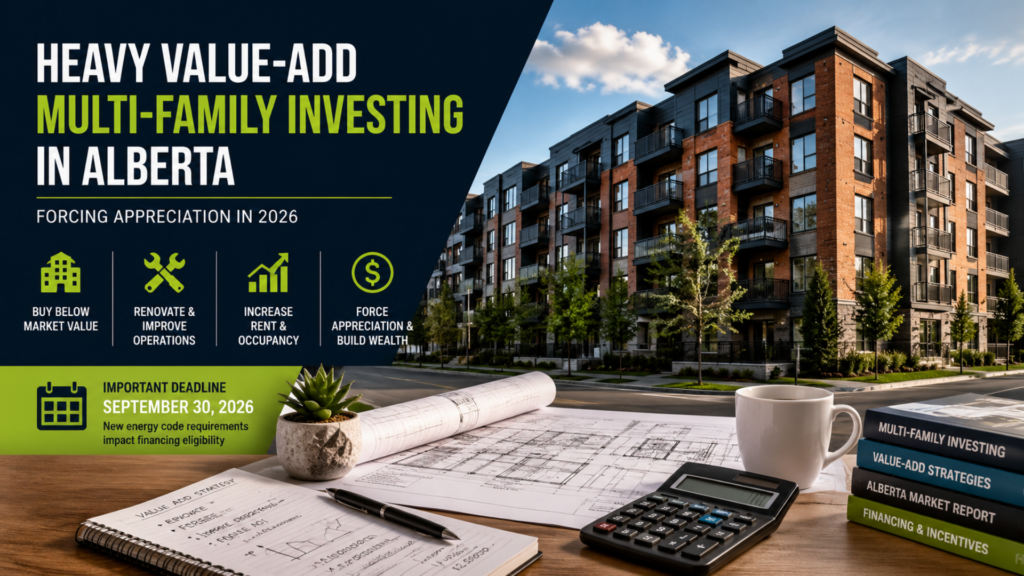
Heavy Value-Add Multi-Family Investing in Alberta: How Smart Investors Are Forcing Appreciation in 2026

Heavy value add family investing in Alberta is really about making older apartment buildings better. You know when you drive by a building and think it could be nice if someone fixed it up. That is what heavy value add family investing in Alberta is all about. I have been watching the market in Alberta. I think 2026 is going to be a great year for people who want to invest in Multi-family properties. What is value add investing in multi family properties? Well, it is not about painting the walls and putting in new appliances. It is about making the whole building work better. You are not just buying a building you are buying a business. The best value add properties are the ones that are not doing well as they could be. The rent might be too low. The management might not be very good. There are a lot of things that can be improved. Alberta is a place to do value add investing in multi family properties The prices are lower than in cities like Vancouver or Toronto. There are a lot of people who want to rent apartments. Many of the apartment buildings in Alberta are old. Need to be fixed up. This is an opportunity for investors. Edmonton and Calgary are two cities in Alberta that’re good for value add investing. Why Alberta Is the Perfect Market for Heavy Value-Add in 2026 The way to make money with value add investing is to buy a building that needs work and then fix it up. You can make the building worth more by increasing the rent. Let me give you an example. Imagine you buy a building with 20 apartments for 2 million dollars. The rent is 850 dollars per month. You spend 500,000 dollars to fix up the building. Then you can charge 1,100 dollars per month. That is a rent increase. The value of the building will go up too. The Profit Formula: How Heavy Value-Add Actually Works Not all renovations are the same. Some will give you a return on your money than others. Kitchens and bathrooms are important. People want to have kitchens and bathrooms. If you put in appliances and fixtures it will make the apartment more attractive to renters. You should also think about the outside of the building. Make it look nice and people will want to live Real Numbers: What a Heavy Value-Add Deal Looks Like There are some risks to value add investing. It can be expensive to fix up a building.. Sometimes things do not go as planned. If you do it right you can make a lot of money. You should have a team of people to help you. This includes contractors and property managers. The September 30, 2026 Deadline You Need to Know About There is something you should know about. The government is changing the rules for buildings. You need to know about this if you are going to invest in a building. The new rules start on September 30 2026. If you can get your building ready before then you might be able to get financing. Conclusion In conclusion value add investing in multi family properties in Alberta is an idea. You can buy a building that needs work and fix it up. Then you can charge rent and make the building worth more. It is not always easy. It can be very profitable. Frequently Asked Questions (FAQs) What is a value-add property? A value-add property is not doing well as it could be. The rent might be too low. The management might not be very good. Why is Alberta a place for value add investing? Alberta has lower prices than other cities. There are a lot of people who want to rent apartments. Many of the apartment buildings in Alberta are old. Need to be fixed up. How much should I spend on renovations? It depends on the building and what you want to do. A typical renovation might cost 25,000 to 30,000 dollars per apartment. What renovations deliver the best return on investment? Kitchens and bathrooms are important. People want to have kitchens and bathrooms. If you put in appliances and fixtures it will make the apartment more attractive, to renters. What is the September 30 2026 deadline and why is the September 30 2026 deadline? The Canada Mortgage and Housing Corporation is making a change to 2020 energy codes after the September 30 2026 deadline. This means that projects that meet the 2015 standards can get better financing terms through the MLI Select program. After the September 30 2026 deadline it will be harder to get points for being energy Green Casa Co-Founder & Director Linkedin Envelope Instagram Hafil Perincheeri is an engineer-turned-realtor, investor, and builder based in Calgary, Canada. As Co-Founder and Director of Greencasa, he specializes in home flips, property development, and investment strategies. Since 2019, he has guided clients in home buying, multifamily investing, and financing options like CMHC and MLI Select, ensuring transparent, informed decisions. Get A Free Quote Green Casa Contact Form Full NamePhone NumberEmailCityServices– Select –Property ManagementConstruction ConsultancyCapital InvestmentMLI Select Program GuidanceDescribe your Requirement:Submit
Home Renovation Ideas
Blog, Real Estate

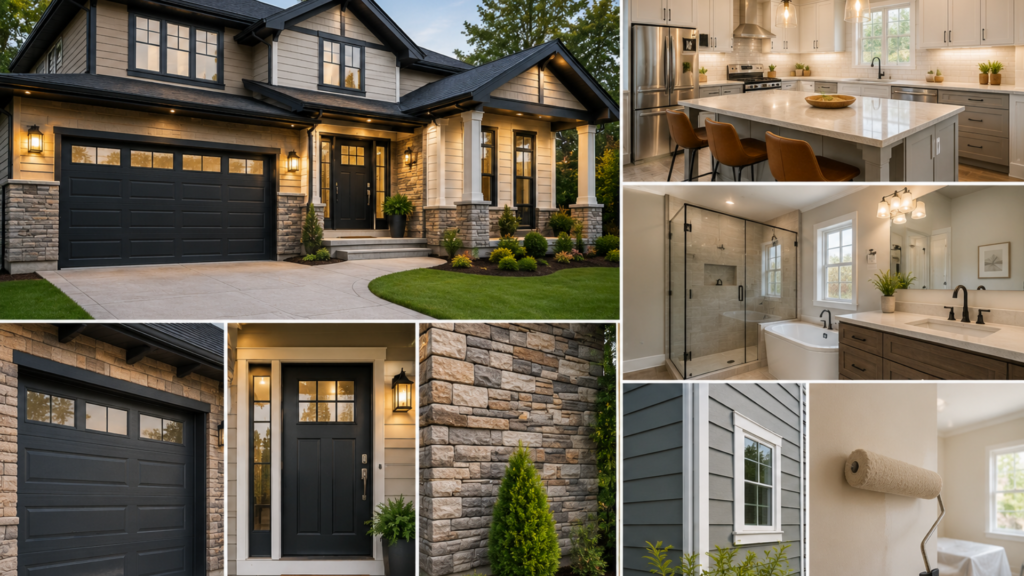
7 High-ROI Home Renovation Ideas That Actually Pay Off in 2026

Let me ask you this: have you ever spent a lot of money on a home renovation and then wondered if you would ever get that money back? I have been in that situation. It is not a good feeling. The truth is that not all home renovation ideas are the same. Some projects can give you back than double what you spent while others can waste your money with little to show for it when you sell your home. According to the Cost vs. Value Report eight of the ten best home renovation ideas in 2026 are projects that improve the outside of your home. If you are planning to sell your home or just want to make your money work harder it is really important to know which home renovation ideas give you the returns. In this guide we will look at seven high-ROI home renovation ideas that are based on data so you can make smart decisions that actually pay off. Why Smart Homeowners Focus On Curb Appeal Before we look at home renovation ideas lets talk about why projects that improve the outside of your home are better than projects that improve the inside. As Paul Rassam, the founder of RooferBros.com, says: “A new garage door or front door can make a difference because it shows that your home is well taken care of.” Buyers form an opinion of your home in a few seconds after they pull into the driveway. That’s why the best home renovation ideas focus on making a first impression. Projects that improve the outside of your home are also usually less expensive than projects that improve the inside of your home but they can give you a better return on your investment. Garage Door Replacement Is The Best Home Renovation Idea If you are only going to do one of these home renovation ideas you should replace your garage door. The numbers are amazing: a new garage door costs about $4,672. It can add about $12,526 to the value of your home, which is a return on investment of 268%. This is the home renovation idea that gives you the return on investment in the country for the second year in a row. Since the garage door is a part of the front of your home an old door can make your home look like it is not well taken care of. A new garage door can make your home look newer and more expensive. Steel Entry Door Replacement Is A Home Renovation Idea Another project that can improve the outside of your home is replacing your front door with a steel entry door. This costs about $2,435. It can add about $5,270 to the value of your home, which is a return on investment of 216%. This is one of the affordable home renovation ideas that can make a big impact. A new front door can improve the curb appeal of your home. Make it more secure and energy efficient. Buyers feel safer when they walk up to a home with a modern front door, and that can lead to higher offers. Manufactured Stone Veneer Is A Way To Add Luxury To Your Home If you want to add some elegance to your home, you should consider using manufactured stone veneer. This costs $11,000 but it can add about $22,880 to the value of your home, which is a return on investment of 208%. Adding stone veneer to the front of your home can make it look end and custom which can make it stand out from other homes in your neighborhood. This is one of those home renovation ideas that can make buyers stop and stare. They are willing to pay more for a home that looks amazing. Fiber-Cement Siding Replacement Is A Great Home Renovation Idea Replacing your siding with fiber-cement siding is another project that can improve the outside of your home. This costs $19,000 but it can add about $21,600 to the value of your home, which is a return on investment of 114%. This type of siding is also very durable. Can resist fire, which can make it a good choice for homeowners. Buyers are looking for homes that’re low maintenance, which makes this one of the smartest home renovation ideas. Minor Kitchen Remodel Is An Interior Project If you want to improve the inside of your home you should start with a minor kitchen remodel. This is one of the interior projects that can give you a good return on investment. A minor kitchen remodel can include replacing the doors and handles on your cabinets installing appliances updating your countertops and improving your flooring. This can return 113% of its cost which is a lot better than a major kitchen remodel. Buyers are looking for kitchens that’re functional and have modern appliances, which makes this one of the smartest home renovation ideas. Midrange Bathroom Remodel Is A Home Renovation Idea Bathroom remodels are another type of project that can give you a good return on investment. A midrange bathroom remodel costs about $26,138. Can return about 80% of its cost. Master bathroom remodels can return 60% to 75% of your investment. To get the results you should focus on updating the fixtures using neutral tile finishes and improving the lighting. Buyers are looking for bathrooms that’re functional and have a spa-like feel, which makes this one of the smartest home renovation ideas. Midrange Bathroom Remodel Is A Home Renovation Idea Sometimes the simplest home renovation ideas can give you the biggest bang for your buck. Painting the inside of your home with colors can cost about $2 to $6 per square foot and can return about 107% of its cost. A fresh coat of paint can make a room look brighter and more inviting. Buyers like homes that’re clean and neutral, which makes this one of the smartest home renovation ideas. Smart home renovation ideas are not about spending a lot of money. 10

Capital Investment

Why Energy Efficiency Is the Investment You Are Probably Overlooking

Let me ask you something: when was the last time you thought about your buildings energy performance as a financial asset rather than just an operating expense? If you are like investors I talk to, probably never. Here is the reality that is reshaping modern real estate. Energy efficiency has evolved from a nice-to-have environmental feature into a hard nosed financial strategy that directly impacts your bottom line. Whether you are a developer planning a multifamily project or an investor holding an aging commercial property energy efficiency is now the single most underutilized lever for boosting returns lowering risk and securing better financing. In this guide we will explore why energy efficiency deserves a place in your investment thesis and how you can start capturing its benefits today. The Financial Case for Energy Efficiency Let us cut through the rhetoric and talk about real money. The numbers behind energy efficiency are compelling enough to make any investor sit up and take notice. Studies show that every dollar invested in energy efficiency can yield returns of three dollars to five dollars over the life of the investment. That is a return profile that would make most Wall Street funds envious. The benefits go far beyond simple payback calculations. Energy efficiency directly reduces one of your most unpredictable operating expenses: utility costs. Electricity expenses alone can account for four percent to twenty six percent of a buildings value. When you improve energy efficiency through HVAC systems, enhanced insulation and smarter building controls you are not just saving money. You are insulating your investment from volatile energy prices and carbon taxes that are only going to rise. Consider this: a near zero energy building can achieve a forty seven point six percent reduction in costs compared to a conventional building. That is not an improvement. That is a transformation of your propertys financial profile. Lower operating costs mean net operating income, which directly translates to higher property values and better cap rates. Energy Efficiency and Property Values: The Green Premium Here is something I find fascinating: the market is actually paying a premium for energy efficiency now. Green-certified buildings consistently command higher rents and sale prices than their less efficient counterparts. Research shows that energy efficient properties can achieve rent and sale premiums of four percent to ten percent compared to properties. In some markets highly energy efficient assets command up to seven percent higher rents, forty five basis points lower yields and five percent less vacancy. What is driving this premium? Tenants are increasingly prioritizing energy efficiency in their leasing decisions because it directly reduces their operating costs. They are willing to pay more for a space that will save them money on utilities month after month. As one industry observer noted, energy efficient buildings powered by reliable energy are increasingly viewed as sources of competitive advantage. Offering improved operating performance reduced exposure to energy market volatility and stronger tenant and investor appeal. The market is also penalizing the opposite. There is a growing discount where properties with outdated inefficient systems are being punished with lower valuations and reduced liquidity. In words failing to invest in energy efficiency is not just missing an opportunity. It is actively eroding your assets value. The Financing Advantage: How Energy Efficiency Unlocks Terms This is where energy efficiency gets really exciting from an investors perspective. Governments and lenders are now offering financial incentives for energy efficient buildings and these incentives can completely transform a projects economics. In Canada the CMHCs MLI Select program is perhaps the powerful example. This program rewards multi unit projects for achieving energy efficiency, affordability and accessibility targets. Projects that earn points unlock premium discounts of up to thirty percent on mortgage insurance extended amortization periods of up to fifty years and loan to value ratios as high as ninety five percent. Let me put that in dollar terms. On a ten million dollar project the difference between scoring fifty points and one hundred points in the MLI Select program can save you roughly one hundred sixty thousand dollars to one hundred eighty thousand dollars in mortgage insurance costs alone. The extended amortization at one hundred points can drop your debt service by eight percent to twelve percent compared to the forty year term available at fifty points. That is money that goes straight to your bottom line. The best part? Energy efficiency alone can get you a portion of the way there. Projects that achieve a forty percent improvement over building code energy performance can earn the fifty points available in the energy category. Even a twenty percent improvement earns twenty points, which combined with categories can push you into the enhanced financing tiers. Future Proofing Against Regulation and Risk Here is another reason energy efficiency deserves your attention: regulation is coming. Building codes are getting stricter, carbon taxes are rising and minimum energy performance standards are being implemented in jurisdictions. Buildings that do not meet these standards will face penalties, higher operating costs and potentially even restrictions on use. Investing in energy efficiency Investing in energy efficiency now is a form of risk management. As one analysis put it structures designed to be more resilient and energy efficient are better prepared for weather and to comply with future building code and updated regulation. You can. Invest proactively in energy efficiency on your own terms or you can be forced to do it later under less favorable conditions. The market is already signaling this shift. A twenty twenty five JLL survey found that seventy six percent of investors now factor sustainability into their real estate decisions. In Asia Pacific forty four percent of investors demand energy efficiency as a negotiable criterion. These trends are only. Properties that lag on energy efficiency will find themselves increasingly marginalized. Practical Steps to Capture the Energy Efficiency Opportunity So how do you actually start capturing these benefits? Here is what I recommend: For construction: Design for energy efficiency from the start. Work with an 10

Construction Consultancy

Home Renovation Trends Captivating Buyers in 2026

Home renovation trends are really capturing the attention of buyers in 2026. Imagine walking into a house that just feels like home. The layout makes sense the bathroom is like an escape and the whole space seems to know what you need before you even unpack. This is not an accident. It is the result of design that thinks about how people live. In 2026 people buying homes are very smart. They do not like fixes that do not mean anything. They want comfort that’s real spaces that can change easily and value that lasts. We looked at what real estate professionals and the current market say. We found the seven renovation trends that are really making a difference for buyers right now. The 2026 Renovation ROI Cheat Sheet Before we get into the details, here is a look at how the numbers work out for the most popular projects that make a big impact this year: * Renovation Project: Wood Deck Addition, Estimated ROI: ~95%, Key Buyer Appeal: More space outside to live * Renovation Project: Composite Deck Addition, Estimated ROI: ~89%, Key Buyer Appeal: Easy to take care of space * Renovation Project: Minor Kitchen Remodel, Estimated ROI: High Key Buyer Appeal: Warm and smart kitchen * Renovation Project: Tub-to-Shower Conversion Estimated ROI: 65% – 80%, Key Buyer Appeal: Luxury and easy to get around * Renovation Project: Finished Basement, Estimated ROI: ~71% Key Buyer Appeal: Space that can change for uses * Renovation Project: Energy Efficiency Upgrades, Estimated ROI: 70% – 80% Key Buyer Appeal: Lower bills and smaller footprint * Renovation Project: Smart Tech Integration, Estimated ROI: High Key Buyer Appeal: Easy and safe 1. Kitchens That Work Hard as You Do Lets be honest the kitchen is not just a room it is the center of daily life. “The kitchen is the heart of the home and many would agree that it is the return on your investment ” says Charlotte Bradley, a real estate expert. In 2026 the best kitchen renovations think about what people need not how they look. Buyers are moving away from kitchens and towards warm luxury kitchens. The look is wood, soft colors and textures that feel real. The materials are quartz and clean-lined cabinets with hidden storage. The layout is open to the living area with spaces for cooking and socializing. The details are lighting that changes high-efficiency appliances. 2. Bathrooms That Double as Personal Sanctuaries The bathroom is not just for getting clean it is a wellness retreat. Buyers want refinement, not things that are hard to take care of. They like walk-in showers, double vanities with quartz or granite and thoughtful lighting. Keep the colors simple and the lines clean. Timeless elegance is better than designs. 3. Smart Home Tech: Invisible Intelligence Integrated technology is not a cool thing it is what buyers expect. It makes life easier and cheaper. Smart thermostats can save 10% to 15% on heating and cooling. Intelligent lighting uses energy and adapts to your daily routine. Future-proofing with EV charging stations, smart backup batteries and solar integrations is important for buyers who want to stay in their homes. 4. Energy Efficiency: The “Green Premium” Buyers care about the cost of running a home. Upgrades that save energy typically get back 70% to 80% of their cost. They also make the home more appealing. Investing in insulation energy-efficient windows and HVAC systems cuts utility bills keeps the home comfortable and prepares it for environmental codes. Buyers are willing to pay more for a home that costs less to run. 5. Flexible Spaces That Adapt to Life Our relationship with our homes has changed. We do not want rooms that can only be used one way. Buyers want spaces that can change as their lives change. They like offices that can become bedrooms, finished basements that can be gyms or media rooms and playrooms that can become study dens 6. Outdoor Living: Expanding the Footprint Buyers love the idea of expanding their living space. Done backyard upgrades make the whole property feel bigger. Wood decks are an investment getting back about 95% of their cost. Composite decks are also good with a 89% return. Even small upgrades like landscape lighting and defined patios can make an impression. 7. Universal Design: Beautifully Accessible Universal design makes a home safe, comfortable and accessible for everyone. It is an empathetic renovation strategy. Modern accessibility is chic and sleek. Curbless showers, wider doorways and lever handles are easy to use and look good. A universal design bathroom remodel can add $15,000 in value to a master suite. As the population ages these updates give your home an advantage. The Bottom Line Universal design makes a home safe, comfortable and accessible for everyone. It is an empathetic renovation strategy. Modern accessibility is chic and sleek. Curbless showers, wider doorways and lever handles are easy to use and look good. A universal design bathroom remodel can add $15,000 in value to a master suite. As the population ages these updates give your home an advantage. Conclusion Renovating a home is not about following the trend on social media. It is about solving problems. By focusing on warmth, intelligence, sustainability and flexibility you create an functional home that you can enjoy now and sell for a premium later. Frequently Asked Questions (FAQs) What home renovations do buyers like most in 2026? Buyers like high-efficiency updates, such as quartz countertops, custom storage, adaptable lighting, smart-home integrations, and versatile flex spaces. Do smart home upgrades pay off? Yes they do. Smart thermostats and smart LED systems save money on utilities. Are expected by buyers as a standard feature. What is design and why is it important? Universal design creates spaces that’re easy and safe for anyone to use regardless of age or mobility. It adds value because it allows buyers to envision “aging in place” without needing renovations. Should I prioritize outdoor renovations? Ideally you should do both. While exterior upgrades often 10

MLI Select
Blog, CMHC MLI Select

The Government Program That’s Changing Multifamily Investing in Canada: MLI Select

If you have been involved in multifamily real estate recently you have probably heard people talking about MLI Select. I have noticed that most investors do not really understand what MLI Select is and how it works. They know it has something to do with CMHC and financing. The details are not clear. This is a missed opportunity because MLI Select is an important financing tool for multi-unit residential properties in Canada right now. It is the program behind apartment construction and refinancing deals in the country. In this guide I will explain what MLI Select is, how the points system works, what is changing in 2026 and how you can use it to improve your deal. What MLI Select Actually Is Lets start with the basics because the name MLI Select confuses a lot of people. MLI Select does not mean that CMHC lends you money directly. Here is how it actually works: a bank or credit union gives you a mortgage and CMHC insures that loan against default. Because the loan is backed by the government the lender takes on risk, which means they can offer you better terms: higher leverage, longer amortization and lower interest rates. MLI Select replaced the MLI Flex program in March 2022 and added a points system. The program is designed to reward projects that contribute to policy goals around affordability, energy performance and accessibility. The more you commit to these environmental goals the better your financing terms become. For example Equitable Bank alone funded $4.3 billion of multi-unit volume in 2025 most of it through MLI Select. Many other lenders are also heavily involved in the program. When people talk about apartments being the number one sector for commercial lender appetite in 2026 MLI Select is the reason that’s possible. The Points System: How You Unlock Better Terms MLI Select uses a points-based system. Your project earns points in three categories. Your total score determines what financing benefits you qualify for. The three categories are: Affordability: you earn points by keeping a percentage of units at rents below the median market rates. The deeper the discount and the longer the commitment period the more points you earn. Energy Efficiency: You earn points by building or retrofitting to exceed baseline energy performance standards. Accessibility: you earn points through barrier- design and accessible unit features. You need least 50 points to qualify for any enhanced terms. The more points you earn the the deal. For example with 50 points you can get a 40-year amortization and a 10% premium discount. With 100 points you can get a 50-year amortization and a 30% premium discount. The 2026 Changes You Need to Know About MLI Select has changed significantly in 2026. If you are not up to speed you could be missing out on serious money or even missing out on financing altogether. The minimum score required is now 50 points up from 12 points. This means you can no longer get terms with a bare-minimum commitment. There are also rules about premium discounts and financing tiers. A 0.25% premium surcharge applies for every 5-year amortization extension beyond 25 years.. There is a important deadline: September 30 2026. After that date CMHC will stop accepting energy efficiency attestations against the building codes. This means that many projects will score energy points under the same building specifications. Why MLI Select Matters for Your Bottom Line Let me give you an example of how MLI Select can make a difference. On a $10 million project with an 80% loan-to-value ratio the mortgage amount is $8 million. A 30% insurance premium discount versus 10% can save you $160,000 to $180,000 in mortgage insurance costs alone. That is before we even talk about the amortization cost and the reduced recourse implications. The 50-year amortization at 100 points can drop your debt service by 8% to 12% compared to 40 years. On an $8 million mortgage that is hundreds of thousands of dollars in annual cash flow improvement. This is why the points system is a financing superpower. For builders doing 5 to 8 unit multiplex projects MLI Select is not optional. It is essential. Without it you are looking at commercial lending: 75-80% loan-to-value ratio, 25-year amortization, higher rates. For a $3 million project that is the difference between $150,000 in equity and $600,000+. Strategic Tips for Maximizing Your MLI Select Score Based on what I have learned from talking to developers and investors who have successfully navigated this program here are some practical strategies: Do not try to max out energy efficiency: you need to combine categories to reach the highest scores. Affordability is your lever: affordability is the only category that can reach 100 points on its own. Plan for the September 30 deadline: if your project is currently in the pipeline and you are relying on the energy code standards you need to submit your application before September 30 2026. Work with an energy advisor: An energy advisor can help you optimize your building design to maximize your points. Talk to your lender: MLI Select applications are submitted through CMHC-approved lenders who use CMHC’s submission systems. Not all lenders are equally knowledgeable about the program. Work with one who has experience. Conclusion MLI Select is a game-changer for mortgage financing in Canada. By projects that contribute to affordability, energy efficiency and accessibility it creates a powerful incentive for investors to build better housing while accessing superior financing terms. Whether you are a first-time multiplex builder or a seasoned apartment investor, understanding MLI Select is not optional. It is the key to making your numbers work in today’s market. The program has gotten more complex in 2026 with minimum scores, stricter energy standards and a looming September 30 deadline. The rewards are worth the effort. Take the time to understand the points system, plan your energy strategy early and work with partners. Your next deal could depend on it. Frequently Asked Questions (FAQs) What is the minimum number 10

Canadian Real Estate Market
Real Estate

The Canadian Real Estate Market in 2026: What You Need to Know

If you are thinking about buying or selling a house in Canada this year, you might have noticed that the Canadian real estate market is different now than it was a years ago. The Canadian real estate market is not crazy like it was during the pandemic. Now it is calmer and more stable. This year, the Canadian real estate market will be about things getting back to normal. People making smart choices. If you are a buyer who’s worried about interest rates or a seller who is wondering if it is a good time to sell you need to know what is going on in the Canadian real estate market. In this guide I will tell you about the predictions, what is happening in different parts of the country and some practical tips so you can make good decisions. The Big Picture: What is Happening in 2026? The Canadian real estate market was slow because people were worried about the economy.. Now, the Canadian real estate market is starting to improve. The Canadian Real Estate Association says that the number of homes sold in Canada will go up by 5% in 2026. British Columbia and Ontario are doing well. This is news after last year was slow. We should not get too excited. It is not like the market is going to take off. When it comes to the price of homes different people have predictions. The Canadian Real Estate Association thinks that the average price of a home in Canada will go up by about 1.5% to around $688,955 in 2026. Royal LePage thinks that the price will go up by 2% to around $823,344 by the end of 2026. Either way the Canadian real estate market is getting more stable after a few years. The price of homes is not going up and down like it used to. What is Driving the 2026 Market? Interest Rates are Stable One of the things that is affecting the Canadian real estate market this year is interest rates. The Bank of Canada said that it is not going to lower interest rates. They are staying at 2.25%. For buyers this means that interest rates are not going to go down. It also means that buyers can plan better because they know what to expect. Knowing that interest rates are not going to change has actually made some buyers more confident. There are a Lot of People Who Want to Buy Something about the Canadian real estate market in 2026 is that there are a lot of people who want to buy homes. People who are between 30 and 34 years old and people who are between 35 and 39 years old are the two groups of people in Canada. Many of them have been waiting for years to buy their second home. The Canadian real estate market is finally starting to see these people buy homes. Different Parts of the Country Are Doing Things The most important thing to know about the Canadian real estate market in 2026 is that it is not the same everywhere. Some parts of the country are doing well. Some parts are not. This is creating experiences for buyers and sellers. What is Happening in Different Parts of the Country Ontario: A Good Time to Buy The real estate market in Ontario is doing well for buyers. The price of homes in Ontario is going down. The average price of a home in Ontario went down by 5.5% to $756,900 in May. In the Toronto area prices went down by 4.6%. The number of homes sold went up by 6.3%. If you are a buyer in Ontario this is a time to buy a home. If you are a seller you need to be realistic about the price of your home. British Columbia: Things are Getting Better The Canadian real estate market in British Columbia is getting better. The average price of a home in British Columbia is going to go up by 3% to $982,800 in 2026. The number of homes sold is going to go down a bit this year. There are a lot of homes for sale in British Columbia, which is keeping the price of homes from going up much. Quebec and the Prairies: The Best Places to Buy If you are looking for places to buy a home in the Canadian real estate market, look at Quebec and the Prairies. Quebec City is going to have the increase in home prices with an 8% increase. The Montreal area and Winnipeg are going to have 5% increases. Halifax, Edmonton and Regina are going to have 4% increases. These cities did not have price increases during the pandemic so they are more affordable now. What Buyers Need to Know in 2026 If you are planning to buy a home in the real estate market this year take your time. You do not have to rush. In some cities, there are a lot of homes for sale so you can look around until you find the one. This is different from the few years when homes were selling quickly. For first-time buyers the Canadian real estate market is more accessible than it has been in years. The government has changed some rules to make it easier for people to buy homes. You can now buy a home that costs up to $1.5 million. You can pay it off over 30 years. The government is also giving first-time buyers some money back. You should know that some buyers are not in a hurry to buy because they are not sure about the economy. If you are waiting for prices to go down remember that prices might not go down that much. You should buy a home when you find one you like and can afford. What Sellers Need to Know in 2026 For sellers the Canadian real estate market in 2026 is different. You cannot just list your home. Expect to get a 10

Scroll to Top

Compare